Janine Porter
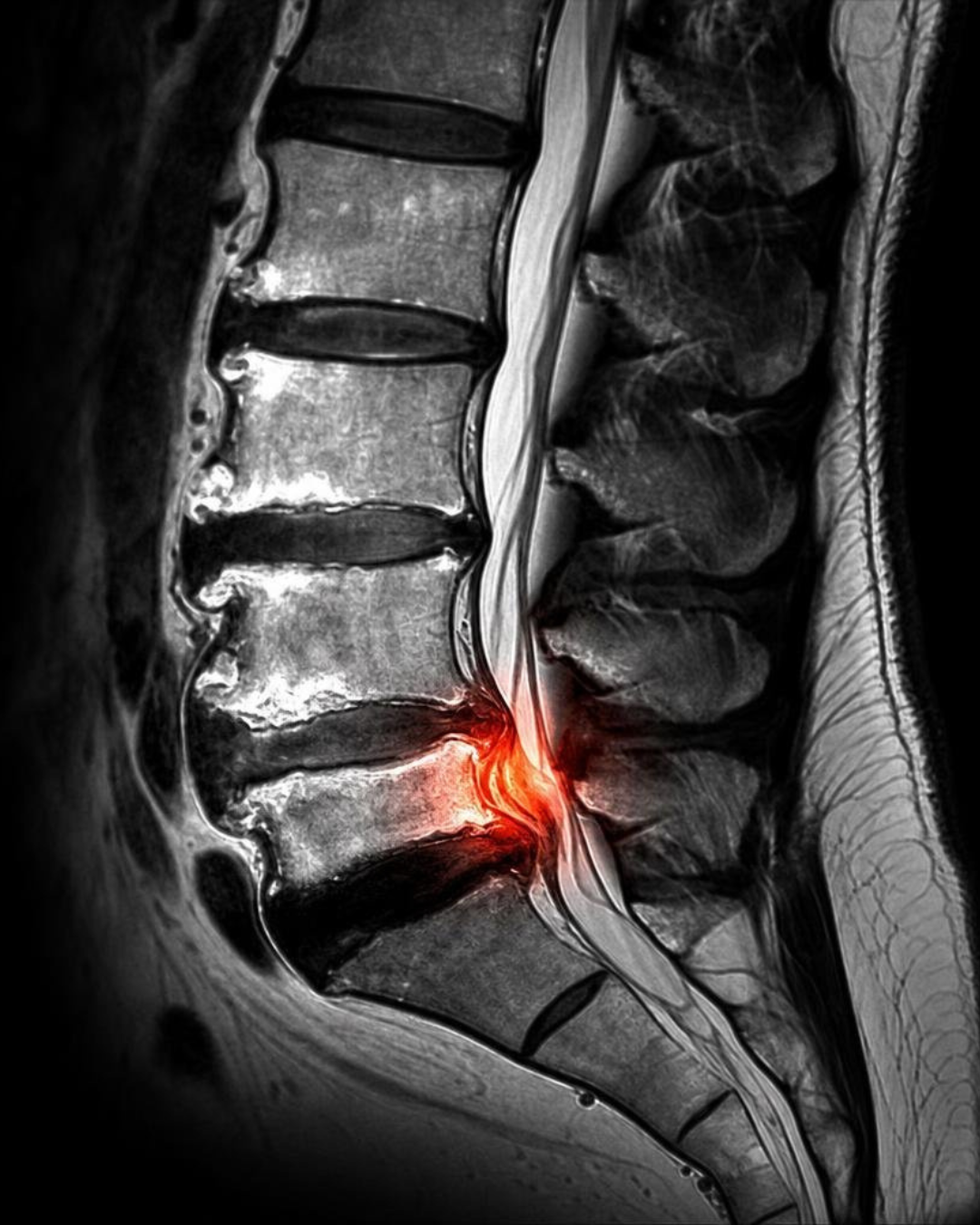
Five doctors told me my back pain was 'just my age.' A woman at my pool told me something else.
Your MRI says “degenerative disc disease.” Your doctor sends you home to manage it, but there’s one question you may never have been asked. It’s the question I wish someone had asked me before I spent six years being told to live with the pain. By the fifth doctor, I already knew how it would go. I'd sit down. He'd glance at the same MRI the four before him had. He'd nod at the screen, not at me. And somewhere in the next four minutes he'd say a version of the thing they all said. "It's degenerative. At your age, the discs don't come back. We manage it." I was 67. I'd been managing it for six years. Managing it looked like this. A chiropractor twice a week for a while, then a physical therapist for months, then a pain specialist who wrote scripts. Anti-inflammatories until they stopped touching it. Muscle relaxers daily. Nerve block shots that took the edge off for a day, maybe two, then handed the pain right back. Facet injections. Then the ablations, until my insurance decided it wouldn't approve any more of those either. I tried the cheap things too, the ones you buy at 1 a.m. because you're desperate. A thirty-dollar massage gun off the internet. A heating pad that shut itself off every fifteen minutes. An inversion table my husband put together in the garage that scared me half to death and did nothing for the ache. A seat cushion I started carrying everywhere. Church pews. Restaurant chairs. The DMV, the doctor's waiting room, the folding chairs at every family cookout. That cushion went where I went. One clinic wanted $6,900 up front for a decompression package. Twenty-six visits. Not a dime covered by Medicare. A friend of mine did it. She felt better on the table and worse by the time she got to her car. I passed. On a good day, I took ibuprofen around the clock and got through the chores. On a bad day, I was on the floor. That's where my son found me the night everything cracked open. Down on the kitchen tile, one hand on the cabinet, waiting for a pill to work so I could stand up. He didn't lecture me. He just crouched down beside me, quiet, and said, "Mom. We can't keep doing this. Look at you." I didn't argue. That was the worst part. I couldn't. And I'll tell you what still makes me angry. That same year, my husband Gerry went in for his regular checkup and happened to mention his knee felt stiff going up the stairs. One sentence, almost an afterthought. He came home holding a referral and a whole list of options, every one of them covered. One mention. One solution. Nobody told him to "learn to live with it." Me? Six years. Five doctors. A drawer full of pill bottles and a cushion I hauled to my own grandkids' games. And the best the whole system could offer was a shrug and a refill. I want to be clear. I don't think any single one of those doctors was a bad person. That's almost worse. This is just how it's set up. This is the standard of care they're all following. And the standard of care for a woman my age with a worn-out back is, basically, a pill and a pat on the head. The lowest moment wasn't the floor, though. It was the bleachers. My granddaughter Lucy used to pat the seat next to her and save me a spot. One game I got there late, and by the time I'd shuffled up the steps, sideways, one at a time, gripping the rail, the only open seat was the metal bench with no back. I had to point at the car and mouth, "I need my cushion." Lucy looked up at me, plain as kids are, and asked, "Grandma, why do you always have to sit way over there?" I didn't have an answer for her. She stopped saving me a seat after that. Not to be cruel. She's eight. She just learned that Grandma sits apart now. And I thought about my own mother, who spent her last years basically homebound with the same kind of back. I remember thinking, clear as anything, that's the road I'm on. And I can't live my life like that. The thing that changed it wasn't a doctor at all. It was a woman in my water aerobics class named Renae. She'd spent thirty-one years as a physical therapist, most of them on spines exactly like mine, before she retired. We were toweling off and I was complaining about the game, the cushion, the whole thing, and she cut me off. "Corinne," she said. "In six years of all of that... what did any of it actually put back into the disc?" I just looked at her. "What do you mean, put back?" "The pills, the shots, the therapy. What did any of it do to the disc itself? To what's inside it?" "I don't... nothing, I guess. They said it was worn out." She nodded slowly, like she'd heard this a hundred times. "That's the whole problem. And I can't believe nobody has explained this to you." So she explained it. Standing there in the pool locker room, dripping, she finally told me the thing five doctors never did. "Every single thing you've tried works around the disc," she said. "The pills quiet the alarm. The shots numb the wire. The therapy strengthens the muscles around it. Surgery cuts. But none of them ever touch what actually went wrong." She held up her hand and made a fist. "A healthy disc is like a sponge full of water. That water is what gives it height, what cushions the bones, what keeps the nerve from getting pinched. As we get older, and as the spine stays compressed all day, the disc dries out. It goes flat and stiff. That's the 'degenerative' they wrote on your report. The disc isn't dead. It's dried out, and there's a world of difference between the two." "Then why doesn't it just... fill back up?" "Because a disc has almost no blood supply. It can't drink on its own. The only way it pulls water and nutrients back in is when the pressure comes off it, and it's allowed to expand. Doctors have a word for it. Imbibition. The disc soaks water back in like a dry sponge dropped in a bowl, but only when it's decompressed." And then she said the part that stopped me cold. "That clinic package your friend paid seven grand for? Decompression is the right idea. That's why she felt better on the table. But the second she stood up and drove home, her spine re-compressed and squeezed the water right back out. You can't rent that for an hour, twice a week. The disc needs the pressure off gently, every single day, long enough to drink and hold it." I felt tears coming, and for once they weren't from shame. Six years I'd blamed myself. Six years of doing exactly what I was told, watching it get worse, thinking I was the one failing. And the truth was I'd been draining a sponge and wondering why it wouldn't fill. "So what do I actually do?" I asked. Renae wrote it on the back of a pool schedule. Look for one thing that does all three at once, she said, because doing one at a time is why nothing held. Real traction, to gently pull the spine apart and take the pressure off. Deep heat, to soften the tissue and pull blood and moisture toward the disc. Targeted massage, to relax the muscles that clamp down and re-compress everything the moment you stand. "Decompress, rehydrate, reset," she said. "All three, together, fifteen minutes a day, lying down at home. Not a vibrating gun. Not a heating pad. Not once a week on somebody's table. Every day, until the disc can finally do its job again." That night I went looking. I found whole groups of people my age with the same MRI, the same "learn to live with it," the same drawer of pill bottles. And a lot of them were talking about the same device. One that did all three of the things Renae listed, at the same time, at home. It's called the SmoothSpine Triple Fusion Back Massager. You lie down on it. It runs gentle air traction to decompress, 122 degree deep heat to bring the moisture in, and targeted massage to unclench the muscles, all in one fifteen minute session. It did all three at once. The three things none of my old treatments had ever done together. More than 21,500 people have used it. The refund rate is under half a percent, and it comes with a 90 day money-back guarantee, which after six years of paying for things that didn't work was the only reason I let myself hope at all. I read the reviews for an hour. Real people. Hedged, honest, the way people my age actually talk. (Results vary, and they said so themselves.) "It may not have cured me. But it gave me the relief I needed, so I can walk around and function again." (Roslyn P.) "In the mornings I can walk down the stairs to the kitchen normally now. Not one step at a time, sideways, holding the banister." (Anita B.) "I'm a nurse, so I was skeptical. Whether or not it's rebuilding my spine, I can tell you it is absolutely improving my function and my pain. I'll take it." (Ruth C.) I ordered one. Gerry saw the box when it came. "Another one?" he asked. Gentle, not mean. He'd watched a lot of boxes come and go. "This one's different," I said. "It doesn't just cover up the pain or squeeze me from the outside. It's supposed to take the pressure off so the disc can actually drink again." He didn't really follow the science. He just said, "I want you back at the games." And I realized he didn't only miss watching me be there. He missed me. Here's how it actually went. Day 3. I stood up after a session and something was off. It took me a second to place it. The catch in my lower back, the one I braced for every time I got up, wasn't there. Just for a minute. But I noticed. Week 2. I came down the stairs in the morning like a normal person. Both feet, no rail, no sideways shuffle. I stood at the bottom and cried a little, holding my coffee, because I hadn't done that in years. Week 3. I forgot to take the muscle relaxer one night and didn't wake up needing it. Then it happened again. Week 5. We drove to Lucy's game. I got out of the car and started walking to the bleachers, and I was halfway there when Gerry called after me. I'd left the cushion in the front seat. Just forgot it. Didn't need it. I sat right up next to Lucy and she leaned into me the whole game. Week 8. I mopped my own kitchen floor. If you've had a back like mine, you know exactly what a strange victory that is. I'm not going to tell you I'm cured. Renae would smack me. Everybody's spine is different, and I can only tell you my own story. But I got my life back a good bit at a time, and it started the week I stopped chasing the pain and started treating what was actually wrong. I looked the device up again after that first month, half expecting to feel a little silly. Turns out I wasn't the only one. The company says 91% of people felt relief in the first week. By then, my own kitchen floor had already made the case. But it was nice to know the numbers backed up what I was feeling. So if you're reading this on your phone, maybe on the floor, maybe with a heating pad that's about to click off, here's what I wish someone had told me at year one instead of year six. The industry has been selling worn-out backs the same trick for decades, and getting paid every step. In the 2000s it was "it's just arthritis, take the anti-inflammatories." They ate my stomach and the pain came back. In the 2010s it was "the disc is worn out, here's a stronger pill, here's a shot." The shots lasted a day. Now it's just "manage it," while the medicine cabinet fills up and the cushion goes everywhere with you. None of it was ever designed to put the water back. There's no billing code for "let it rehydrate at home." That's not a conspiracy. It's just the math of how they get paid, and you're the one who pays it. So here's where you decide. Option 1. Keep doing exactly what they told you. The pills, the shots, the follow-up in six months. And watch a dried-out disc do the one thing "degenerative" promises it will do. Option 2. Bet thousands up front on a clinic table that works right until you stand up and drive home. Option 3. Try the one thing that does all three at once, at home, fifteen minutes a day, with 90 days to send it back if your body doesn't answer. I know which one I wish I'd picked at 61 instead of 67. If I could sit down next to myself six years ago, on that kitchen floor, I'd say this. You're not broken. You're not "just getting old." You've been treating everything around the disc, and never once the disc itself. And that part, you actually can change. You deserve more than "learn to live with it." You deserve to sit next to your granddaughter. You deserve yourself back. 👉 See how a dried-out disc rehydrates: https://try.smoothspine.com/tfbm-coc-adv2-ddd 💕 90-Day Money-Back Guarantee. Use it every day, then decide. 🔬 3-in-1: gentle air traction, 122 degree deep heat, targeted massage. Decompress. Rehydrate. Reset. 🦵 Built for worn, dried-out discs. Not just the pain on top of them. ⭐ Joined by 21,500+ people who were told to "just live with it." Because in a system that writes off a worn-out back as "your age"...sometimes it starts the day you stop draining the sponge, and let it drink.
Engagement over time
Not enough history yet to show a trend.