Listen Library
To Find Out Download Now!
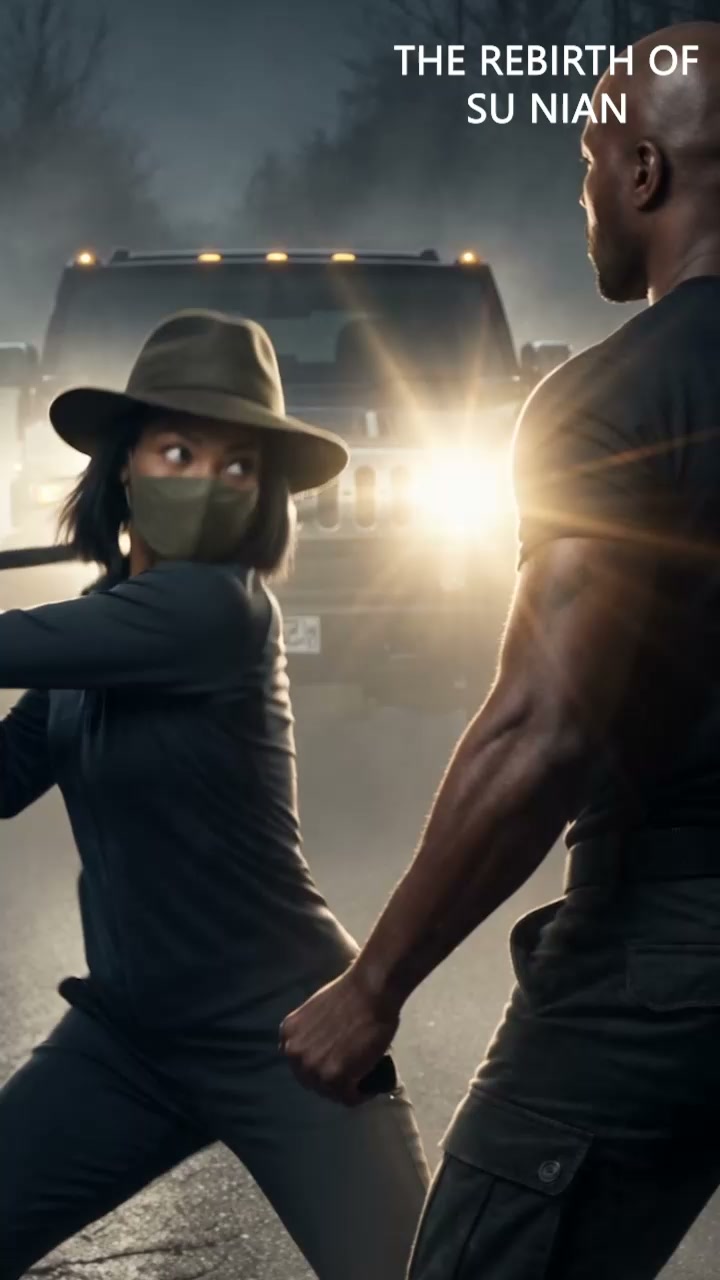
A Tang Sword slices a bald man's head from his body in a single wet stroke. He does not scream. He does not have time. The head hits the asphalt before the body does. Two miles from the wall of Base One, on a country road nobody drives at night, a small woman in a hat and a mask is killing eight men in the dark. Second man drops with his throat opened. Third goes down with the sword in his chest. Fourth is stabbed through the ribs before he can lift the machete in his hand. Thirty seconds ago these eight men were laughing at her. They had laid iron nails across the road so anything moving faster than a walk got shredded. They had blocked her exit behind. They had picked a stretch of country where nobody screams and nobody hears. They were waiting to stab. Strip. Leave for the wild dogs. Then she stepped out of the Hummer with a sword in her hand and they laughed harder. Lucky night — it's a girl. Little beauty — put the toy down. That's not something you can play with. Her hand went to the car keys at her waist. Click. The headlights died. The world went black. Eight men in black stood blind in a country dark, laughing at a girl they could not see anymore. The girl they could not see anymore was already running. Now four men are dead in under a minute. The last four rush her in the black. She is smaller than any of them. She moves like her body has been killing men her entire life. Three more drop. One at a time. The last one falls to his knees, one arm severed at the shoulder, and begs. She takes his head off while he is still smiling. The Hummer's headlights click back on. Eight bodies in a cone of cold white light. She walks between them, sword still wet, and looks at the dark stretching to the horizon. It has only just begun. But to understand how a woman ends up alone on a country road with eight dead men at her feet — you have to go back. Back three months. Back to the moment she woke up screaming in a bed she should not have been sleeping in, in a country that should not have existed anymore, in a body that had already died once. The woman on the bed is beautiful. Skin as white as a doll's. Long hair, tangled. Sweat on her cheeks. And her face is twisted in a way that no sleeping face should be twisted. She is dying. Then she sits up. She sits up like she has been electrocuted. She grips the blanket in two fists. She stares at nothing. Her chest heaves. Her name is Clara Sutton. Where is she. Who saved her. Who is left who can save anyone. Acid rain fell from the sky. It fell like a hurricane. Anyone caught outside was corroded where they stood. Even if a person had pulled her out — where in a world of acid rain does someone find a room this clean. She lifts the blanket to her face. It smells like sunshine. Line-dried. Warm. Her eyes go wide. This is her old apartment. This is the room she lived in before the world ended. Her hand digs under the pillow. Comes up with a phone. She thumbs it on. May Twentieth. Ten years ago. She starts to cry. I'm back. I'm really back. She opens the bank app. She is terrified to look. The balance loads. Three hundred million dollars. For ten years she ate tree bark. Grass roots. Dirt. For ten years. She had all this money and by the time the world ended it was worthless. She could not buy a single grain of rice with three hundred million dollars. Not this time. This time she is going to spend every dollar she owns. Turn all of it into supplies. Fill every warehouse in the city. But where does a person put that much. Her hand goes to her collarbone. She feels for something. She finds it. The emerald locket. Her mother's. Square. Uncarved. A family heirloom she wore all her life until she lost it in the ninth year of The Fall and cried for weeks. The only thing her mother left her. And right now it is around her neck. She walks barefoot to the kitchen. She takes a fruit knife from the block. She cuts her fingertip. The blood wells fast. She presses the emerald to it. She does not flinch. The blood absorbs into the stone. Green deepens. Deepens. Turns red. Blood red. Then a white flash. The emerald is gone. And so is the cut on her finger. In Clara's mind, a room opens up. Grey. Empty. Thirty feet high. The size of twenty basketball courts. Her mother did not lie. Her heirloom is a Stash. Clara is standing alone in her kitchen at dawn with a bloody knife on the counter and a warehouse inside her chest. For the first time in ten years, she starts to plan. The Fall is coming. She has already died in it once. This time she has three hundred million dollars, a warehouse-sized pocket Stash, three months of warning, and the memory of every mistake she made the first time. The question is: Is that enough? She tests the Stash three times. She slides the knife inside with a thought. Pulls it back. Slides it in. Pulls it back. Until the reality of it stops sliding out of her mind every time she blinks. Then she does something she has not been able to do in ten years. She opens the refrigerator. She grabs the bread. Yogurt. Fruit. Eggs. Anything her hands can close around. She sits down cross-legged on the living room carpet and she eats. She tears the bread. She peels the yogurt. She eats like a person who has forgotten what softness tastes like. She eats until she cannot eat anymore. She wipes her mouth on the back of her wrist. Then — because the Stash still needs testing — she drops the last two swallows of yogurt inside it. She wants to know if food preserves. Then she opens her laptop. At the top of the document she types one word. Weapons. She was kidnapped when she was three. Rescued with great difficulty. Her parents sent her to the Guardian Training Compound as a lay disciple — martial arts, tutors, exhaustion, all of it — because they had already learned what the world does to a small girl who cannot fight. Those years were the only reason she survived what came the first time. She types faster. Food. Water. Shelter. Transport. Fuel. Seeds. Medical supplies. Tools. Fabric. Fire. She is still adding when the sun comes up. At the bottom of the list she prints one line for herself. I will not run The Fall the same way I ran it last time. Shower. Hair up. Tracksuit. Keys. Wallet. Down to the underground parking lot where her Hummer waits — two rows of five seats, huge trunk, the exact car she never thought she would be grateful for. First stop: the salon. The stylist nearly cries when Clara tells her to cut off waist-length hair to the neck. Clara does not blink. Long hair is trouble in The Fall. Too hard to wash. Too easy to grab. Second stop: the largest wholesale district in the city. She rents a warehouse in a quiet corner for three months. Checks every wall for cameras. Locks it. Then she starts spending. She orders a thousand steel shelves. Six feet long, ten feet high. Like she is ordering coffee. The seller nearly falls off his stool. Then the grain store. She says: a thousand bags of Calrose rice. A thousand of Arborio rice. A thousand of long-grain jasmine. A thousand bags each of four kinds of flour. Two thousand pounds each of millet, black rice, purple rice. Two thousand pounds each of every bean you sell. Five hundred pounds of every kind of starch you keep in stock. The shopkeeper stares. Young lady — you're not teasing me? She says: calculate the total. I will pay half as deposit. Then you will believe me. Two hundred and fifty-seven thousand dollars. She transfers the deposit. He gives her his account number so fast the phone almost catches fire. She goes to the oil shop. A hundred barrels each of canola, peanut, soybean, sunflower, sesame. Five hundred bottles each of hemp seed, corn, olive, camellia, palm, grapeseed, walnut. The grocery. A thousand boxes of salt. A thousand pounds each of white sugar, rock sugar, brown sugar. Every sauce the store carries by the case, two hundred each. Every spice by the pound, two hundred each. Then she goes to lunch. She has not eaten in a real restaurant in ten years. She orders ten portions of every dish on the menu. Tells the owner she wants pick-ups every day at noon for a full month. Then she drives to the next restaurant and does the same thing. And the next. And the next. By evening she is on the food-truck strip. Cold pasta salad. Loaded blue cheese tots. Kebabs. Grilled sausage. She eats and buys at the same time until both hands are full. Back in the car she finally lets out a breath. She swipes the last of the snacks into the Stash. Drives home. Showers. Opens Amazon. Some things you buy wholesale. Some things you buy online. She fills a cart with beef jerky, hot chips, pretzels, cracker packs, and jerky sticks — and ships every box to the rented warehouse. Never her home. Because in The Fall, a girl known to have supplies is a girl known to be killed. She sleeps. She dreams of starving in a broken city. Dawn breaks. She opens her eyes. She checks that she is still in her old apartment. She lets out a long slow breath. Just a dream. Today is another day of big shopping. She is back in the car before nine. Today is household goods. Laundry detergent. Soap. Shampoo. Conditioner. Toothbrushes. Dish soap. Two hundred cases each. Toilet paper and wet wipes and tampons in quantities she will not use in two lifetimes. Disposable food containers. Plastic utensils. Cling film. Aluminum foil. Because production of these things stopped in the tenth year of her last life and she can still feel the loss. The first year of The Fall was The Scorch. No rain. Water was survival. She contacts a manufacturer and orders a thousand water tanks. Each tank holds two tons. Then she disappears for a month. She is on the road across the whole country. Seed suppliers in the cities. Then farm country — where she buys seeds farmers will not be able to preserve through what is coming. She pays them well. Before she leaves each town she says one thing, quietly. My friend at NOAA says the heat is coming. Stock up. Store it well. A gift she can afford. A whisper she cannot be traced by. She buys twenty tons of coal. A thousand propane tanks. Ten diesel-electric utility trikes. Ten pedal trikes. Ten mountain bikes. Solar panels. Generators. Flashlights. Candles. Then she comes home. She sits on her sofa. She unrolls the printed list one more time. Nine-tenths of the Stash is full. Of three hundred million dollars, two hundred and fifty-seven million is spent. The rest she converts to gold bars and drops in a corner of the Stash. Because in a month or two, paper money will be worth exactly what it is printed on. Paper. It is mid-August. She scrolls Twitter. Everything looks normal. Everything always looks normal. That is how it happened last time too. Then the notification. A post pushed to the top of the feed. The weather is getting more and more abnormal. This morning the temperature had already risen to a hundred and four. The daytime high today is projected to reach a hundred and thirteen. Someone in the comments has done the math. Nobody has seen rain in over a month. The heatwave is coming. The heatwave is not coming three days from now on September First, when Clara remembers it coming. The heatwave is coming today. She sets the phone down slowly. She walks to the window. She pulls the blinds apart. A wall of white light hits the room. She takes the elevator down. She steps out of the apartment building — and the sun hits her exposed skin like a hot iron. She steps back inside immediately. Rides the elevator up. Reaches out the window with a thermometer. The mercury climbs. Climbs. Climbs. Settles. A hundred and twenty-four degrees. Clara stares at the number. If she can come back to life, why can't a heatwave come three days early. She looks at the thermometer for a very long time. Then she goes to check her supplies again. Because the timeline she remembers is not the timeline she is living in. And if the heat has moved — everything else has moved with it. The heat rewrites the whole city. By day, people faint on the pavement. Ambulances stop trying to be quick. There are just too many. The old die first. The stubborn die second. The ones who do not understand what has come for them die third. By night the city crawls back to life. Clara goes out. She has to. The heat is not stopping. If her body does not learn to move in it, she will die the day the air conditioners fail. She wanders the stalls. Buys small things she does not need. Lets the sweat run down her back. Does not go home until she has walked for two hours. Back in her apartment she takes ice out of both ice makers she has running twenty-four hours a day. Fills a bucket. Drops the whole bucket into the Stash. The ice makers will make more. She knows what is coming. The next day the neighborhood group announces water rationing. Then rolling blackouts. Then, weeks later, no water at all except at fixed windows. Clara has a thousand water tanks. All full. All ready. She has fifty tons of cat litter stacked to the ceiling of the Stash. She has never owned a cat. The first woman says: connect everything in the house that can hold water. It's going limited tomorrow. The second says: my grandson can't stand a hot day without a bath. The first says: first the power, now the water. My son says all this online talk about the end of the world — maybe there's something to it. The second says: end of the world or not — always good to stock up on food. Clara says nothing. Behind her mask her mouth is a straight line. The heat gets worse. The water gets thinner. The panic starts to look like panic. Now, about the weapons. She has bought a few. Not enough. She goes out into the night market and looks for a man selling knives. She sees him from twenty feet away. He is wearing a military green jacket in the middle of a heatwave. Camouflage pants. Strange boots. He is not sweating. She approaches. She picks up a dagger from the cloth. The blade is good. Better than good. She says: how much. His voice is like a cold spring in a mountain. He says: seven thousand each. Pick whichever you like. She says: seven thousand? He says, too fast: is seven thousand too expensive? Four thousand? At the Collector's Armory where she bought her first weapons, a dagger this good would be seventy thousand dollars minimum. He is offering it for four. She puts the dagger down. She stands up. She backs away. Something is very wrong with this man. She turns and walks off fast. Telling herself: never buy from a stall whose price makes no sense. That is how a person wakes up dead the next morning. She is not two blocks away when she stops. She looks back at the dark corner. The end-of-the-world rumor has not fully surfaced yet. Order is still in place. Police are still around. Why would anyone openly sell weapons at this hour, in this corner, right now. Maybe he is not selling weapons. Maybe he is scouting the neighborhood. She turns around. She walks back. She rounds the corner — and walks straight into him. They stagger apart. Regain their balance. His hands are empty. She narrows her eyes. Where did your things go. He touches his nose. I hid them. Under the streetlight she can see him clearly now. Silver hair. Silver at the roots — not dyed. Cold-touch clothes in a heatwave. And his eyes, when he looks at her, are not the eyes of anyone from her city. His lips curl at the edge. He says, quietly: an interesting girl. She starts to leave. He says: wait. She stops. He says: do you have anything to eat. She turns and looks at him. His lips are pale. Chapped. Dehydrated. She is about to say no when he takes a ring off his finger. He says: this is for you. She says, immediately colder: we have met twice. He looks embarrassed. This is a weapon. He runs a long finger along the surface of the ring. Three sharp spikes rise out of it. The longest is a full half-inch. He says: most people would not see it as a weapon. Would not be on guard against it. Perfect for a young lady. He holds the spike ring out to her. He says: pay whatever you think it's worth. A beautiful and kind-hearted little fairy like you wouldn't just watch me starve to death in the street, would you. She looks at the ring. She looks at him. She takes the ring. She pays him for it. Not because she trusts him. Because a weapon that will not read as a weapon is a weapon she needs. She goes home. She trains for three hours. Her body is remembering. The heat gets worse. September. October. The news stops pretending the temperatures are normal. The words "The Fall" start showing up on Reddit. Some people share photos of their stockpiles. Some of the people who share their stockpiles are robbed the next day. Clara does not share her stockpile. Clara does not share anything. She goes to the commissary every night. In the parking lot, in the shadows, she starts to notice the men and the cargo vans and the eyes that are just starting to size everyone up. She keeps her head down. She buys dried pasta. She goes home. But some of the eyes follow her. The first crew that tries her, she leaves on a road in the suburbs. Their leader is a man called Tiger. He does not get up. Some of them, she is told later, saw the whole thing from the woods. She does not know who. She hears the knock at her door at four in the morning. She has been waiting. The lock rattles. Clara is on her feet. She kicks the stool aside. She yanks the door open. She kicks Cody Cole across the hallway. She kicks Hailey Dunn right behind him. Both hit the wall. Both slide down. Clara steps out into the corridor and closes her door behind her, softly. Cody Cole scrambles up. You bitch — I'll teach you a — He rushes her. Bad idea. She grabs his arm. Pivots. Throws him over her shoulder. He hits the floor hard. Before he can get his air back she squats down and dislocates both of his arms with two dry pops. He is howling. Loud enough for the whole floor to hear. She steps on his chest. He turns red. Veins bulge on his forehead. His breath will not come. Hailey Dunn is on her feet. Ashen. Trembling. Reaching for her phone. Help him — help him right now — or I'm calling the police — Clara smiles. Please. Report it. She jerks her chin at the lock pick set on the floor. You tried to pick my lock. You tried to hit me. Perfectly clean self-defense. Before The Fall — the police take you away. Now — the police don't come out during the day anymore. The heat, you know. And they would have to feed you. Nobody wants to feed you. Not worth it. Hailey Dunn stops moving. Then Hailey Dunn starts crying. Suddenly. Wetly. We were wrong! We were wrong — please — please forgive us — we'll never do it again — Clara looks down at the man under her heel. For ten years in her past life she carried Hailey Dunn's face. The face that watched a man molest her and told the man to teach her a lesson. The face that laughed. Clara killed both of them, eventually, in her first life. That was the first time she killed anyone. Second time around, she has been waiting. The Fall has arrived. The order that was going to protect them is not coming. She takes a slow breath. She says, soft: there is no forgiveness in this world anymore. In the morning the sixth floor of the apartment building is quiet. Someone in the neighborhood group chat wonders if the couple next door has finally moved out to the country. Clara eats sausages for breakfast. November arrives. The government takes over the commissary. The nightly troublemakers scatter. Official uniforms carry official guns and even the hungriest man understands what that means. So they turn to easier targets. Buyers on their way home. Women alone with a bag. Anyone smaller than themselves. Clara is targeted several nights in a row. She kills every one of them with a single blow. Every dark night, someone dies on the way home. The authorities patrol. It does not help. Survival has become a luxury. Nobody is listening to discipline anymore. New Year's Eve is coming. No one is celebrating. Grain has bugs in it. Big ones. Flour beetles that used to be pinpoint-size are now larger than the grains of rice they were born in. People open their bins to see the crawling mass — and they do not scream because of the bugs. They scream because there is no food to replace the food. Clara cooks alone. New Year's Eve she takes out blackened redfish. Pot roast. Shrimp boil. Garlic broccoli. Four dishes and a soup, for one. In her last life this same night she shared a pot of boiled pasta with the entire apartment building. They nearly came to blows over portions. Nobody smiled. This year she is alone. She smiles. After New Year the power dies for good. The water trucks stop coming. The mall opens at night. It sells almost nothing. People queue all night and go home with nothing. The rivers are dry. The trees have been cut down for firewood. Despair. People start leaving for the country. They do not have gasoline. Some come to Clara's door to ask. Please — do you have any gas — I have to get my mother out — please — She always shakes her head. To prove she has no gasoline, every night she goes out — she walks. Some of them try to break in anyway. Try to find out for themselves. They do not break in successfully. Clara is waiting. She is waiting for news from the base. Because in her past life she went to the country. She stood in a village that had no water except from deep wells, no shops, families hoarding rice they would not sell for gold. She dug up grass. Ate bark. Ate dirt. Heard, eventually, about a small base. Walked there. Discovered the small base was barely better than dying in a field. This time she is going to wait until the government announces the Ten Federal Safe Zones. Then she will go directly to the biggest one. She lies in bed listening to the radio, day after day. She stockpiled dozens of radios in every price bracket, so she is never listening to a broken one. June arrives. On a hot half-asleep afternoon, the radio makes the announcement. The government has established ten major security zones across the country. Base One is located at the Allegheny Springs Resort. A hundred and twenty-five miles from — Clara sits up so fast the radio stand rattles. A hundred and twenty-five miles. She could drive that in three hours in the world she left. Even in this world she can make it in five. She is on her feet. She is packing. The chairs. The sofa. The coffee table. The kitchen appliances. All of it drops into the Stash. At sunset the solar panels come off the balcony. The sunshade cloth comes off the windows. All of that goes in too. The apartment is empty. She thinks about that for a moment. Then, so nobody is suspicious, she takes an old set of furniture out of the Stash — nothing special, nothing she bought for herself — and places it around the apartment. So it looks lived in. So it looks like she was one more person who fled and left her stuff behind. She dresses. She closes the door. She walks step by step down to the underground parking lot. There are cars everywhere. Most of them are covered in dust. She gets into the Hummer. The engine starts. A low powerful growl in an underground garage that has heard no engines for months. The sound alone brings people running from every apartment building. She hears them shouting. Some running behind the car. Some cursing. Some just watching. She does not stop. She has plans for none of them. At the edge of the city, glancing into her rearview mirror, she sees a cargo van. Familiar. Tiger's van. She thought she had killed Tiger's whole crew. A straggler, then. Someone she missed. Someone who has been watching her since. She does not think about it long. On the highway her Hummer leaves the van behind so fast it does not matter anymore. Three hours out — the Allegheny Highlands. The Allegheny Springs Resort. She has never been. But with the paper map, it is not hard to find. Before she gets close she pulls off the road. Opens the trunk. She takes out summer mats. Pillows. Bedding. Toiletries. A radio. A solar panel. An induction cooker. Cookware. An electric kettle. A rice cooker. Two vacuum-packed bags of rice, fifty pounds each. Vacuum-packed vegetables. Noodles. Mushrooms. Half a bottle of oil. Half a jar of salt. She loads it into the trunk until it is half full. A hiking backpack, bulging, on the passenger seat. Everything she owns — visible. Everything she owns — invisible. Then she drives on. She sees the base from a long way off. The wall is thirteen feet tall. Maybe sixteen. It extends into the darkness on both sides so far she cannot see the end of it. A wall. An actual wall. Just seeing it, she almost cries. She is not the only person heading in. Cars ahead of her. Cars behind her. She joins the back of a line that stretches for more than half a mile. An hour later she reaches the front. A young man walks up to her window. Tanned. Handsome. Uniform. He says: hello. Please show me your identification. She hands over her ID. Her passport. Her diploma. He walks them to the other staff member at a table. A minute later he is back. He says: to enter the base, each person must pay ten pounds of grain. In her past life she paid entry fees to every small base she ever found. She was not surprised then. She is not surprised now. She opens the passenger-seat backpack. She takes out a vacuum-packed bag of millet weighing exactly ten pounds. She hands it over. The staff member hands her a slip of paper and a booklet. He says: keep driving in. Turn left. Parking lot. She drives in. She turns left. She sees a parking lot bigger than any parking lot she has ever seen. Covered. Solar-powered searchlights hanging from the ceiling. Under each light, a cloud of mosquitoes so thick it looks like darkness itself. Cars. Thousands of them. Maybe tens of thousands. And still, only one-fifth of the space is used. She parks. Opens the booklet. Skims the map, the rules. She has been driving since nine. It is nearly two in the morning now. Sunrise is at four. If she wants to sleep tonight, she has to find a place to sleep before then. She gets out with her hiking backpack. Before she has time to look for a sign, someone steps out of the shadows and rushes at her. Her hand goes to the dagger at her hip. Then he speaks. Miss — do you need a guide? She looks. A boy. Fifteen or sixteen. Thin as a rail. Black short-sleeved shirt full of holes. Shorts full of holes. Arms all vein and bone. She lets her hand fall. She says: how much. He says: a pack of biscuits! Or a bag of instant ramen — anything. She says: not water? He says, softly: we have water to drink. She smiles behind her mask. The Allegheny Springs Resort is nestled against the mountains. Eight lakes on its grounds. Water, unlike everywhere else in the country, is not the problem here. She says: do you know the base? He says: there's nowhere I don't know. She says: then take me to the Housing Center. The teenage boy climbs — hesitantly — into her passenger seat. Under his direction she drives across the base. Ten minutes to the Housing Center. What used to be the ticket hall of a mountain resort. Now clean, bright, loud with hundreds of new arrivals all trying to get inside at once. A woman in a uniform at the window hands Clara a tablet. Red dots. Green dots. A map so dense it can barely be read. Clara slides a Hershey's bar across the counter. The woman pockets it faster than Clara pushed it. Puts on a smile. Honey — what kind of house are you looking for? Higher floor. Small suite. Better neighborhood. The Manor District area. Six-story blocks, small suites. Which floor? Sixth. A phone call. A man arrives. Clara gives the teenage boy a packet of instant ramen. He runs. She follows the man. They take a scenic tram — the same four-wheeled thing that used to ferry tourists between attractions — thirty minutes across the resort grounds. Six-story residential building. Two units per floor. On the sixth floor, the man opens the security door. Two bedrooms. A living room. Seven hundred and fifty square feet. Kitchen. Bathroom. Running water. Electricity — that she pays for. No furniture. No appliances. Walls half-plastered, no paint. A basic toilet. A single tap. An incandescent bulb. Bare. Clara looks around and finally understands what it means to be destitute. She nods. She says: how much. He says: the base runs on contribution points. One hundred a month. If you don't have points you can pay in food. She has neither points nor a job. She pays in food. Two bags of rice and all the dehydrated vegetables — two months' rent, because good quality goes further than junk grain. Then she takes the man back to the tram. Waves him off. Walks back to her sixth-floor unit. She locks the security door. She sets down her backpack. She stands in the middle of the empty concrete room. She waits until she is sure she is alone. And she starts, one item at a time, pulling her old life out of the Stash. A refrigerator appears. A bed. A carpet. A dining table. An air conditioner. Peel-and-stick wallpaper unrolling. The apartment slowly becoming a home. By the time the sun rises outside, the sixth-floor unit in the Manor District of Base One looks like it has been lived in for a year. Wooden floor down in the bedroom. White wallpaper on every wall. Clothes hangers at the foot of the bed. Bedside table. iPad. Evaporative cooler. It looks almost exactly like her old apartment. Which is exactly the point. She pulls the heat-insulating cloth across the window from the outside. Hangs the heat-insulating film across the glass from the inside. Draws the curtains. The heat is going to punch this base in the mouth by nine in the morning. This year the heat is not going to reach her. She sleeps until evening. She wakes. She wraps herself in long sleeves. Hat. Mask. Sneakers. Not for the sun. For the mosquitoes. She notices something immediately. There are far fewer mosquitoes here than in her old neighborhood. Someone in this base has developed something. Someone in this base is doing more research than they are telling anyone about. She walks. She listens. She learns. The base runs on contribution points. You earn contribution points by working — by building houses, by turning in grain or seeds, by taking a job the base assigns you. You spend contribution points on rent. Food from the official commissary. Utilities. Money from before is worth nothing. She walks past the night market where hundreds of unwanted goods sell for a single contribution point apiece. She does not buy. She does not need any of it. She knows that the moment she starts spending contribution points here, she starts being remembered. She goes home. She sleeps until the next evening. She wakes up. She counts her time. She has paid two months' rent. Two months is not enough. She needs to earn contribution points. She needs to bring in food from outside the base — the seeds she has stockpiled, the grain she has stockpiled. Not too much at once. Not so much that someone starts asking where the little girl in the Manor District got her hands on a hundred bags of rice. She decides to make a supply run. She leaves the base at night. She drives out of the base and turns down the first road that leads away from the crowd of new arrivals still parked at the entrance. The plan is simple. Circle a few miles. Kill time. Come back after midnight. Pull food and seeds out of the Stash in the dark. Take them into the base at daybreak. Turn them into contribution points at the exchange desk. Come home. Sleep. The plan lasts twenty minutes. She rounds a curve and slams on the brakes. The road in front of her is a carpet of spike strips. Dense. Deliberate. Deep enough to shred every tire on any vehicle that hits them at speed. She looks in the rearview mirror. Another car is parked across the intersection behind her. Blocking any retreat. Highway robbery. Two miles from the base. She did not expect this. She should have. The road runs eighteen inches above farmland on either side. Trees along the shoulder — dead, but standing. Not tall enough to hide behind. Not thick enough to ram through. Four men step out from behind the trees ahead of her. Four more get out of the car behind. Eight men. All dressed in black. All bald. In the first year of The Fall, bald is common. There is no water in most bases to wash your hair. Lice come fast in the heat. Cutting it off is easier than dealing with it. Men, children, women — they all shave. But eight bald men in matching black, waiting on this specific stretch of road, at this specific hour — this is not a coincidence. Clara does not get out. She sits in the car. Watches. Sizes them up. Steel pipes. Machetes. A fire axe. No firearms. She has the Tang Saber in the passenger seat. She reaches out and takes it. She steps down onto the asphalt with the Tang Saber at her side. The bald men see her clearly for the first time. A small woman under a hat and a mask. Alone. They laugh. The first one says: lucky night — it's a girl! The second says: even in that mask you can tell she's got a shape on her — The third walks closer, slow. Hey, little girl — put the toy down. That's not something you can play with. The fourth howls. If you want to play with something, brother's got a gun for you — you can play with it all you want — The others laugh with him. Clara draws the Tang Saber from its scabbard. The blade catches the Hummer's headlights and throws cold white light back at them. Even in the dark, anyone can see the quality of it. A blade like that costs more than any of them will earn in a lifetime. For a heartbeat they hesitate. Then they laugh again. The third one says: the little rascal — she's even playing with knives now! The fourth chokes on laughter. Little beauty — listen to your brother — put the knife down — The last man who spoke to Clara in that voice was Tiger. She sent Tiger to a place where words do not reach him anymore. Her other hand finds the car keys hanging at her waist. She turns them one click. The Hummer's headlights click off. The world goes black. The base lights are miles away and useless. The other car's headlights are down the road behind her, catching nothing. The world goes black. The bald men freeze. They were laughing at her a second ago. They are not laughing now. Clara's boots hit the road running. A cold flash of light in front of the nearest bald man's eyes — and his body and his head become two things instead of one. The Tang Saber comes up. Comes down. Second man drops. Third. Fourth. By the time the remaining four have adjusted their eyes to the darkness, they have lost half their number. They shout. They rush her. Clara is a small target in the dark. She moves like her body has been doing this her entire life. Because in her past life it survived ten years by moving exactly like this. And in this life she has been training every night for a year, waiting for men like these. Three of the four remaining go down inside a minute. The Tang Saber takes the last one's arm. He drops to his knees. Beautiful lady — ma'am — heroine — I was wrong — I was blind — spare my life — please — Clara stops walking. Looks down at him. He sees her stop and his lips curl into a grin. A grin because he thinks she is going to spare him. A grin because he thinks he has read her right. Clara's right hand swings once. The Tang Saber slices the top of his neck. His grin is still there when he hits the road. She starts walking. Sword down. Toward the car at the intersection behind her. She does not know if there are more men inside. She stops ten feet short. Reaches into her pocket. Takes out a smoke grenade — one of the ones she stockpiled two lifetimes ago. One she has never used. Pulls the pin. Rolls it through the open door of the vehicle. Thirty seconds. The smoke boils out and the coughing turns to men. Two of them come running down the steps. Two Tang Saber strikes. Two bodies. The smoke clears. She climbs into the empty vehicle. Cases of hard liquor. Cases of cigarettes. Two boxes of survival bars. Two of canned food. Six of instant ramen packets. Two of ham sausages. Over a dozen bottles of Dasani. And in the back — more than a dozen bags of rice. Of flour. Of grain. The take is bigger than she expected. She stands in the aisle. One hand on the roof of the bus. Listening to the wind on the dead trees outside. Ten bald men. Ten men, waiting on a road two miles from a wall. If ten men were waiting here tonight — how many are waiting on every other road tonight. If the road she took out of the base is already this dangerous — what does the road she takes tomorrow look like. What does the road after that look like. The Tang Saber is heavy in her hand. She looks down at the blade — still clean — and up at the darkness stretching to the horizon. The wall behind her is thirteen feet tall. The dark ahead of her has no wall at all. The Hummer's headlights click back on. Cold white light floods the ambush site. Eight bodies. An abandoned vehicle. A road slick with what she has done. One woman. One sword. Three hundred million dollars spent. Ten years of the wrong memories in her head. A Fall that has only just begun to show her its teeth. Because tomorrow she has to drive this road again. And there will be more than eight of them. And the sword will only cut so many. How dangerous is the world outside the base going to get. And how long can Clara keep answering it with a sword.
Engagement over time
Not enough history yet to show a trend.