Nerves & Tremor support community
Almost lost him..
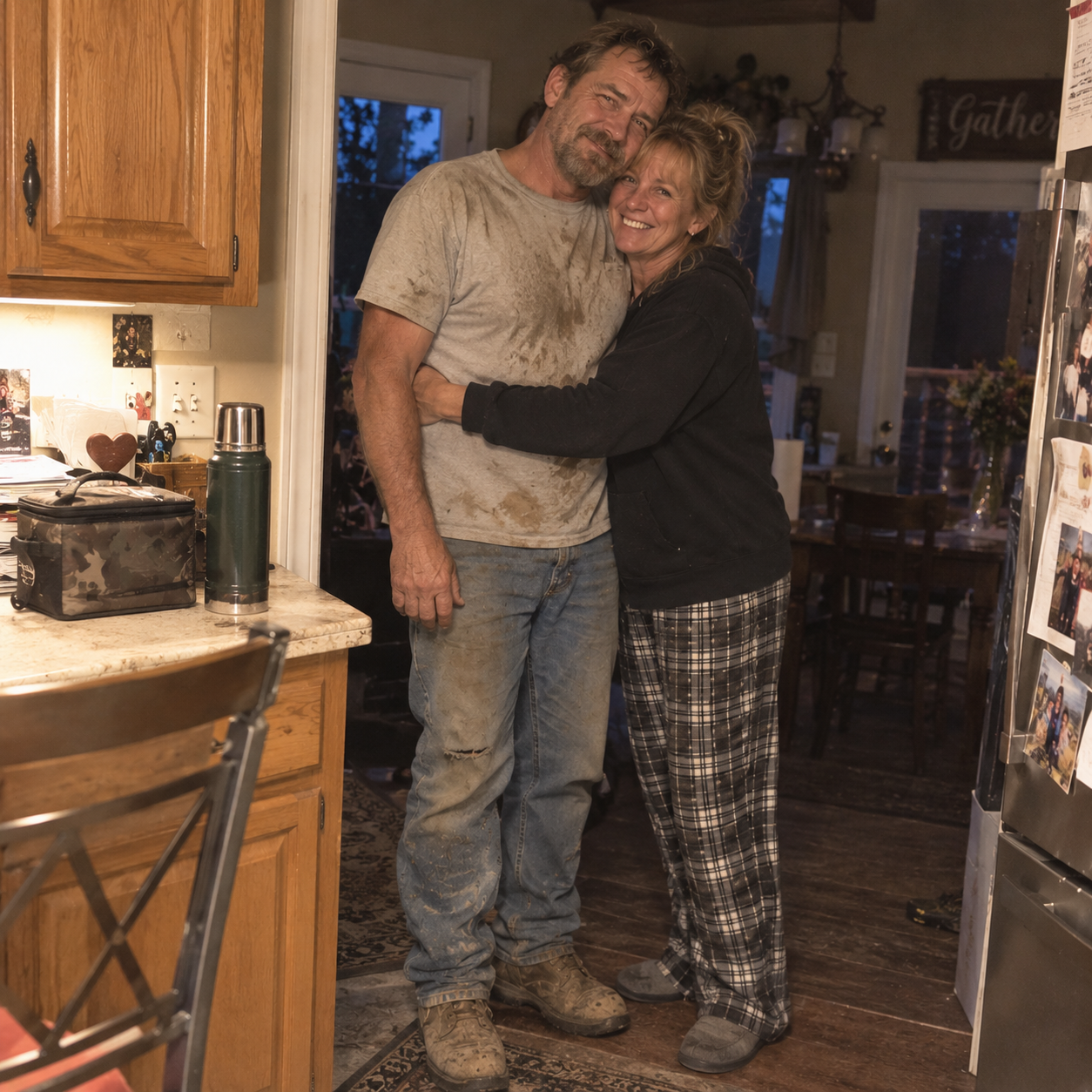
Every family dealing with Parkinson's thinks they have years. I thought so too. And I'm going to tell you what 11 weeks taught me, whether you want to hear it or not. Because 11 weeks is all I got. Eleven weeks from the night I finally found out what was really happening to my husband, to the morning I watched a nurse turn off the machine next to his bed. Eleven weeks. I'm not writing this to make you sad. I'm writing it because I'm pissed off. Because I did the math afterward, and I realized I'd had almost three years, and I spent them waiting. Trusting. Believing a word that turned out to mean nothing. And I keep seeing families making the exact same mistake I made. My husband's name was Gary. He was diagnosed with Parkinson's on September 22nd, 2021. His neurologist looked at his scan, confirmed it in under two minutes, and wrote a prescription for Carbidopa-Levodopa. Stay active. Eat right. Get your sleep. See you in six months. Gary did everything that man said. Every single thing. For two years and eleven months. He died on August 30th, 2024, at 6:05 in the morning. I was holding his hand. The last thing I said to him was, "I'm right here, honey." I don't know if he heard me. He was 65. Diagnosed at 62. Almost three years on the medication. Never missed a pill. Walked the neighborhood every evening after supper. Quit his Mountain Dew. Quit his fried food. Went to every single appointment. Did every exercise the therapist gave him. Did every last thing right. His thermos is still on the kitchen counter. The dented green Stanley he carried on every route for 30 years. It still has a sticker on the side from a truck stop in Amarillo that he refused to peel off. I haven't washed it. If I wash it, the last coffee he ever made is gone. I need to tell you what happened to Gary. Because I'm seeing the same posts in the Parkinson's groups on Facebook that I was writing a year before he died. "My husband's neurologist raised his dose again, is this just how it goes?" "My dad sleeps all afternoon even on his meds, anyone else deal with this?" "Doctor says the fog is just part of the disease. Is that true?" And every one of them makes my stomach turn. If your husband, your father, your mother, or you have Parkinson's, please read all of this. I know it's long. I know you're scrolling. I know you've got somebody to take care of and not a minute to spare. But I'd have given anything, anything, for someone to tell me this three years ago. Nobody did. So I'm telling you now. Gary drove a truck for 30 years. Long-haul. Every state in the lower 48. Then when his back got tired, he retired from the road and drove a school bus for our district for six more years because he said he couldn't stand sitting still. Those kids loved him. He knew every one of their names. He had a bag of Tootsie Rolls under the driver's seat for birthdays. He was big and loud and he laughed with his whole chest. He could back a 53-foot trailer into a loading dock in one try. His hands on a steering wheel were the steadiest thing I ever saw. I noticed the shake before he ever admitted it. His left hand. A little tremor around his coffee mug one morning. I watched him switch the mug to his right hand and tell me his left wrist was sore from an old injury. After that, I started noticing him keeping his left hand in his jacket pocket at church. When I asked him about it, he brushed me off. A few days later, the district noticed too. A parent reported that the bus driver's hand was shaking at a stop sign. They pulled him off the route "for a medical evaluation." He came home in the middle of a Tuesday and sat in his truck in our driveway for an hour before he came inside. I made the appointment myself. He didn't want to go. I told him I'd already called and if he didn't get in the car I'd drive him there in my bathrobe. He got in the car. The neurologist walked in, looked at his scan, and confirmed it before he'd even sat down. Early-stage Parkinson's. Prescription. Stay active, eat right, sleep. Six months. Gary didn't say a single word the whole drive home. Forty-five minutes of highway. This from a man who used to talk to me on the CB radio for three hours at a stretch just because he was bored. When we got home, he sat at the kitchen table. Same table where we'd eaten 38 years of suppers. Where our kids did their homework. Where he taught our son to play gin rummy and cheated every single hand. He sat there for a long time. Then he looked up. "Sharon, what do we do now?" I said, "We do what the doctor says. We take the pills. We keep you moving. We trust it." He nodded. And he did it. Every bit of it. He started the Carbidopa-Levodopa that night. The shake settled down within a couple of weeks. He could drive again. The district even let him back on the route part-time. At the six-month appointment, the neurologist smiled and said he was doing great. Managed. That was the word they used. Managed. I believed it. Gary believed it. We both wanted to believe it so bad that we didn't see what was happening underneath. Month three. The exhaustion. Not normal tired. The kind where he'd sit down after breakfast and be asleep in his recliner by 9:30 in the morning. A man who'd driven overnight hauls across Texas without blinking couldn't keep his eyes open past mid-morning. I told myself it was the medicine settling in. Month five. The bathroom. Every morning. Forty-five minutes. He'd come out pale and quiet. I found the laxatives behind the cereal boxes in the pantry. He was embarrassed. Gary had never been embarrassed a day in his life. The man used to sing Merle Haggard at truck stop karaoke. I told myself it was a side effect. It would pass. Month seven. The fog. He'd be telling me something at supper and just stop. The word would be gone. Easy words. "Spoon." "Mailbox." "Wednesday." His eyes would go searching around the room, and he'd say "the… the… you know," and I'd fill it in and act like it was nothing. It wasn't nothing. And I noticed every single time. Month nine. The freezing. He'd stand up from the table and his feet wouldn't move. Just locked there. Two seconds. Four. Six. His body leaning like it wanted to go, and his legs just not getting the message. The first time, he grabbed the counter and held on so hard his knuckles went white. He didn't say a word. Just held on and waited for his legs to come back. I was at the sink. I watched him in the reflection of the window over the faucet and cried as quietly as I could so he wouldn't hear me. Month twelve. The first dose increase. We went back to the neurologist and Gary told him all of it. The tiredness. The bathroom. The fog. The freezing. The neurologist said, "Those are common with Parkinson's. That's part of it." And he raised the dose. See you in six months. That was it. That was the whole appointment. In the car, Gary said, "Sharon, he didn't even look at me. I told him everything and he just upped the pills." I said, "Give it time. He knows what he's doing. We're doing it right." We weren't doing it right. We were doing what we were told. And those are two different things. I learned that the hard way. Month fifteen. Second dose increase. Same appointment. Same "that's part of it." Same six months. After that, Gary stopped telling the neurologist things. He'd just say "fine" and "about the same." Because what was the point? Every new thing he said got the same answer and the same bigger dose. Month eighteen. The district took him off the bus for good. He came home with his Tootsie Roll bag in his hand. He'd emptied it out from under the seat. He set it on the kitchen table and sat down next to it. "They said it's not safe anymore," he said. "Those kids. I've been driving those kids for six years." He didn't cry. Gary didn't cry. He just sat there looking at that empty bag. That was the first piece of him I lost. Month twenty-two. He stopped driving altogether. He froze at a green light with his foot on the brake. Cars honking behind him. He couldn't make his foot move to the gas. A man who drove two million miles in his life, frozen at a green light on Main Street. He came home, put his keys in the junk drawer, and never took them out again. That was the second piece. Month twenty-six. Thanksgiving. Our son came in from Phoenix with his wife and our two grandsons. Gary used to play gin rummy with those boys all day long and cheat every hand and they'd scream about it. This time he sat in his recliner and said he was too tired. The football game was on. He wasn't watching it. He was staring at the wall above the TV. Our son found me in the kitchen. "Mom. What's wrong with Dad?" I said, "The doctor says he's managed." He looked at me the same way I'd been looking at Gary for months. The look that says, you know that word means nothing, and so do I. That was the third piece. Month thirty. Third dose increase. Gary didn't even sit down in the exam room. He stood in the corner with his hands in his jacket pockets and waited for it to be over. The neurologist typed, adjusted, printed, and said, "You're holding steady, Gary. Keep it up." Gary didn't say anything. He walked to the car and got in the passenger seat. I drove. I'd been driving for months. About halfway home, he said something I'll hear for the rest of my life. "Sharon, I'm going away. I can feel it. A little more every day. And nobody's doing a damn thing about it." I pulled onto the shoulder of the highway. I put my hand on his. It was shaking. I held on anyway. And I told him I'd find something. I told him I wouldn't stop until I did. I told him I wasn't going to let him go the way his brother went. Gary's older brother Ray had Parkinson's. Diagnosed at 60. On Levodopa for eight years. By the end, Ray's wife was feeding him with a spoon, dressing him every morning, walking him to the bathroom at 3am. She was 5'2" and weighed maybe 120 pounds. Ray had been a 6'3" welder. He died in a care home at 68. Gary was one of his pallbearers. He never talked about it. But I'd catch him looking at his own hands sometimes, and I knew exactly who he was thinking about. That night, I didn't sleep. That was the night the countdown started. I just didn't know it yet. 11 weeks left. I sat down at our kitchen table at 11pm with my laptop and a pot of coffee. Gary was in bed. The house was dead quiet. And I started reading. I didn't even know what I was looking for. I just knew whatever the neurologist was doing wasn't enough. The medicine was holding the tremor. Everything else was falling apart. And every six months, the only answer was more of the same medicine. I read until 5 in the morning. Research articles I had to read three and four times. Parkinson's forums. Caregiver groups where women like me were posting at 2am because they couldn't sleep and their husbands were slipping away and nobody was helping them. The things those women wrote tore me open. "I'm losing him an inch at a time and I can't stop it." "He used to be the funniest man in every room. Now he doesn't talk." "I feel like I'm living with a ghost who looks like my husband." "My kids keep asking what's wrong with their dad and I don't have an answer." "He told me he's scared. He's never been scared of anything." Every one of them. Every single one. It was like reading my own diary. And then, buried in all of it, I started seeing something else. Not a lot of it. But it kept coming back. "I started my husband on shilajit and his neurologist asked what we changed." "His energy came back first. Then his words." "It didn't fix everything. But he's himself again. That's all I wanted." I kept reading. I read about the research. I read about how it works. I read about the traditional medicine behind it, going back thousands of years. And I found the thing nobody had told us. Not in almost three years of appointments. Not in three dose increases. Not in a single one of those two-minute visits where the neurologist said "managed" and Gary disappeared a little more. Here's what I found. Here's what I should have known on September 22nd, 2021. The Carbidopa-Levodopa replaces the dopamine his brain can't make enough of anymore. That's its job. It calms the tremor. That's the one thing the neurologist checks. And that part was working. But there's another part. The part I was watching every day from across the supper table. The energy. The clarity. The sleep. The gut. The walking. The being there. The Gary-ness of Gary. That part had been sliding the whole time, and nothing he was taking was doing a thing to stop it. Two things were dragging it down. The first is wear and tear. Free radicals building up in the brain day after day, like rust slowly eating through the frame of an old truck. The medicine doesn't touch the rust. It replaces the dopamine while the rust keeps spreading. The second is minerals. The brain needs trace minerals to make energy, stay sharp, keep your mood steady, and sleep through the night. Magnesium. Zinc. Selenium. Dozens more. In a lot of people with Parkinson's, those run low. And in almost three years, Gary's neurologist never once tested him for a single mineral. It's just not part of the standard Parkinson's visit. The medicine was holding one side. Nobody was holding the other one. And here's what made me want to throw my coffee cup through the window. Most of what you swallow never gets where it needs to go. The turmeric I'd been giving Gary. The multivitamin. The fish oil. The B12 his family doctor told him to take. I'd spent over $2,000 in two years on bottles from the drugstore. Most of it went straight through him. For two years, I'd been giving my husband things that never reached the part of him that was going away. Then I found fulvic acid. It's a natural compound that helps carry trace minerals into your cells so your body can actually use them. And then I found where it naturally comes packed alongside those minerals: shilajit. It's a thick, dark resin that seeps out of rocks high up in the Himalayan mountains. It's been used in traditional medicine for thousands of years for strength and a clear mind. It's naturally loaded with trace minerals, and it's rich in fulvic acid. And it's packed with antioxidants that help fight that rust. The minerals. The delivery. The rust. All in one. The other side. The side nobody was holding. The side that was taking Gary. At 4:48 in the morning, I ordered it. Right there at the kitchen table. The brand was Xara 10-in-1 Shilajit Gummies. Pure Himalayan shilajit, standardized for fulvic-acid content. Third-party tested, with the lab report right on the product page. No fillers. No heavy metals. Ten ingredients, including KSM-66 ashwagandha and CoQ10. One gummy after breakfast. I didn't know it, but I had just under 11 weeks left with my husband. 10 weeks left. The jar came. Before Gary took a single one, I took the ingredient list to his neurologist. One of the ingredients is kaunch bean, which has natural L-dopa in it, the same thing in his medication. I wasn't going to guess on that. The doctor looked it over and said it was fine alongside his current dose. Gary started one gummy every morning with his coffee. In that green Stanley thermos. Alongside his Levodopa. We didn't change a single other thing. Week 1 — 9 weeks left. The bathroom. For over a year, every morning had been 45 minutes of misery. On day six, he came out in ten minutes flat and just stood in the hallway with the strangest look on his face. "Sharon," he said. "That's the first normal morning I've had in a year and a half." I turned around so he wouldn't see my face and started scrubbing a pan that was already clean. Week 2 — 8 weeks left. I came in from the grocery store at 2:30 in the afternoon, and he wasn't asleep. He was in his recliner with a trucking magazine open on his lap. Reading it. He hadn't been able to read for almost a year because the fog made the words swim. He looked up. "What?" "Nothing," I said. And I went out to the garage and sat in my car and cried where he couldn't hear me. Week 3 — 7 weeks left. Our son called on FaceTime from Phoenix with the grandsons. Gary told them a story about the time he got stuck behind a herd of cattle on a highway in Wyoming for four hours and a cowboy on a horse knocked on his window to ask if he wanted a sandwich. He told the whole thing. Every detail. He did the cowboy's voice. Those boys were rolling on the floor. When he hung up, our son texted me: "Mom. Was that Dad?" Week 4 — 6 weeks left. He stood up from the supper table. No freeze. Just stood up, like it was nothing. Walked to the counter. Filled his thermos. Walked back. He looked down at the thermos in his hand. Then he looked at me. "Well, I'll be," was all he said. Week 5 — 5 weeks left. He went out to the driveway and washed his truck. First time in over a year. I watched from the kitchen window. He moved slow, and his left hand still had a tremor, but he washed that whole truck, bumper to bumper, and waxed the hood. When he came inside, he was sweating and grinning. "Told you I could still do it," he said. I held his face in my hands and kissed him and cried and didn't bother hiding it. Week 6 — 4 weeks left. We went back to his neurologist. Same office. Same two-minute visit. Except this time, the neurologist stopped. He looked at Gary. Really looked at him. He asked how he'd been, and Gary told him. Awake in the afternoons. Talking. Reading. Washed his truck. The neurologist said, "Well, Gary, whatever you're doing, keep doing it." Gary told him about the gummies. The doctor nodded and said, "I'll keep that in mind." And he wrote it down. In almost three years, it was the first time I'd seen that man write down anything Gary said. That was the best week of my life since the diagnosis. Gary played gin rummy with me every night. Cheated every hand. I let him. 3 weeks left. Sunday supper. Our daughter drove up from Louisville with her kids. I made pot roast. Gary's favorite. He was telling a story. Laughing. And then he took a bite and started coughing. Then he couldn't stop. His face went red. Then gray. Our daughter was pounding his back. I was screaming. Our granddaughter was crying under the table. It came up. He could breathe again. But he was shaking and wheezing, and I called 911 anyway. At the hospital, they kept him overnight. And the next morning, the hospitalist ordered a full workup. That's when it all came out. Almost three years of Parkinson's had been doing damage nobody had been watching. Not the tremor. The rest of it. His swallowing had gone weak. They did a test. Food and liquid had been slipping into his lungs instead of his stomach. Probably for months. Nobody had ever tested it. Nobody had ever asked. His blood pressure had been dropping every time he stood up. For months. The medication was part of it. Nobody had checked. His kidneys had been declining. The numbers had been creeping up at his regular checkups for over a year. His family doctor had said "we'll keep an eye on it." Nobody did. I sat next to his hospital bed while that hospitalist laid it all out, and I felt something I'd never felt in my life. Not sad. Not scared. Rage. Pure, blinding, shaking rage. Almost three years. Three dose increases. Six appointments. And nobody had ever looked at anything but his damn tremor. 2 weeks left. They sent him home with a thickener for his drinks and a list of foods to avoid. He was weaker. The hospital had wrecked his schedule. His medication timing got thrown off. He wasn't sleeping. The fog came back in. I kept giving him the Xara every morning. I wasn't going to stop. And the energy started coming back again. Slowly. Like rebuilding something after a storm knocked it down. But he'd been breathing food into his lungs for months before anybody caught it. 1 week left. He spiked a fever on a Thursday night. By Friday morning, he couldn't catch his breath. Aspiration pneumonia. The swallowing problem nobody tested for. They took him by ambulance. Straight to the ICU. He never came home. 0 weeks. August 30th, 2024. 6:05 in the morning. I was in the chair next to his bed. I'd been there four days. Our daughter was asleep in the waiting room. Our son was on a flight from Phoenix. His plane landed at 6:40. He was 35 minutes too late. Gary's hand was in mine. His eyes were closed. The machine was beeping. Then it wasn't. A nurse came in. She looked at the screen. She looked at me. "I'm so sorry, Mrs. Doyle." I drove home that afternoon. The Xara jar was on the counter. His green Stanley thermos was right next to it with the last of his coffee still inside. The truck was in the driveway, still shining from the wax job he'd given it five weeks earlier. I sat in his recliner. The one he used to fall asleep in by 9:30 in the morning. The one he stopped falling asleep in during those few weeks when he was reading and talking and laughing and washing his truck and cheating at gin rummy and being Gary. I sat there until it got dark. The house was so quiet I could hear the ice maker. Thirty-eight years. And the only sound left in my house was the ice maker. The funeral was September 6th. Our daughter came from Louisville. Our son from Phoenix. Half the kids from his old bus route came with their parents. One little girl, maybe nine, walked up to the casket and put a Tootsie Roll on it. Then another kid did. By the end of the service, there were two dozen Tootsie Rolls on my husband's casket. My youngest grandson asked me, "Grandma, is Papa driving a truck in heaven?" I said yes. He said, "Does he have Tootsie Rolls?" I had to walk out of the room. After the funeral, I tried to go back to normal. I couldn't. Because every time I opened my phone, I saw women my age posting things like "my husband's neurologist just raised his dose again" and "he sleeps all afternoon but the tremor is under control, so I guess that's good?" and "the doctor says he's managed." And I knew. I knew. Some of those husbands were doing exactly what Gary did. Taking every pill. Walking every evening. Trusting the neurologist. And sliding anyway. And their wives thought they had years. I thought I had years too. Here's what those 11 weeks taught me. You don't have years. You have right now. That's it. I had almost three years. I spent them waiting. Waiting for the medicine to do more. Waiting for the next appointment. Waiting for someone to tell me what to do. And by the time I stopped waiting and went looking myself, I had 11 weeks. Levodopa only replaces the dopamine. It doesn't fight the rust. It doesn't refill the minerals. It holds the tremor. That's all it was ever made to do. The other side, the side that took my husband, kept sliding the entire time. For almost three years. While the neurologist said "managed." While Gary sat at the kitchen table and told me he was going away. While I stood at the sink and cried into the dishwater. Quitting soda isn't enough. Evening walks aren't enough. Eating right isn't enough. Those things slow the slide. They don't stop it. They don't refill what's being drained. That's why Gary did everything right and still slid. For five weeks, the Xara worked. I watched it. His neurologist saw it. He was reading. He was talking. He washed his truck. For five weeks, Gary was Gary. But the damage that had been building for almost three years was already there. The swallowing. The blood pressure. Things that had been ignored for so long that five weeks wasn't enough to outrun them. I was 11 weeks too late. If I'd found it at month six instead of month thirty, I'd have had two and a half years of Gary being Gary instead of five weeks. His body would've had two and a half years of those minerals. Two and a half years of fighting the rust instead of ignoring it. I think he'd still be here. I can't prove it. But I believe it like I believe the sun comes up in the morning. Because I saw what five weeks did. And I can count. Every morning at 6:05, I wake up. Every single morning. Same time he died. My body won't let me forget. I lie there and look at his side of the bed. I still sleep on my side. I can't make myself move to the middle. I have to tell you what happened after the funeral. Because this story didn't end with Gary. Three weeks after we buried him, my sister Donna called me. Her husband Rick is 63. Diagnosed with Parkinson's a year and a half ago. Same medication. Same kind of neurologist. Same "managed." Same sliding. Donna was crying. "Sharon, it's happening to Rick. The tiredness. The fog. He froze in the Walmart parking lot on Saturday. It's just like Gary. And his doctor says he's doing fine." I told her everything. The shilajit. The five weeks. The minerals. The rust. The 11 weeks. She said, "Why didn't Gary's doctor ever tell you about this?" I said, "Because it's a resin that comes out of a mountain. Nobody gets rich telling you about it. The whole system is built to treat the tremor and book the next appointment." She was quiet a long time. I mailed Rick a jar the next morning. I put a note inside. "Take this list to your neurologist first. Then take one every morning with your coffee. And don't you dare wait, Rick. I waited. Look where it got me." He took it to his doctor. His doctor said fine. He started it that week. Seven weeks later, Donna called me. "Sharon. He's awake in the afternoons. He's back in his woodshop. He told the grandkids a story at dinner last night. The whole thing. He hasn't done that in a year." Then she said the thing that sat me down on the kitchen floor. "Sharon, you gave me the years you didn't get." My neighbor Pat. Her husband Larry was diagnosed four years ago. After the funeral, I told her. She started Larry on it. A month later, he walked to the mailbox and back without his walker. First time in six months. She texted me a picture of the walker parked by the front door. She wrote one word. "Look." A woman from my church, Glenda. Her father is 77. He's had Parkinson's for over ten years. She figured it was too late at his stage. She tried it anyway. Four weeks later, he sat through her grandson's entire Christmas pageant, awake and clapping. Her mother said it was the first family thing he'd been present for in two years. Gary's old dispatcher, Earl. Diagnosed eight months after Gary. His wife called me last month. She said Earl's sleeping through the night for the first time in a year. The bathroom problems stopped. He's walking the neighborhood again after supper. She said, "Sharon, he seems like himself." That phrase. "He seems like himself." That's everything. That's what the medication was never made to give. That's what the neurologist was never trained to look for. And that's what Gary had for five weeks before the damage everyone ignored caught up with him. I'm not a doctor. I'm not a scientist. I'm a 61-year-old widow sitting in my dead husband's recliner at 2 in the morning because I can't sleep, and I can't stop thinking about Rick and whether he started soon enough. Here's what I know because I lived it. You don't have years. You have right now. The medication holds the tremor. It doesn't hold the rest. Walking slows the slide. It doesn't stop it. Eating right helps. It doesn't refill what's being drained. Most supplements never get where the damage is happening. Shilajit's minerals and fulvic acid help get where they need to go. They help fight the rust. They help hold up the side the medication was never made to hold. Gary did everything right for almost three years, and it didn't save him, because nobody told him what was actually being lost. And by the time somebody did, the clock had almost run out. I wish someone had told us before September 22nd, 2021. Before the two-minute diagnosis. Before the first dose increase. Before the second. Before the third. Before the recliner became his whole world. Before they took him off the bus. Before he put his keys in the junk drawer. Before the pot roast. Before August 30th at 6:05 in the morning. I can't go back. Gary can't come back. His thermos is still on the counter, and I'm never washing it. But your husband can still be reached. Your father can still be reached. Your mother. Your wife. You. And the only thing standing between them and what I lost is how long you wait. Xara 10-in-1 Shilajit Gummies. Pure Himalayan shilajit, standardized for fulvic-acid content. Third-party tested, with the lab report right on the product page. No fillers. No heavy metals. Ten ingredients in one gummy, including KSM-66 ashwagandha and CoQ10. One gummy after breakfast, alongside whatever your neurologist has you on, after your neurologist has seen the label. You don't change the medication. You add what the medication was never made to give. Right now it's buy 2, get 1 free, with a full 60-day money-back guarantee. If you don't see a difference in their energy, their clarity, and how present they are, you get every penny back. No questions. And one more thing. Every Parkinson's ad I've ever seen shows a man. Every one. But Parkinson's doesn't care if you're a man or a woman. And whether you're the one with the diagnosis, or you're the one across the supper table watching someone you love slip a little further every week, counting the pieces, this is for you. This is especially for you. Because nobody sees what the caregiver sees. Nobody knows what the wife knows. Nobody understands what it does to you to watch a man who drove two million miles freeze at a green light. The side the medication holds matters. The side nobody's holding is where you lose them. And the clock on that side is already running. Don't wait the way I waited. Order now while this batch is still in stock. https://www.xarashilajit.com/products/xara-shilajit%C2%AE-pure-shilajit-wellness-formula P.S. His green thermos is still on the counter. I still can't wash it. Every morning I walk past it, and for one second I forget. For one second I think he's about to come in from the driveway and ask if there's more coffee. He's not. Almost three years of doing everything his neurologist told him. Three dose increases. Six two-minute appointments. And a gummy that costs less than his morning coffee, that gave me five weeks of my husband back, and not one doctor ever mentioned it. I had almost three years. I used 11 weeks. Please don't do the math on your own husband the way I have to do it on mine. https://www.xarashilajit.com/products/xara-shilajit%C2%AE-pure-shilajit-wellness-formula P.P.S. I'm writing this at 2:20 in the morning because I can't sleep, Gary's side of the bed is cold, and Rick is 63 and I'm terrified every time Donna's name pops up on my phone. He's awake. He's talking. He's in his woodshop. But every time she calls, I hold my breath until I hear her voice and know it's good news. Please share this with anyone you love who has Parkinson's. Even early stage. Especially early stage. Even if the neurologist says "managed." Especially if the neurologist says "managed." You don't have years. You have right now. https://www.xarashilajit.com/products/xara-shilajit%C2%AE-pure-shilajit-wellness-formula P.P.P.S. Can you take this with Levodopa? With Sinemet? With Rytary? With Crexont? Yes, alongside it, never instead of it. This isn't a replacement. It's what was missing. Just take the ingredient list to your neurologist first, because of the kaunch bean. That's what I did for Gary, and that's what Rick did. Both doctors said fine. One gummy after breakfast. That's the whole routine. ~ Sharon Doyle, 61, Bowling Green, KY
Engagement over time
Not enough history yet to show a trend.