Essential Health Finds
Support stamina and heart health every day
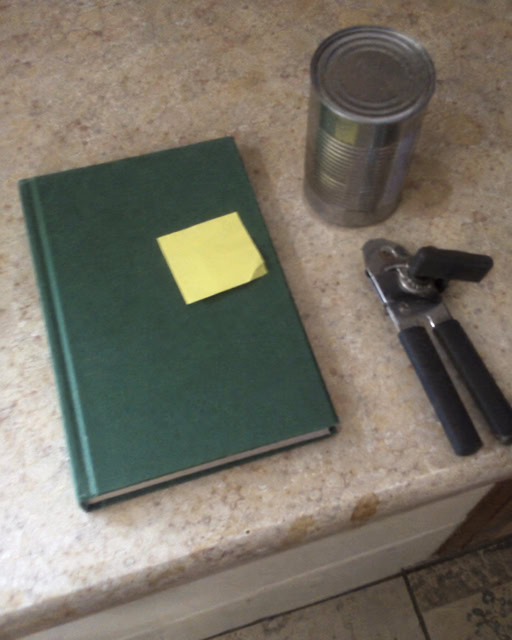
The Thing You Can Actually Hand Someone — a Story About a Sister, a Stubborn Brother, and a Gift That Wasn't an Argument. This is an illustrative story about a woman named Marion and her brother Tom, and one small package that taught her the difference between giving someone a thing and giving them a lecture. Picture Marion, sixty-one, retired court reporter, the kind of person who spent thirty years writing down exactly what people said and has strong feelings about the difference between that and what people meant. And picture her brother Tom. Tom is fifty-seven, in Phoenix, and stubborn in the specific way of a younger brother who has spent a lifetime not being told things by an older sister. You know this dynamic if you have a Tom. Possibly you are a Tom. Here is the thing about Tom, and it's the whole engine of the story: you cannot tell Tom anything. Not because he's foolish. Because the telling itself is the problem. The moment a suggestion arrives wearing Marion's voice, Tom's whole system organizes against it, on principle, regardless of merit. Marion has watched this cost him things over the years — good advice bounced off purely for having a return address she was on. So when Marion wanted Tom to try something — a cookbook, as it happens, because Tom had mentioned, in the offhand way that means it matters, that cooking for one since his divorce had become "opening cans standing up" — she faced the oldest problem in the family. How do you give a stubborn person something without it becoming a fight? Her first instinct was the essay. It always is. She drafted the text — you know the one. Tom, I've been thinking about you, and I really believe if you'd just— She deleted it. She'd sent that text before. She knew exactly where it went: to the bottom of a conversation, unanswered, a small cold war conducted in read receipts. Because the essay isn't a gift. The essay is an argument with a bow on it. It asks the recipient to first concede that they had a problem, then concede that you spotted it, then concede that your solution is right — three concessions, before they've even opened the thing. Nobody stubborn makes three concessions. Marion had transcribed enough testimony to know that people defend the first inch harder than the last mile. So she did something different. She bought the cookbook — a plain, good one, nothing fancy, the kind with actual splatter-friendly pages — and she mailed it. No lecture inside. No essay. Just a sticky note on the cover, in her court-reporter's block print: "Saw this. Thought of you. No pressure. Recipe on page 84 is stupidly easy. — M" That's it. That was the whole gift. And here's what Marion understood, standing at the post office counter, that took her sixty-one years to learn: A gift and an argument are opposites. An argument asks the other person to move first — to admit, to agree, to change their mind before they've done anything. A gift asks nothing. It just arrives, sits on the counter, and waits to be picked up or not, entirely on the recipient's schedule and entirely at their discretion. The cookbook made no claim about Tom. It didn't say he ate badly. It didn't say she'd been right. It didn't require him to lose the argument first. It just sat on his counter in Phoenix, splatter-friendly and patient, until one night when the cans standing up got old enough that page 84 looked easier than not. Tom called her three weeks later. Not to concede — Toms don't concede. He called to complain that page 84 was "fine, I guess," which in the family dialect is a standing ovation, and to ask if the book had anything with chicken thighs. That's the discovery, and Marion would want it said plainly: You cannot hand someone a conclusion. Conclusions have to be reached, in private, on the person's own clock. What you can hand someone is a plain thing — no essay attached — and then get out of the way. The gift that respects a person enough to ask nothing of them is the only kind a stubborn person will ever pick up. Give the thing. Skip the lecture. Let them read the recipe themselves. Now step out of the story, because the rest of this is between us and you — and it's a confession about advertising, which is a trade built almost entirely of essays. Everything Marion figured out, she figured out about a cookbook. No supplement had anything to do with it, and nothing in this ad should be read that way — keep that straight, because the next part is about a supplement. But here is why her story stopped us. An ad is usually the essay. It's the three-concessions move in a font — you have a problem, we spotted it, we're the fix — and we've all read ten thousand of them, and they bounce off exactly the way Marion's deleted text would have. We'd rather do the cookbook thing. So here is the plain information, with no essay attached, and you can read it or not. Beetroot naturally contains dietary nitrates, and the body converts those into nitric oxide, a molecule that helps support healthy blood flow.* That's the one supportive sentence, marked to the disclaimer below, and it belongs to the vegetable. Rosabella Beetroot is organic beetroot powder in capsules — two capsules, once a day. 1,300mg of organic beetroot powder per serving — a serving being those two capsules. One active ingredient, with the dose printed plainly on the label, nothing to decode. Non-GMO, third-party lab tested, produced under GMP, made in the USA from globally sourced ingredients. It contains no caffeine. Sixty capsules in a bottle; thirty days. And the formats note, plainly: beets come the traditional ways too — roasted, juiced, pickled — and those ask for more steps than some kitchens want to host. The capsule format means you don't have to wash, roast, juice, or scoop beet powder yourself. Follow the directions on the label. The serving is two capsules, taken once daily. One thing before anything goes in a cart: talk to your doctor or pharmacist before adding any supplement, especially if you take any medication. This goes alongside the rest of a routine — the meals, the walks, the sleep — not in place of any of it. On Amazon, Rosabella Beetroot is rated 4.4 out of 5 across 14,557 ratings as of September 1, 2026. And now the ending, which is where the essay-ad would make its closing argument — and where we're going to do the opposite, because we've read Marion's story too. Here is what we're not going to do. We're not going to promise you a transformation. We're not going to tell you what you'll feel or when. Bodies are different, and yours doesn't owe an advertisement anything. We're not going to present the story as proof of what the product does — Marion and Tom are illustrations, and we said so in the first line so the distinction stays clear. And we're not going to hand you the argument — the one that would help you convince somebody you love to try this. We can't, honestly. An argument that someone should take this would need promises we don't make: that it'll do something specific, for them, on a schedule. We don't have those, and we won't invent them to help you win a conversation at somebody's kitchen table. What we can hand you is the plain information: what the product is, what's in it, the serving, the testing, and the label. What you decide from there is yours. The format is two capsules, once a day. That's the format. The reading — and the deciding — is yours, the way it was always going to be. P.S. If there's a Tom in your life — someone stubborn you love, who won't be told anything — the finding of this story has nothing to do with supplements and everything to do with stubbornness: stop sending the essay. The essay is why the last three didn't land. If there's something you want to share, send the information instead of the argument, and let them decide whether they want to look into it on their own clock. That's not a trick. It's just respect. P.P.S. What it is, plainly: organic beetroot powder in capsules — 1,300mg per two-capsule serving, one active ingredient, dose on the label, no caffeine, non-GMO, third-party lab tested. Thirty days a bottle. Those are the basics. P.P.P.S. If you're not satisfied for any reason, return the product within 90 days of delivery for a full refund. Individual experiences vary. These statements have not been evaluated by the Food and Drug Administration. This product is not intended to diagnose, treat, cure, or prevent any disease. https://track.tryrosabella.com/8ae97cac-2146-42d6-af75-de0e59d15644
Engagement over time
Not enough history yet to show a trend.