Nerves & Tremor support community
Almost lost him..
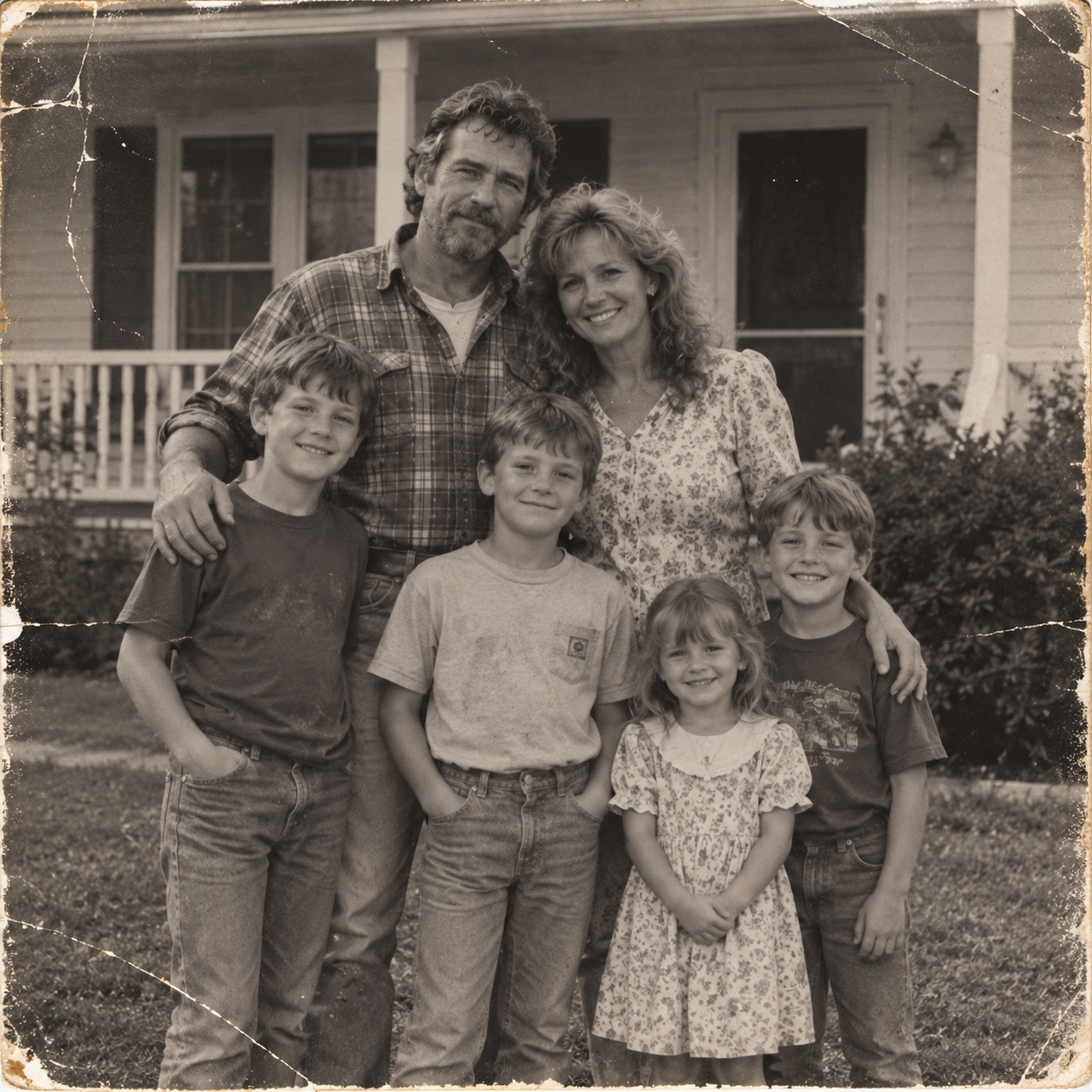
My dad spent $60 on a "Parkinson's gummy" his golf buddy told him about, and I was ready to throw it in the trash myself. He's been freezing in doorways, losing his words, and napping by noon for three years, and I wasn't about to let some internet company take advantage of him. Then I read the lab report. And then I read the ingredient list. And that's when I really got worried, for a reason I'll explain in a minute. Before you scroll past this thinking it's another ad, hear me out. I'm not here to talk you into buying anything. Honestly, I'd rather you didn't take my word for it at all. I'm writing this because when I was trying to prove this thing was garbage, I found a whole lot of people online who were exactly like me. Sons. Daughters. Husbands. Wives. Skeptics. People who'd been burned, and people like me who work in healthcare and roll their eyes at every supplement that walks through the door. And I figure some of you are reading this right now with your arms crossed, looking for the catch. Good. Keep them crossed. Read the whole thing. Then go do your own digging. And if I'm wrong, come back here and tell me in the comments. I don't think I am. But I'll be waiting either way. My name is Nicole. I'm 46. I've been an ER nurse for 20 years. Do you know how many patients I've seen come into my emergency room with a Ziploc bag full of supplements? Hundreds. Maybe thousands. "I take turmeric for my joints, and this for my liver, and this one my neighbor sells." Half of them can't tell me what's in it. Some of them land in my ER because of what's in it. I have zero patience for supplement marketing. Zero. So in our family, when it comes to my dad and his Parkinson's, I'm the one who says no. Loudly. My dad's name is Jerry. He's 71. He sold insurance for 35 years, and he was the kind of insurance man people actually liked. He knew every client's kids' names. He sent Christmas cards to all 400 of them, handwritten. But what Dad really loved was golf. He played every Saturday for 40 years with the same three guys. He had a five handicap at his best. He could sink a ten-foot putt with his eyes closed. He taught me to putt on the living room carpet with a coffee mug for a hole. He was diagnosed with Parkinson's three years ago. His neurologist put him on Carbidopa-Levodopa. The tremor in his right hand calmed down pretty fast. At every appointment since, the doctor says he's doing well. "Good response to medication." That's the part the doctor sees in 15 minutes every six months. Here's what I see. He freezes. Doorways, mostly. He walks toward the kitchen and right at the threshold, his feet just stop. Hand on the doorframe. Three seconds. Five. Sometimes ten. His whole body leaning forward while his legs refuse the signal. I know exactly what that is clinically. Freezing of gait. I've charted it a hundred times on other people's parents. It's different when it's your own dad standing in your mom's kitchen doorway, white-knuckling the frame. He loses his words. A man who could talk a stranger into a life insurance policy in 20 minutes now stops in the middle of a sentence and just hangs there. "Nicky, hand me the… the… you know." He points. He gets frustrated. He waves his hand and says, "Never mind." He naps. He was a 5:30am guy his whole life, on the first tee by 7 every Saturday. Now he's asleep in his recliner by noon. Every day. Mouth open. Golf Channel on. Remote sliding off his lap. And he quit golf. His Saturday foursome. Forty years. His hands got too stiff and slow on the club. He froze on the 9th green one morning, standing over a putt, and couldn't make his arms move. His buddy Frank had to walk him to the cart. He hasn't been back to the course since. His clubs are in the garage. His putter is leaning against the wall by the back door, right where he left it. Every six months, my mom takes him to the neurologist. Every six months, the doctor says the symptoms are "part of the progression," and bumps the dose up a little. And every six months, Dad's a little further away. Now here's the ugly part about me. When Dad got diagnosed, the vultures came out. The ads started showing up on his phone. On his Facebook. In his email. "Reverse Parkinson's naturally." "What neurologists won't tell you." "This one weird trick doctors hate." And Dad, bless him, he got scared. He's losing himself one doorway at a time. And somebody on the internet is promising him a way out. Turmeric capsules. A "brain restore" formula. Mushroom powder that was supposed to "regrow neurons." Fish oil. A copper bracelet. And a bottle of something from a company with no address that I took one look at and threw straight in the garbage. Every single time, I was the one who shut it down. I'd come over on my day off, see a new bottle on the counter, and go through it like a med reconciliation at work. What is this? Who makes it? What's actually in it? How much? Has it been tested? Does it interact with your medication? Almost every time, the answer was "nobody knows." I'd sit Dad down and give him the nurse lecture. He'd get quiet. And I'd feel like the worst daughter alive. But I'd rather feel like that than see him in my ER. Finally, I made him promise. Nothing goes in his mouth that I haven't looked at first. He promised. Three months ago, I came over for Sunday dinner and found a jar on the kitchen counter next to his pill organizer. Xara 10-in-1 Shilajit Gummies. Dad was asleep in his recliner. It was 12:30. When he woke up, I was standing over him holding the jar. "Dad." He got that look. The same look my patients get when I ask how much they really drink. "Frank's wife gave it to him," he said. "For his Parkinson's. Frank says it's helping. I just ordered one jar, Nicky. Sixty bucks." Frank. His golf buddy. Frank had Parkinson's too. Diagnosed a year after Dad. "You promised," I said. "I know." "Have you taken any?" "Not yet. I was waiting for you. I knew you'd have a fit." I wasn't mad at him. I was mad at whoever was selling this. And I was going to take it apart. I told him, "I'm going through this one. And if it's garbage, it's going in the trash." He said, "Fair enough. But you have to really look." So I sat down at my mom's kitchen table with my phone and my reading glasses, and I did what I do with every unknown substance a patient brings into my ER. I started with the label. First, I checked whether they'd even tell me what was in it. Most of the junk Dad had bought hid behind a "proprietary blend." That's a red flag in my world. If you won't tell me the dose, I'm not giving it to my patient. Xara listed every ingredient. Pure Himalayan shilajit. KSM-66 ashwagandha, which I knew from work as one of the more studied forms for stress and sleep. Black pepper extract, which helps absorption. A handful of others. And kaunch bean. That's where I stopped cold. Kaunch bean, also called Mucuna, naturally contains L-dopa. The same active ingredient that's in my dad's Carbidopa-Levodopa. This is exactly the kind of thing I see go wrong in my ER. Somebody stacks a supplement on top of a prescription without anybody checking, and nobody knows what happened until they're on a stretcher. So right there, I made a rule. Nobody was touching this jar until Dad's neurologist looked at that label with his own eyes. Non-negotiable. Second, I checked whether it had been tested. The big danger with shilajit is that cheap stuff can come contaminated with heavy metals. I've read the case reports. Xara had a third-party lab report right on the product page. Dated. Testing for heavy metals. I read the whole thing. Then I looked up the lab. It was a real, accredited lab. That bugged me. In 20 years of looking at patients' Ziploc bags, I can count on one hand the supplements that came with a lab report. Third, I went looking for real-world results. Not the reviews on their own website. Those can say anything. I went to Parkinson's forums. Caregiver groups. Facebook comment sections. Reddit. And I read like I read a chart. Looking for patterns. Looking for red flags. And this is where it got strange. I kept finding people exactly like me. A pharmacist's wife in Texas who said she'd "never let a supplement in the house" until her husband's symptoms kept sliding on his medication. A daughter in Ohio who bought it for her dad fully planning to return it. She'd already printed the label. A son in Arizona whose comment started with, "I came here to warn people." It ended with, "I was wrong, and I'm glad I was." Skeptic after skeptic. People who'd been burned. People in healthcare. People who went in looking for the catch. And one after another, they said the same kinds of things. Nobody said "cure." Nobody said "miracle." Which, as a nurse, honestly made me trust it more. Real results are usually modest. Miracles are a marketing word. "The afternoons came back first." "He's finishing his sentences." "She's getting through doorways easier." "My dad seems like himself again." Three hours. A whole page of notes in my phone. A lot less certainty than when I sat down. So I went back to the physiology. Why would this do anything when the turmeric and fish oil and mushroom powder didn't? Here's how I'd explain it to a patient's family in the ER, in plain English. Dad's medication does one job. It replaces the dopamine his brain can't make enough of anymore. That's why his tremor calmed down. That's what his neurologist measures. And by that measure, he's "doing well." But the brain doesn't run on dopamine alone. It runs on energy. Every word Dad reaches for. Every step through a doorway. Every hour he stays awake instead of crashing at noon. A big part of that energy depends on minerals. Magnesium, zinc, selenium, and a long list of trace minerals we almost never test for. In a lot of people with Parkinson's, that side runs low. And it's not part of the standard neuro follow-up. In three years, nobody had ever drawn a single mineral level on my dad. I checked his chart in the patient portal. Not one. I started thinking of it as two tanks. The medication keeps one of them full. The dopamine. Nobody was touching the other one. The energy tank. The one that keeps him sharp, moving, and in the conversation. That explained a lot. It explained why he was "doing well" on paper and still fading in his recliner. It also explained why the turmeric and fish oil never did anything. Most of what you swallow never gets where it needs to go. Turmeric, for example, is notoriously poorly absorbed. Most of it goes straight through you. What makes shilajit different, from what I could find, is that it's naturally loaded with trace minerals, and it's rich in fulvic acid, which helps carry those minerals into your cells so your body can actually use them. It's a resin that seeps out of rock in the Himalayas, and people there have used it for centuries for strength and mental clarity. Minerals and delivery, in one. Okay. That was a real rationale. That's more than I could say for the copper bracelet. But a rationale isn't proof. I don't give a patient anything because the mechanism sounds good on paper. So I made Dad a deal. My terms. Step one, he takes the ingredient list to his neurologist. I'm coming with him. If the doctor says no, the jar goes in the trash, no arguments. Step two, if the doctor says yes, he takes one gummy a day, every day, for 60 days, alongside his regular medication. Nothing else changes. Not his dose. Not his diet. Nothing. Step three, I chart it. Honest notes, like a nursing assessment. And if I don't see anything real by day 60, we use the 60-day money-back guarantee, and he's done with internet supplements for good. Dad stuck out his hand and said, "Deal, Nurse Ratched." I went with him to the neurologist that Tuesday. I handed the doctor the printed ingredient list and pointed straight at the kaunch bean. The neurologist read the whole label. He said he appreciated that we brought it in, especially because of the kaunch bean. He looked at Dad's current dose, said it was fine alongside his medication, and told us to keep him posted. Dad started the next morning. One gummy after breakfast with his coffee. Here are my notes. I wrote them like I'd chart them at work. Day 1: Pt took one gummy with coffee, 0800. No change observed. Asleep in recliner at 1215. Expected. Day 8: Pt awake at 1430 when I called. Watching golf. Noted. Could be a good day. Day 11: Mom reports pt awake at 1500 two days in a row. Pt called me on his own, unprompted, to complain about a missed putt on TV. 18-minute call. Noted. Day 15: Pt states bowel movements "back to normal" for first time in over a year. Mom confirms. Noted. I did not expect that one. Day 20: Pt completed newspaper crossword. In pen. Letters fit in boxes. He looked up at me and said, "Seven letters. 'Doubting nurse.' Starts with S." Answer: skeptic. He laughed at his own joke. I had to go stand in the bathroom for a minute. Day 26: Pt told a full story at dinner about selling a policy to a man who paid him in fresh-caught walleye in 1987. Every detail. No word-finding difficulty observed. I've heard that story 50 times. Have not heard him finish it in two years. Day 31: Observed pt ambulate from living room to kitchen. Approached doorway. I was watching. I know exactly what pre-freeze looks like. The hitch. The hand reaching for the frame. Didn't happen. He walked through. Like it was a doorway. He didn't notice. I did. I went out to my car and sat there for a while. Day 38: Pt went to garage. I followed. He picked up his putter from beside the back door. Put a coffee mug on its side on the garage floor. Lined up a putt. His hands still had a little tremor. He took a long time setting up. He made it. He looked over at me in the doorway and said, "Just like the living room, Nicky." I didn't say anything. I couldn't. Day 45: Neurology follow-up. I went. For the first time in three years, Dad did most of the talking. Told the doctor about the afternoons, the crossword, the putting in the garage. The neurologist looked at him for a long moment and said, "Well, Jerry, whatever you're doing, keep doing it." Day 52: Frank picked Dad up on a Saturday morning and drove him to the course. Not to play. Just to ride in the cart for nine holes. Mom said Dad came home at 1pm, sunburned, and didn't take a nap. Day 60: Assessment complete. I stopped charting. I didn't need to anymore. Now let me be as straight with you as I'd want someone to be with me. As a nurse, I'm not going to oversell this. My dad still has Parkinson's. He still takes every dose of his medication. His right hand still has a tremor. He still freezes sometimes, especially in the evening, especially when he's tired. He still naps some afternoons. He's 71. This didn't cure anything. Nothing does. If anyone ever tells you something cures Parkinson's, that's your red flag. Walk away. What I'm telling you is that my dad is more here than he's been in two years. He's awake for his afternoons. He's finishing his sentences. He's doing the crossword in pen. He's riding in the golf cart with Frank on Saturdays. After 20 years of looking at what people bring into my ER in Ziploc bags, I know the difference between marketing and real results. I went in looking for the reason to throw this in the trash. I didn't find one. I found my dad. So here's why I'm writing this. When I was digging, I found a lot of people online just like me. Skeptics. Sons and daughters and spouses who'd been burned. Some of them work in healthcare like me. Some had tried it and come back to say they were wrong. Some were still standing at the edge, arms crossed. This is for the ones still at the edge. I'm not asking you to trust me. I wouldn't trust me either. I'm asking you to do exactly what I did. Read the label. Every ingredient. Look each one up. Read the lab report on their page and look up the lab. And take the ingredient list to the neurologist before anybody takes a single gummy. Point at the kaunch bean. As a nurse, I'm telling you that part is not optional. Then go find the reviews that aren't on their website. Read the forums. Read the skeptics. Then, if your neurologist says it's okay, give it the full 60 days alongside the medication, like we did. Keep notes. Honest ones. If it doesn't do anything, send it back. The guarantee is real. I read the terms. I read the terms on everything. And then come back here and comment. If I'm wrong, tell me. Tell everybody reading this. I'll leave it up. But I've looked at this every way I know how to look at something. And I'm pretty sure you're going to find the same thing I did. I'll be waiting for your comment. I'm betting it's going to be a testimonial. Here's where it is, so you can start your own digging: https://www.xarashilajit.com/products/xara-shilajit%C2%AE-pure-shilajit-wellness-formula Everything I checked is on that page. The full ingredient list. The lab report. The 60-day guarantee. They're doing buy 2, get 1 free right now, which is what we got so Dad had enough for the full 60-day trial without running out in the middle. P.S. Dad read this over my shoulder at Mom's kitchen table. When he got to "Nurse Ratched," he laughed so hard he had to set his coffee down. When he finished reading, he didn't say anything for a minute. Then he got up, walked through the kitchen doorway without stopping, came back with his putter, and leaned it against the table next to me. He said, "Tell them to take it to their doctor first. You told them, but tell them again." So. Dad says take it to your doctor first. P.P.S. If you're the one in your family who works in healthcare, the one who always has to say no, I know that job. You've seen too much to trust anything. That's not wrong. Just make sure you're skeptical in both directions. I almost threw away the one thing that gave my dad his afternoons back because I was sure I already knew the answer. \~ Nicole, RN, 46, Louisville, KY
Engagement over time
Not enough history yet to show a trend.