Dr. Lisa Park, Naturopathic MD
50% OFF — it wasn't the calories
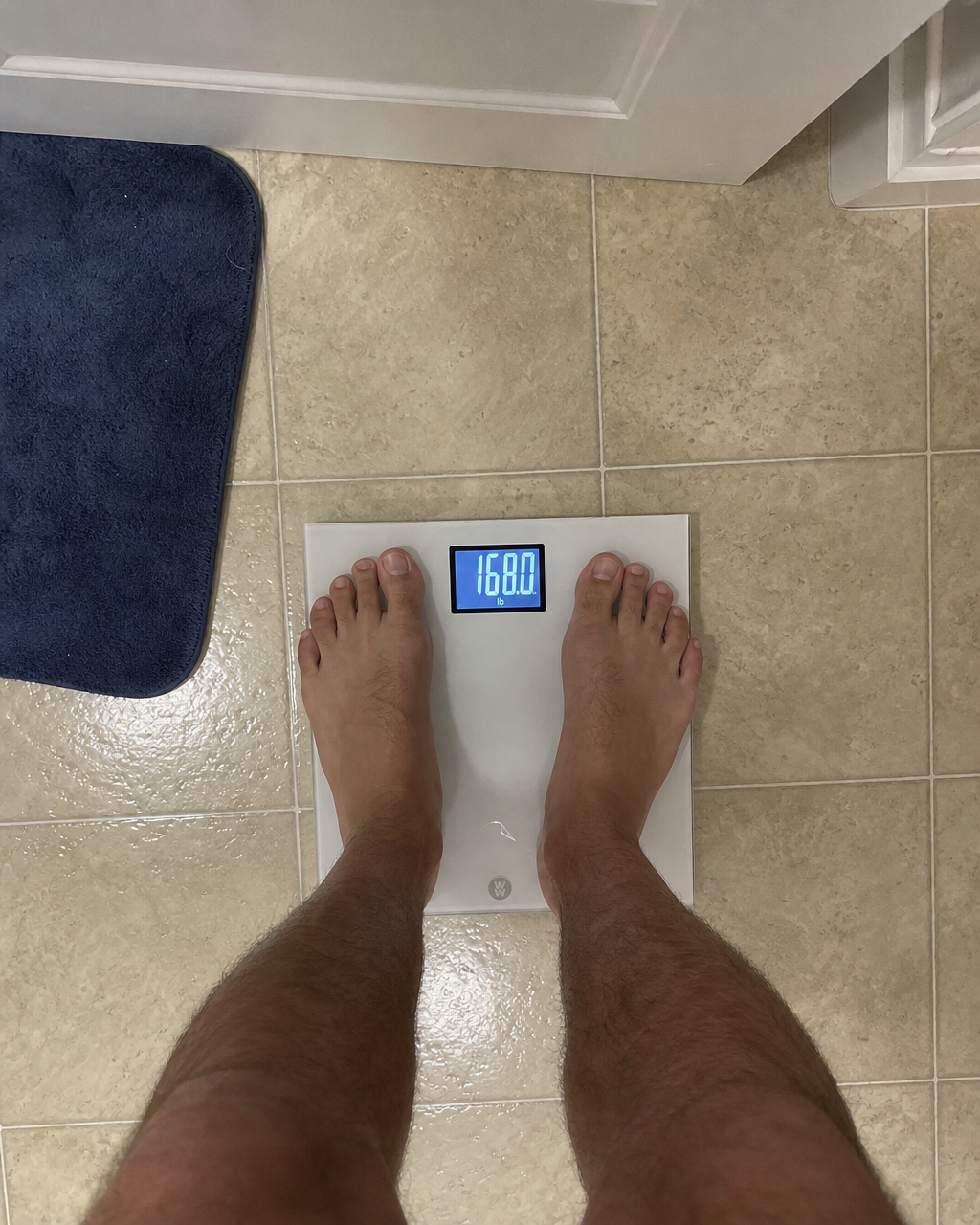
Every PCOS patient I see has the same food diary. 1,200 calories. And they're GAINING weight. I need you to read this carefully because what I'm about to say goes against everything you've been told about weight loss. My name is Lisa. I'm a naturopathic physician. I've been in practice for 14 years, and for the last nine of those years I've specialized in one thing: women whose bodies stopped responding to the rules. The women who do everything right and get punished for it. I see about 40 patients a week. And at least 15 of them hand me some version of the same food journal. Monday: egg whites, spinach, grilled chicken, steamed broccoli, brown rice. 1,187 calories. Tuesday: Greek yogurt, turkey wrap, salmon, sweet potato. 1,204 calories. Wednesday: protein shake, salad, lean ground turkey, zucchini noodles. 1,156 calories. Perfect. Disciplined. Meticulous. And every single one of them is gaining weight. Not 2 or 3 pounds. 8, 12, 15 pounds in a year. While eating less than their teenage daughter. I used to think they were miscounting. I'm ashamed of that now. When I was in school they taught us the calorie model. Calories in, calories out. Thermodynamics. Simple math. If someone is gaining weight on 1,200 calories, they must be snacking and not logging it. Eating in the car. Finishing their kids' plates. That's what I believed for the first five years of my career. Then I met Priya. Priya was 34. Software engineer. PCOS diagnosis since she was 22. She sat in my office with a binder. Not a journal. A BINDER. Every meal photographed. Every calorie weighed on a food scale. Every macro tracked to the gram in an app for 14 months straight. 1,150-1,250 calories a day. 120g protein. 30 minutes on the Peloton five days a week. She gained 19 pounds. I looked at that binder and I couldn't explain it. Not with anything I'd been taught. She wasn't cheating. She wasn't lying. The math was right there in black and white and it didn't add up. I told her I'd look into it. She smiled and said "That's what the last three said." She'd seen an endocrinologist who put her on Metformin. Made her nauseous for four months. Lost 3 pounds. Gained back 5. She'd seen a gynecologist who told her to lose weight to manage her PCOS. She said "I'm trying" and he said "try harder." She'd seen a registered dietitian who put her on 1,000 calories. ONE THOUSAND. She was so hungry she couldn't sleep. Lost 4 pounds in two weeks. Gained 7 back in the next three. And she'd heard every variation of the same sentence from every professional she'd paid to help her: "You must be eating more than you think." After Priya left my office that day I went home and couldn't stop thinking about that binder. Because she wasn't the only one. I had a patient named Jessica. 41. Teacher. PCOS. 1,300 calories, gym 4x/week. Gaining. A patient named Dana. 29. Nurse. PCOS. Intermittent fasting 16:8 for eight months. Started at 168. Now 181. A patient named Maria. 37. Stay-at-home mom. PCOS. Tried keto for six months. Lost 11 pounds the first month. Stalled completely. Gained it all back plus 4 more. Same food diaries. Same discipline. Same weight going the wrong direction. Something was wrong with the model. Not with these women. That's when I started reading outside my training. Not the nutrition textbooks. Not the FDA guidelines. The endocrinology research. The metabolic studies from the last decade that somehow never made it into clinical practice. And what I found kept me up at night. Here's what nobody told these women: When you have PCOS, your body produces 3 to 5 times more insulin than a normal body in response to the same food. The same bowl of oatmeal that gives your friend steady energy sends your insulin through the roof. And here's the part that changes everything: Insulin is a STORAGE hormone. When insulin is elevated, your body is in storage mode. It is chemically, hormonally, physically INCAPABLE of burning stored fat. It doesn't matter if you eat 1,200 calories. It doesn't matter if you eat 800. When insulin is high, the vault is locked. Your body will break down muscle for energy before it touches stored fat. So what happens when you slash calories to 1,200? Your body panics. Cortisol spikes. Cortisol tells your liver to dump glucose into your blood. Glucose triggers more insulin. More insulin locks more fat. You're starving yourself INTO weight gain. The calorie model works fine for someone with normal insulin function. For a woman with PCOS? Calorie restriction is like trying to drain a bathtub with the faucet running full blast. You can scoop all day. The water's still rising. I went back to Priya and told her everything. I told her calorie counting wasn't just failing her. It was making her worse. I told her the 1,000-calorie diet that dietitian put her on probably triggered the worst insulin cascade of her life. I told her Metformin targets insulin sensitivity but mainly in muscle tissue. It barely touches the liver, which is where most of the damage is happening. I told her the gynecologist who said "try harder" had no business giving nutritional advice. She was quiet for a long time. Then she said: "So what am I supposed to do?" That's the question I'd been researching for three months. And I didn't have a clean answer yet. But I knew the direction. The problem isn't calories. The problem is insulin. Support insulin sensitivity and the body starts releasing stored fat on its own. Without starvation. Without the Peloton at 5AM. Without the guilt and the food scales and the binder. I started looking at what actually targets insulin resistance at the cellular level. Not Metformin. Not another diet protocol. I found three compounds in the research that kept showing up together. Berberine — activates AMPK, the enzyme that tells your cells to absorb glucose without needing as much insulin. Some studies show it performs comparably to Metformin without the GI side effects. Benfotiamine — a fat-soluble form of vitamin B1 that helps protect blood vessels from glucose damage. Most people have never heard of it. It's been used in Europe for decades. Ceylon Cinnamon — not the grocery store kind. The real extract. Multiple studies show it supports insulin sensitivity and healthy fasting glucose levels. The problem was finding them together. In the right forms. At clinical doses. Not the watered-down versions on Amazon with 47mg of berberine when the studies used 500. I tried combining them myself. Ordering from three different suppliers. Having Priya take six capsules a day from different bottles. It was a mess. She did it for three weeks and said she felt like she was running a pharmacy out of her kitchen. Then one of my colleagues — Dr. Amara, a functional medicine physician in Seattle — mentioned she'd been recommending a formulation to her insulin resistance patients that had all three. YOLO Daily Sugar Control. I was skeptical. I'm always skeptical of branded supplements. I asked her to send me the label. Berberine 500mg. Benfotiamine 150mg. Ceylon Cinnamon extract standardized. Chromium. Banaba leaf. Every ingredient at clinical doses. The exact forms I'd been researching. I still hesitated. But I gave Priya the information and told her to make her own decision. She started taking it August 14th. I know the exact date because she wrote it in the binder. Week 1: Her fasting glucose dropped from 112 to 98. She'd never been below 105 in four years of testing. Week 2: She texted me on a Tuesday night. "Dr. Park. I'm not hungry at 3pm for the first time in years. Like, genuinely not hungry. Not willpower. My body just... isn't asking." That was the insulin. When insulin drops, the hunger signals normalize. Your body can finally access stored energy instead of screaming for more food. Week 3: Down 4 pounds. She hadn't changed her diet. Hadn't increased exercise. She'd actually INCREASED her calories to 1,600 because I told her to stop starving herself. Eating more. Losing weight. The opposite of everything she'd been told for 12 years. Week 6: 11 pounds down. Fasting glucose 91. Her endocrinologist ran her bloodwork twice because he thought the lab made an error. She brought the binder to my office. Flipped to the last page. Drew a line under August 14th. "Everything before this page was me fighting my own body," she said. "Everything after is what happens when you stop." I cried. In my office. In front of a patient. I'm not proud of it but I'm not sorry about it either. Because Priya was the 47th woman I'd watched torture herself with a calorie deficit that was never going to work. And she was the first one I'd actually been able to help. Since then I've recommended YOLO Daily Sugar Control to over 200 of my patients with insulin resistance. Not all of them have PCOS. Some have pre-diabetes. Some have that stubborn belly fat that doesn't respond to anything. Some are on Metformin and looking for something that doesn't destroy their stomach. The results aren't identical for everyone. Some respond in the first week. Some take three or four weeks to see the glucose numbers shift. But the pattern is consistent enough that it's no longer a hypothesis in my practice. It's a protocol. Rachel. 42. PCOS since 26. Stopped counting calories. Started YOLO. Down 16 pounds in 10 weeks. First normal period in 7 months. Keisha. 38. Pre-diabetic. A1C went from 6.1 to 5.6 in 90 days. Her doctor couldn't believe the numbers. Danielle. 45. No PCOS but severe sugar cravings. Said by day 5 she walked past the vending machine at work without even looking at it. Jennifer. 31. PCOS. Gained 40 pounds in two years despite running half-marathons. Down 22 pounds in four months. Said "I finally feel like my body is on my side." If you have PCOS and you're reading this while eating your 1,200-calorie dinner that you hate, I need you to hear me: It's not your fault. It was never your fault. Your body is not broken. The advice was broken. The calorie model wasn't designed for women with insulin resistance. It was designed for people with normal metabolic function. And every professional who made you feel lazy or dishonest for gaining weight on a starvation diet owes you an apology they'll never give. You don't need less food. You need less insulin. 🛡️ 50% OFF — check if YOLO Daily Sugar Control is still in stock: P.S. — If you start this, eat real food. 1,400-1,800 calories. Protein at every meal. Stop weighing yourself daily. Give it three weeks before you expect anything. The glucose numbers will move first. The scale follows. P.S.S. — There's a 365-day money-back guarantee. I asked the company about that because I thought it was a marketing gimmick. It's not. They told me less than 3% of customers ever use it. Draw your own conclusions. P.S.S.S. — They're a small company. I've had patients tell me it was out of stock when they went to reorder. If the link works, it's available. If it doesn't, check back in a week.
Engagement over time
Not enough history yet to show a trend.