Nerves & Tremor support community
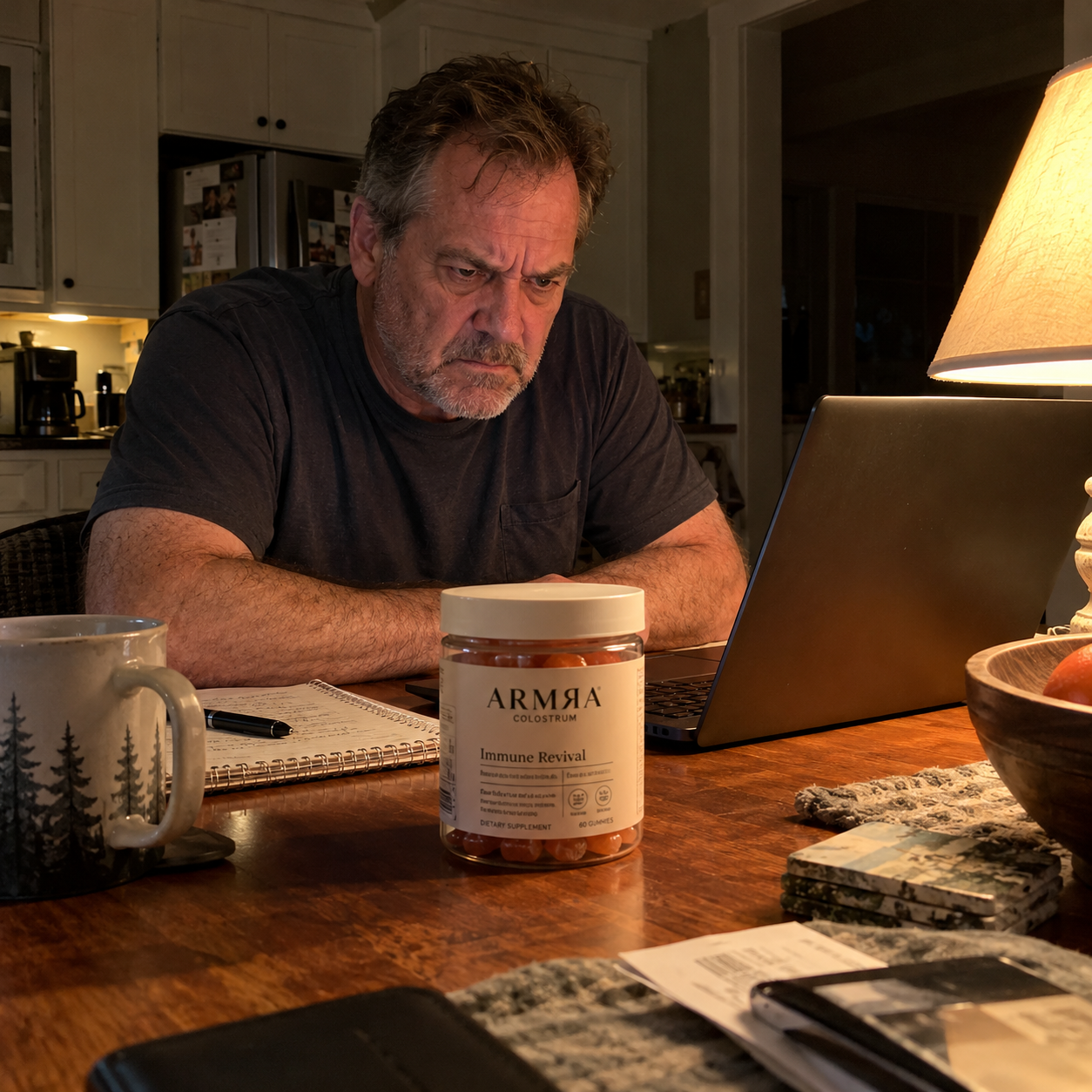
Almost lost him..
Every Parkinson's patient I know has a cabinet full of turmeric, fish oil, and CoQ10, and not one of them has gotten better. I'm about to tell you why, and I don't give a f\*ck whose product I'm calling out. I know because I sold it to them. For eleven years, I worked the counter at a health food store in our town. The kind of place with wooden shelves, a little bell over the door, and a back wall lined floor to ceiling with supplement bottles. And every single week, Parkinson's families came through that door. Wives with a list written on an envelope. Daughters on the phone with their mom, reading labels out loud. Husbands holding their wife's elbow while she shuffled down the aisle, asking me, "What's good for Parkinson's?" And I'd walk them over to the back wall and tell them. Turmeric, for inflammation. Fish oil, for the brain. CoQ10, for energy. Magnesium. B12. Vitamin D. Lion's mane. A "neuro support" formula with a picture of a glowing brain on the label, $89 a bottle, which our owner made sure we recommended first. And when shilajit got popular, a cheap brand that came in a plastic tub and smelled like hot asphalt. I believed in every single one of them. I wasn't lying. I'd read the little cards the distributors sent us. I thought I was helping. Eleven years. Hundreds of Parkinson's families. Thousands of bottles rung up at my register. And not one person ever came back in and said, "The turmeric is working." Not one. I'm going to tell you why. I'm going to tell you how I found out. And I'm going to tell you what finally did make a difference, for my own husband, after every bottle I ever sold failed him too. But first I have to tell you about Mr. Kowalski. Because Mr. Kowalski is why I quit that job, and why I'm writing this. Albert Kowalski and his wife Irene came into my store every other Tuesday for six years. He was diagnosed with Parkinson's on February 3rd, 2018. Irene told me the day it happened. She came in by herself, crying, and asked me what she should buy. I loaded her up. Turmeric. Fish oil. CoQ10. The neuro formula. I wrote it all down on a little card for her so she'd remember. She came back every two weeks for six years to refill that card. By the end, Mr. Kowalski was taking eleven bottles a day. I'd rung up every single one of them. Albert Kowalski died on January 11th, 2024, at 3:15 in the morning. Irene was holding his hand. He hadn't recognized her in two months. He was 77. Diagnosed at 71. Six years on his medication. Never missed a dose. Took every bottle I ever handed Irene. Walked with his cane to the end of their street every morning, even in winter. Did everything right. Three weeks after the funeral, the bell over the door rang, and Irene walked in. She had a brown grocery bag in her arms. She set it on my counter. It was full of bottles. Half of them still had the safety seals on. Turmeric. Fish oil. The $89 neuro formula. Some of them I recognized by the sticker. My handwriting was on the price tags. "I don't need these anymore," she said. "Can I get a store credit?" Then she looked at me with her eyes all red, and she said the thing I'll hear for the rest of my life. "Carla, did any of it ever do anything?" I didn't have an answer. I gave her the store credit. She never came back to use it. And I knew exactly how she felt. Because by then, I had the same bag of bottles at home. For my own husband. If your husband, your wife, your father, your mother, or you have Parkinson's, please read all of this. I know it's long. I know you're scrolling. I know you've got somebody to take care of and a pill organizer to fill. But I spent eleven years behind that counter selling people hope in a bottle, and I'd give anything to go back and tell every one of them what I'm about to tell you. I can't. So I'm telling you. Every night now, I see the same posts in the Parkinson's groups on Facebook. "What supplements are you giving your husband for Parkinson's?" And then 200 comments. "Turmeric!" "Fish oil!" "CoQ10, high dose!" "Lion's mane!" "Magnesium glycinate!" And it makes me sick to my stomach. Because I know exactly what happens next. They'll drive to a store like mine. Some girl at the counter, some girl like I was, will walk them to the back wall. They'll spend $200. They'll line it all up on the kitchen counter. And six months later, their husband will still be asleep in his recliner by 1pm, still losing his words, still freezing in the doorway. And the neurologist will have raised his dose again. And they won't understand why. I'm going to tell you why. My husband's name is Joe. He's 63. He ran his own diesel repair shop for 30 years. Semis. Tractors. School buses. If it had a diesel engine, Joe could make it run. Truckers from three counties over used to call him before they called the dealership. He came home every night smelling like diesel and coffee with grease under his fingernails that never fully washed out. His work shirts all had "JOE" stitched over the pocket in red thread. There's still one hanging on the hook by our back door. Dark blue, faded, with a grease stain on the sleeve he swore would come out. I wash everything else. I can't wash that one. If I wash it, it won't smell like him anymore. Like the old him. Joe was diagnosed with Parkinson's on September 15th, 2020. He was 59. I noticed the first change before Joe ever admitted anything was wrong. His left hand. Just a little hesitation when he'd reach for things at supper. He started passing me plates with his right hand. One night I watched him pick up his coffee, set it down, then switch hands like he'd changed his mind. I asked him, "What's going on with your hand?" He told me he'd pinched a nerve at the shop. A few days later, his shop foreman, Danny, called me. "Carla, Joe dropped a socket wrench into an engine block three times today. His hand's not right." I made the appointment. The neurologist looked at the scan and confirmed it in about two minutes. Early-stage Parkinson's. Carbidopa-Levodopa. Stay active. Eat well. Reduce stress. See you in six months. Joe didn't say a word the whole drive home. Forty-five minutes. A man who talked nonstop about torque specs and fuel injectors, silent. When we got home, he sat down at our kitchen table. Same table where we'd eaten every supper for 34 years. "Carla," he said. "What do we do?" And I said the dumbest thing I've ever said in my life. "Don't worry. I work at a health food store. I'll bring home everything that helps." He started the Carbidopa-Levodopa that night. Within two weeks, the tremor calmed down. He was back at the shop. At the six-month appointment, the neurologist said he was doing great. Stable. That was the word. And I started bringing home my cabinet. With my employee discount. Month two. Turmeric. The good kind, the one I always told customers about. $38, or $30 with my discount. Month three. The fatigue. He'd come home from the shop and fall asleep in his recliner by 5. Then by 3. Then he stopped going to the shop in the afternoons at all. I brought home CoQ10. High dose. The one I'd recommended to a hundred Parkinson's families. $52. Month five. The bathroom. Forty-five minutes every morning. He'd come out pale and quiet. I found laxatives in his truck. He was so embarrassed. I brought home magnesium. $24. Month seven. The fog. He'd be telling me about a job at the shop and just stop. The word would vanish. Simple words. "Bolt." "Hose." "Thursday." His eyes would search around the kitchen like he'd dropped something. I brought home the triple-strength fish oil. The one I always said was best for brain fog. $45. Month nine. The freezing. He stood up from the supper table one night and his feet wouldn't move. Stuck. Four seconds. Seven. His whole body leaning forward like it wanted to go. He grabbed the counter and held on until his legs came back. I was at the sink. I watched him in the window reflection and cried as quietly as I could. The next day, I brought home B12. $19. Month twelve. First dose increase. We told the neurologist everything. The tiredness. The bathroom. The fog. The freezing. "All common with Parkinson's," he said. And raised the dose. See you in six months. In the truck, Joe said, "He didn't even look at me, Carla." The next day, I brought home the $89 neuro formula. The one our owner told us to push. I'd sold it to Irene Kowalski for Albert. I'd sold it to dozens of families. Month fifteen. Second dose increase. Same "common with Parkinson's." I brought home lion's mane. I brought home a tub of that cheap shilajit. Joe took one bite and spit it in the sink and said, "That tastes like a burnt-out turbo." Month eighteen. Joe sold the shop. He couldn't keep up. His hands wouldn't do the fine work anymore. He froze in the middle of the shop floor one afternoon, right next to a lift with a semi on it, and Danny had to come take his arm and walk him to a chair. He sold it to Danny. Thirty years. He signed the papers at our kitchen table with a shaky hand. Then he went outside and sat in his truck in the driveway for two hours. That was the first piece of him I lost. Month twenty-two. He stopped driving. He froze at a green light on Highway 30, foot stuck on the brake. A semi behind him laid on the air horn. The driver was one of Joe's old customers. He got out, walked up, recognized Joe, and drove him home himself. Joe hung his keys on the hook next to his work shirt. They're still there. That was the second piece. Month twenty-six. Christmas. Our grandson, who's eight, is obsessed with trucks, just like his Papa. He came running in with a toy semi and climbed up in Joe's lap. "Papa, tell me how a diesel engine works again!" Joe had explained it to him a dozen times. Compression. Ignition. Joe would make the engine noises and our grandson would laugh until he couldn't breathe. Joe opened his mouth. And what came out was so slow and quiet and jumbled that our grandson couldn't understand him. He looked up at me. "Grandma, why is Papa talking like that?" I said, "Papa's just tired, honey." That was the third piece. By then, my cabinet at home had sixteen bottles in it. Every single one from my store. Every single one I'd recommended to other families. I'd spent over $3,000, even with my discount. And Joe was worse than he'd ever been. Month thirty. Third dose increase. Joe stood by the exam room door with his hands in his pockets. The neurologist typed, adjusted, printed, and said, "You're holding steady, Joe." In the truck, Joe said the thing I hear every night. "Carla, I'm going away. Little bit every day. And none of it's working. Not the pills. Not all that stuff you bring home from the store. None of it." All that stuff you bring home from the store. I pulled over. I held his hand. His left hand. It was shaking. And I promised him I'd find out why. Joe's father had Parkinson's too. Diagnosed at 62. By the end, Joe's mother was spoon-feeding him, bathing him, helping him to the bathroom at 3 in the morning. She was 4'11". Joe's dad had been a 230-pound railroad man. He died in a nursing home at 70. Joe was 40. He never talked about it. But I'd see him looking at his own hands sometimes, and I knew who he was seeing. That night, after Joe went to bed, I lined up all sixteen bottles on the kitchen table. And then I did something I'd never once done in eleven years behind that counter. I actually looked into whether any of it worked. Not the little cards the distributors sent. Not the labels. The actual research. I read until the sun came up. And I found out things that made me so ashamed I had to go sit in the bathtub with the lights off. Here's what I found. First, the medication. The Carbidopa-Levodopa replaces the dopamine Joe's brain can't make enough of anymore. That's its job. It calms the tremor. That's the one thing the neurologist checks. And that part was working. But there's another side. The side I was watching every day across the kitchen table. The energy. The clarity. The sleep. The gut. The walking. The talking. The being there. The Joe-ness of Joe. That side had been sliding the whole time, and nothing he was taking was holding it up. Two things were dragging it down. The first is wear and tear. Free radicals building up in the brain day after day, like rust eating through an old engine block left out in the rain. The medication doesn't touch the rust. It replaces the dopamine while the rust keeps spreading. The second is minerals. The brain needs trace minerals to make energy, stay sharp, keep your mood steady, and sleep through the night. Magnesium. Zinc. Selenium. Dozens more. In a lot of people with Parkinson's, those run low. And in three years, Joe's neurologist never once tested him for a single mineral. It's not part of the standard visit. So the medication was holding one side. And I thought my back wall was holding the other. It wasn't. And here's why. I'm going to go down the shelf, the same way I used to walk customers down it. The turmeric. Most turmeric is barely absorbed. Your body flushes most of it before it ever does anything. Eleven years, I sold it as the first thing every Parkinson's family should buy. Most of it went straight through them. The fish oil. Fine for your heart. But it doesn't touch the mineral side at all. Not one trace mineral in it. I sold it as "brain support" because that's what the card said. The CoQ10. One ingredient trying to do a job that needs a whole team. It doesn't replace minerals. It doesn't do enough on its own. I sold it as the energy fix. The drugstore-grade magnesium. One mineral when the brain needs dozens. And the cheap kinds barely absorb. The B12. Most of the people I sold it to had never even had their levels checked. Neither had Joe. We were all guessing. The $89 neuro formula. I finally read the label all the way through with a magnifying glass. Mostly filler. A "proprietary blend" with no amounts listed for anything. Our owner made 60% margin on that bottle. That's why we pushed it first. And that cheap shilajit in the plastic tub. I looked into it. A lot of the cheap stuff is cooked at high heat, which can destroy what makes shilajit worth taking in the first place. And a lot of it is never tested for heavy metals. I'd sold tubs of that to sick people for two years. I'd never once seen a lab report. Sixteen bottles. $3,000. Almost none of it was getting where it needed to go. And what was, wasn't doing the job that actually needed doing. For three years, I'd been giving my husband things that never reached the part of him that was fading. And for eleven years, I'd been selling the same things to hundreds of families who trusted me. I sat in that dark bathtub and thought about Irene's grocery bag on my counter. And I thought about every envelope with a list on it. Every daughter on the phone. Every husband holding his wife's elbow in my aisle. I'd sent them all home with a bag of nothing. But in all that reading, I kept seeing something else. In the forums and the caregiver groups. Not a lot. But consistent. "I threw out everything else and just give my husband a good shilajit now. His neurologist asked what we changed." "His energy came back first. Then his words." "It's not a cure. But he's himself again." So I dug into the part those posts kept mentioning: fulvic acid. Fulvic acid helps carry trace minerals into your cells so your body can actually use them. That was the delivery piece all those bottles had been missing. Then I found where it naturally comes packed alongside those minerals: real shilajit. Not the plastic tub I used to sell. It's a thick, dark resin that seeps out of rocks high up in the Himalayan mountains. It's been used in traditional medicine for thousands of years for strength and a clear mind. Good shilajit is naturally loaded with dozens of trace minerals, not just one. It's rich in fulvic acid. And it's packed with antioxidants that help fight that rust. The minerals. The delivery. The rust. All in one. Everything my back wall of bottles was supposed to do and didn't. But it has to be the real thing. Pure. Tested. Not cooked to death. The one I found wasn't on my store's shelf. It was Xara 10-in-1 Shilajit Gummies. Pure Himalayan shilajit, standardized for fulvic-acid content. Third-party tested, with the dated lab report right on the product page. In eleven years, not one product on my back wall ever showed me a lab report. This one put it right up front. No fillers. No heavy metals. No proprietary blend. Ten ingredients listed plainly, including KSM-66 ashwagandha, CoQ10, and black pepper extract to help absorption. One gummy after breakfast. Instead of sixteen bottles. And it's a gummy. Joe had started choking on his morning pills. He could manage a gummy. I took the ingredient list to his neurologist before he took one. One of the ingredients, kaunch bean, naturally contains L-dopa, the same thing in his medication. I wanted the doctor to see it. He looked it over and said it was fine alongside Joe's current dose. That night, I put all sixteen bottles in a box in the garage. And the next Monday, I gave my two weeks' notice at the store. The owner asked me why. I told him I couldn't walk another Parkinson's family to that back wall. He told me I was being dramatic. I left anyway. Joe started one gummy every morning with his coffee. Alongside his Levodopa. Nothing else. Just the medication and the gummy. Week one. The bathroom. For two and a half years, every morning had been 45 minutes of misery. On day five, he came out in under ten minutes and stood in the hallway with the strangest look on his face. "Carla," he said. "That's the first normal morning I've had in two and a half years." I went out to the garage and stood next to my box of bottles and cried until I couldn't breathe. Week two. I came in from the grocery store at 2 in the afternoon and he wasn't asleep in his recliner. He was at the kitchen table with an old diesel repair manual open in front of him, reading it. Out loud. Arguing with it. He looked up. "This guy's got the injection timing wrong on the Cummins. Always did." I sat down at the table and laughed so hard I cried. Week three. Our grandson came over. He climbed in Joe's lap with his toy semi. "Papa, tell me how a diesel works again." And Joe told him. Compression. Ignition. Why diesels don't need spark plugs. He made the engine noises. Our grandson laughed until he fell off his lap onto the floor. Our daughter was standing in the kitchen doorway with her hand over her mouth. Week four. He stood up from the supper table. No freeze. Just stood up. Walked to the coffeepot. Poured a cup. Walked back. He looked at the cup in his hand. Then at me. "Huh," he said. Week five. Joe called Danny. He hadn't called the shop just to talk since the day he sold it. They stayed on the phone for almost half an hour talking about an engine Danny was rebuilding. Joe asked questions. Corrected him twice. Told him which torque spec to check before he put the head back on. When he hung up, he sat there holding the phone for a second. Then he looked at me. "Still know a few things," he said. Week six. Neurologist appointment. Same office. Same doctor. This time, the doctor looked at Joe. Really looked at him. Asked how he'd been, and Joe told him himself. Awake in the afternoons. Reading. Teaching his grandson about diesels. The doctor said, "Well, Joe, whatever you're doing, keep doing it." Joe said, "My wife quit her job and threw out sixteen bottles of junk she used to sell. Now I take one gummy." The doctor laughed. Then he wrote it down. Week eight. Danny called. He was having trouble with an old Detroit Diesel nobody at the shop could figure out. He asked if Joe would come take a look. I drove him over. Joe sat on a stool next to the engine, because he can't stand that long anymore. He listened to it run for about thirty seconds. "Your number three injector's sticking," he said. It was the number three injector. The whole shop clapped. Danny shook his hand and said, "Missed you, boss." Joe was quiet the whole ride home. When we pulled into the driveway, he said, "Carla. I'm still in here." Week nine. Joe fell. He was walking from the bedroom to the kitchen in the morning. He stopped in the hallway for a second. Just stood still. And then his legs gave out. He went down against the doorframe. Hard. I heard it from the kitchen. I'll never forget that sound. He'd broken his hip. At the hospital, after surgery, a hospitalist ordered a full workup. And that's when we found out what nobody had been watching. His blood pressure had been dropping every time he stood up. For months. Maybe years. The medication was part of it. Nobody had ever checked. The hospitalist said that's almost certainly why he fell. He stood still in the hall, his blood pressure dropped, his brain went short on blood for a second, and his legs buckled. His swallowing had gotten weaker. They tested it. He was at risk of food going into his lungs. Nobody had asked. His kidney numbers had been creeping up at his checkups for over a year. His family doctor had said, "We'll keep an eye on it." Nobody did. I sat next to his hospital bed and listened to all of it, and I felt something I'd never felt before. Rage. At the neurologist. At the family doctor. At the owner of that store. At every distributor who ever sent me a little card. And at myself. Three years. Three dose increases. Six appointments. Sixteen bottles. Eleven years behind a counter. And nobody, not one doctor, not one bottle, not me, had done anything about what was actually going on. And then I thought about Albert Kowalski. Irene told me later it was the same thing. A fall. The hospital found the blood pressure, the swallowing. Too late. He got pneumonia in the hospital and never came home. Mr. Kowalski never had the gummy. I never told Irene about it. I didn't know yet. And by the time I did, Albert had been gone four months. Joe had been taking it for nine weeks before his fall. I don't know for sure what those nine weeks did. I'm not a doctor. But I know this. He was stronger going into that hospital than he'd been in two years. He was awake. He was talking. He was eating. He was himself. The surgeon said he recovered faster than he expected. The speech therapist caught the swallowing problem early and gave him exercises. His family doctor finally started checking his blood pressure standing up. I kept giving him the gummy every morning in the hospital with his coffee, as soon as they said it was okay. Joe came home in eight days. Albert Kowalski never came home. That's the difference. And I think about it every single day. If I'd found this at month six instead of month thirty, Joe would have had two and a half years of those minerals. Two and a half years of fighting the rust. Maybe no fall. Maybe he'd still own the shop. I don't know. I can't prove it. But I know what nine weeks did. And I know what sixteen bottles and three years didn't. And if I'd known about it eleven years ago, I could have told Irene. I could have told every family that walked through that door. I think Albert Kowalski would still be here. I can't prove that either. But I believe it the way I believe the sun comes up. Here's what happened after Joe came home. The first thing I did was drive to Irene Kowalski's house. I brought a jar. I sat at her kitchen table and told her everything. The back wall. The bottles. The research. The gummy. Joe. She didn't say anything for a long time. Then she said, "My brother-in-law has Parkinson's. Albert's younger brother. Stan. Diagnosed last spring." She took the jar. She took the ingredient list to Stan's neurologist that week. He said it was fine. Stan started it. Six weeks later, Irene called me. "Carla," she said. "He seems like himself." That phrase. "He seems like himself." That's everything. That's what the medication was never made to give. That's what nothing on my back wall ever gave Joe. That's what Albert never got. Then I started calling the families. The ones I remembered. The ones who came in every other week. I still had some of their numbers from special orders. Peggy, whose husband Don was diagnosed four years ago. I told her. She started him on it. Five weeks later, he was out in his garden for the first time in two summers. She brought me a bag of his tomatoes and left it on my porch with a note that said "Thank you." Ruth, whose mother is 78 and has had Parkinson's for twelve years. Ruth figured it was too late. She tried it anyway. Four weeks later, her mother sat through her great-grandson's entire baptism awake and smiling. Ruth said it was the first family event her mother had been present for in two years. Mike, a retired trucker who used to come in every month with his wife's list. His wife, Debbie, has Parkinson's. Four weeks in, the bathroom problems stopped. She's sleeping through the night. Mike called me and said, "Carla, I've got my wife back at the breakfast table." I'm still calling them. One at a time. Every family I can remember who ever walked to my back wall. That's how I'm paying it back. I'm not a doctor. I'm not a scientist. I'm a 58-year-old woman who spent eleven years selling Parkinson's families bottles that didn't work, and three years giving the same bottles to her own husband. Here's what I know, because I sold it and then I lived it. The medication holds the tremor. It doesn't hold the rest. Walking slows the slide. It doesn't stop it. Eating right helps. It doesn't refill what's being drained. Turmeric mostly passes right through you. Fish oil doesn't touch the minerals. CoQ10 alone can't do the whole job. Cheap shilajit is often cooked to death and never tested. "Proprietary blends" are hiding something. Usually a big profit margin. The girl behind the counter at your health food store means well. But she's reading the same little cards I was. Real, tested shilajit brings dozens of minerals, helps carry them into your cells, and helps fight the rust. It helps hold up the side the medication was never made to hold. One gummy. Not sixteen bottles. Joe did everything right for three years and kept sliding, because nobody told us what was actually being lost, or why nothing on that back wall was fixing it. Not even me. And I worked there. I wish someone had told me before September 15th, 2020. Before I said, "I'll bring home everything that helps." Before the two-minute diagnosis. Before the first dose increase. Before the second. Before the third. Before he sold the shop. Before the keys went on the hook. Before Christmas. Before Irene's grocery bag on my counter. I can't give Irene back her husband. I can't give Joe back those three years. I can't undo eleven years behind that counter. But your husband can still be reached. Your wife can still be reached. Your father. Your mother. You. Go open your cabinet right now. Count the bottles. Add up what you've spent. Then ask yourself if any of it has actually changed anything. If the answer is no, you already know what I'm going to say. Xara 10-in-1 Shilajit Gummies. Pure Himalayan shilajit, standardized for fulvic-acid content. Third-party tested, with the dated lab report right on the product page. No fillers. No heavy metals. No proprietary blend. Ten ingredients in one gummy, including KSM-66 ashwagandha and CoQ10. One gummy after breakfast, alongside whatever your neurologist has you on, after your neurologist has seen the label. You don't change the medication. You replace the cabinet. Right now it's buy 2, get 1 free, with a full 60-day money-back guarantee. If you don't see a difference in energy, clarity, and how present they are, you get every penny back. No questions. In eleven years, I never once sold a bottle that came with a promise like that. And one more thing. Every Parkinson's ad I've ever seen shows a man. Every single one. But Parkinson's doesn't care if you're a man or a woman. And whether you're the one with the diagnosis, or you're the one walking down a health food store aisle with a list on an envelope, hoping the girl behind the counter knows what she's talking about, this is for you. This is especially for you. Because I was that girl. And I'm sorry. The side the medication holds matters. The side nobody's holding is where you lose them. Don't lose yours the way Irene lost Albert. Order now while this batch is still in stock. [https://www.xarashilajit.com/products/xara-shilajit%C2%AE-pure-shilajit-wellness-formula](https://www.xarashilajit.com/products/xara-shilajit%C2%AE-pure-shilajit-wellness-formula) P.S. The box of sixteen bottles is still in my garage. Some of them still have price tags in my handwriting. I keep them as a reminder of every family I sent home with nothing. Joe's work shirt is still on the hook by the back door. Last week, Danny called again with another engine nobody could figure out. Joe sat on his stool in that shop and found the problem in two minutes. When we got home, he took the shirt off the hook and put it on. It still says "JOE" over the pocket. Please don't waste three years like we did. And please, please don't end up like Irene, carrying a grocery bag of unopened bottles back to the store. [https://www.xarashilajit.com/products/xara-shilajit%C2%AE-pure-shilajit-wellness-formula](https://www.xarashilajit.com/products/xara-shilajit%C2%AE-pure-shilajit-wellness-formula) P.P.S. I'm writing this at 1 in the morning because I can't sleep. Joe's asleep down the hall, and I keep thinking about all the families I haven't been able to reach yet. The ones whose numbers I never had. The ones who just came in once, bought a bag of bottles, and never came back. I don't know where they are. I don't know if their person is still asleep in the recliner by noon. That's why I'm putting this out here. Please share this with anyone you know who has Parkinson's. Especially if they shop at a store like mine. Especially if they have a cabinet like mine. https://www.xarashilajit.com/products/xara-shilajit%C2%AE-pure-shilajit-wellness-formula P.P.P.S. Can you take this with Levodopa? With Sinemet? With Rytary? With Crexont? Yes, alongside it, never instead of it. This isn't a replacement for the medication. It's a replacement for the cabinet. Just take the ingredient list to your neurologist first, because of the kaunch bean. That's what I did for Joe, and what Irene did for Stan. Every doctor said fine. One gummy after breakfast. That's the whole routine. \~ Carla Petersen, 58, Grand Island, NE
Engagement over time
Not enough history yet to show a trend.