Lauren Hayes
He gave up everything he loved... His liver failed anyway
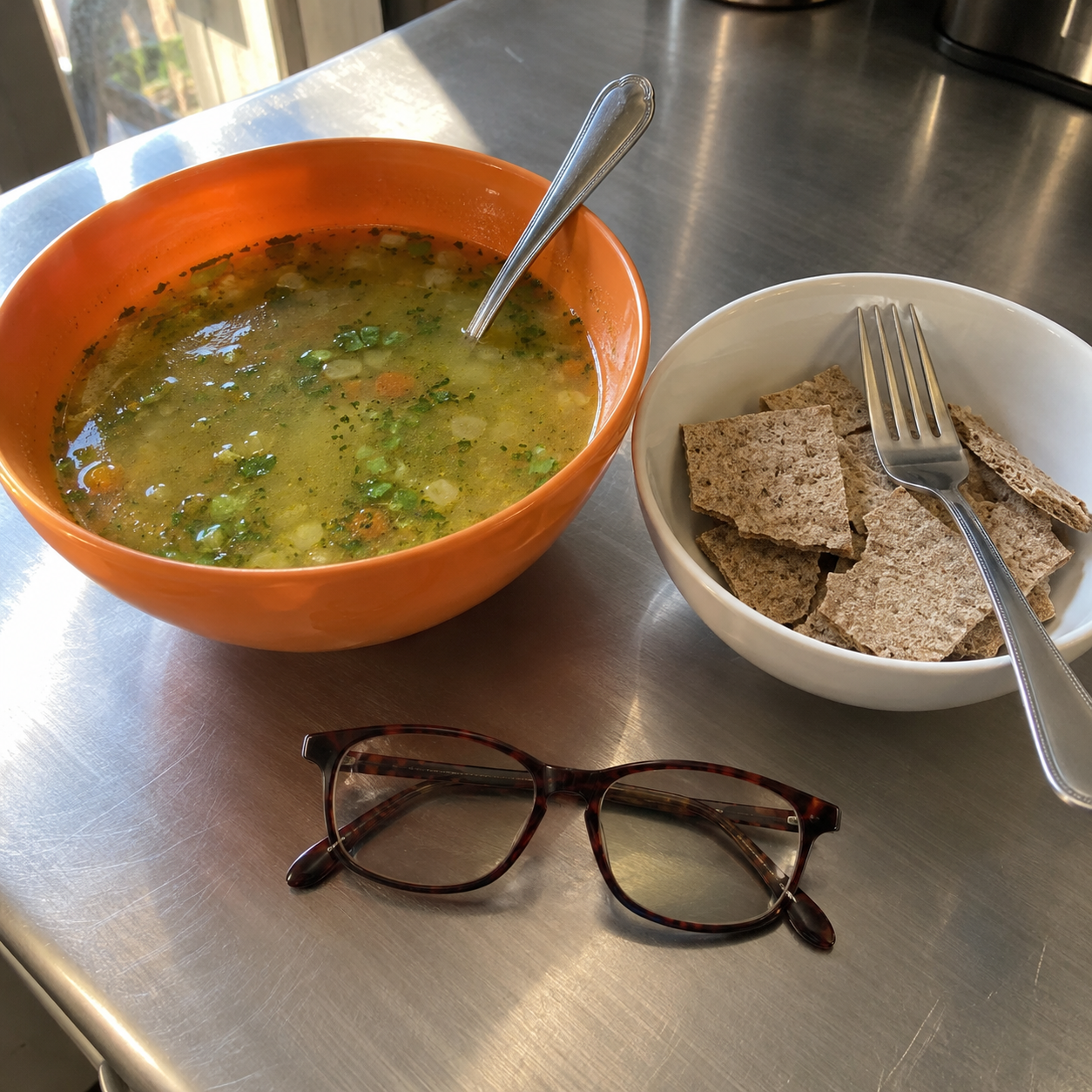
My husband was diagnosed with fatty liver in June 2022. He never drank a day in his life. After the diagnosis, he cut out sugar. Went on the Mediterranean diet. Walked three miles a day. Lost 41 pounds. He died of liver failure on October 19th, 2024 at 4:17 AM. He was 58 years old. He cut out sugar completely on June 8th. Did the Mediterranean diet for two years and three months. Lost 41 pounds. Walked our golden retriever three miles every single morning before work, rain or shine. He did everything the hepatologist told him. The hospital bill was $71,000. The funeral was $11,400. His reading glasses are still on the nightstand. I can't move them. If I move them, he's really gone. I need to tell you what happened to David. Because every week I see posts on Facebook from women like me — "my husband's ALT is slightly elevated, the doctor said to cut carbs, any tips?" — and it makes me physically sick. If you're the wife of a man over 45 who got the fatty liver diagnosis, or you got it yourself, please read this whole thing. I know it's long. I know you're scrolling. I know you have things to do. Sixteen months ago I would have given anything — everything — for someone to tell me what I'm about to tell you. David went in for his annual physical on June 9th, 2022. He felt fine. Better than fine. He'd just turned 56. He was still coaching his nephew's Little League team. He still mowed his own lawn. He thought he was healthy and honestly so did I — he'd never smoked, never been a drinker, his dad was 87 and still driving. Three days later his primary called. ALT of 94. AST of 88. The ultrasound came back with moderate steatosis. The hepatologist confirmed it two weeks later. Non-alcoholic fatty liver disease. F2 fibrosis already. "There's no medication for this. We treat it with lifestyle. Mediterranean diet, drop 10% of your body weight, walk every day. We'll retest in six months." David hung up the phone and sat at the kitchen table for forty minutes without saying anything. Then he stood up, opened the pantry, and started filling a trash bag. I watched him throw out the Frosted Flakes. The Ritz crackers. The Triscuits. Three boxes of Pop-Tarts our grandkids ate when they came over. Two jars of Smucker's. The entire bottom shelf of the freezer — the Eggos, the Hot Pockets, the Häagen-Dazs he loved. "That's it," he said. "I'm done." And he was. For 28 months, he didn't break the diet once. No bread. No pasta. No sugar. Not at his sister's wedding in Phoenix. Not on our 35th anniversary in Charleston where they brought out a complimentary slice of pecan pie and he asked them to take it back. Not at his own 58th birthday dinner where I made him grilled salmon and a salad and he smiled and said it was the best birthday meal he'd ever had. He stopped going to the Sunday cookouts at his brother's because everyone was eating burgers on potato rolls and he couldn't sit there with a plate of plain chicken without feeling like an alien. He stopped going to the diner where he and his buddies had been meeting for Saturday breakfast since 1994 because the smell of pancakes made him want to cry. He lost his buddy Mike, who told him "you're no fun anymore" and stopped inviting him. He lost a piece of himself he'd been carrying for 35 years. And he did it anyway. Because the doctor said to. He lost 41 pounds. He walked Riley — our golden — three miles every morning before work, summer and winter, didn't matter. He bought a juicer. David. With a juicer. I still can't picture it. He took the milk thistle his hepatologist "wasn't against." He took a multivitamin. He drank lemon water every morning. He ate exactly what they told him to eat. He did everything right. The follow-up labs came back on December 6th, 2022. ALT: 91. AST: 86. Six months of doing everything right and the numbers had barely moved. The doctor said, "The liver heals slowly. Give it more time. We'll retest in six months. Keep doing what you're doing." So he did. June 2023 labs: ALT 96. AST 91. Higher. December 2023 labs: ALT 104. AST 99. The fibroscan in January 2024 showed F3. He had progressed. David came home that night and sat at the kitchen table. The same table he'd sat at after the first phone call. He didn't say anything for a long time. Then he said: "Linda, I gave up everything. Everything I loved to eat. For 19 months. And it's getting worse." I told him to give it more time. I told him the hepatologist said it could take two years. I told him to trust the process. He nodded. He kept walking Riley. He kept eating the salmon and the spinach. He kept taking the milk thistle. Five days later — five days — he woke up at 2 AM with a pain in his right side that doubled him over. I drove him to the ER. By the time they admitted him at 4:30 AM, the whites of his eyes were yellow. Not "a little off." Yellow. Like a highlighter. Like someone had switched a light on behind them. The ER doctor — a young guy, couldn't have been 35 — looked at David's bloodwork and his face did this thing. "Mr. Hayes, your bilirubin is 9.1. Your ALT is now 612. Your liver is in acute decompensation. We're admitting you to ICU." "But I've been on the diet for over two years," David said. The doctor just looked at him. "I know, Mr. Hayes. I'm so sorry." David spent 6 days in the ICU. I learned things about the liver I never wanted to know. I learned that when a liver shuts down, the toxins your body produces every single day — ammonia, mostly — start building up in your blood and crossing into your brain. They call it hepatic encephalopathy. It means your husband stops being your husband. He looks at you like he's trying to remember who you are. He says things that don't connect. On day 3, David asked me three times in twenty minutes if I'd fed the dog. We don't have a dog. We haven't had a dog since 2009. I learned that they inject something called NAC intravenously when a liver is shutting down. The nurse told me it's the same compound they use for acetaminophen overdoses. She said it forces the liver to start rebuilding the master antioxidant it uses to protect itself — something called glutathione. She said it's the only thing they've got, and at this stage they were hoping it could buy him time. It bought him 6 days. Day 4, his kidneys started failing. The doctors talked about a transplant. Then they talked about him not being a candidate because of how fast he was declining. Then they stopped talking about transplants altogether. Day 5, his belly swelled up like he was nine months pregnant. They drained 4 liters of fluid out of his abdomen. Four liters. The nurse called it ascites. I called my daughter. Day 6 — October 19th — I was in the family waiting room down the hall. They'd asked me to step out. At 4:11 AM I heard the long beep down the corridor. At 4:17 AM, a young resident I'd never seen walked into the waiting room. I knew. "Mrs. Hayes. I'm so sorry. We did everything we could." I drove home at 6:30 AM. The juicer was still on the counter. His walking shoes by the back door. The milk thistle on the windowsill above the sink, right next to the multivitamin. His reading glasses were on the nightstand where he left them. Where they sit today. I sat in his recliner. I didn't move for seven hours. The house was so quiet I could hear Riley breathing on the rug. 36 years. And the loudest thing in my house was a sleeping dog. The funeral was October 26th. David's brother flew in from San Diego. Our daughter came up from Atlanta with the grandkids. Our son flew in from Denver. The grandkids wore suits that were too big for them. My five-year-old granddaughter asked me: "Grammy, when is Pop-Pop coming home?" I told her Pop-Pop was in heaven now. She said: "Can we call him there?" I had to walk out of the room. After the funeral, I tried to go back to normal. I couldn't. Because every time I opened Facebook I saw women my age — wives of men David's age — posting things like, "my husband's ALT came back at 71, doctor said borderline fatty liver, anyone tried milk thistle?" Or, "Mediterranean diet for 6 months, his numbers haven't moved, what else can we try?" And I knew — I KNEW — some of them were doing exactly what David did. The diet. The walking. The juicing. The milk thistle. And ending up where I am. I couldn't just sit there and watch it happen. So I started researching. Not because I wanted to. Because I had to. Because if David gave up two years and four months of everything he loved for nothing — if I can't save even one other family from what happened to mine — then I can't live with that. I read for weeks. PubMed papers I had to read three times to understand. Hepatology forums where people described David's exact trajectory. Studies out of Europe and Japan. And one thing kept coming up, over and over, that no hepatologist ever told us. The reason David's numbers didn't come down is that the lifestyle changes only slow the damage. They don't repair what's already gone. Specifically: glutathione. Glutathione is the master antioxidant your liver uses to filter everything that passes through your body — every medication, every environmental toxin, every fatty meal, every hormone, every breath of polluted air. Every cell in your liver depends on it. And here's what no one told us. After age 40, your body produces about 10% less glutathione every single year. Modern life — processed food, medications, environmental toxins — burns through what's left even faster. By 55 most people have lost nearly half their production capacity without knowing it. When your glutathione is low, your liver keeps running but has nothing to work with. Fat backs up inside liver cells. Toxins recirculate. Enzymes climb. The damage has nowhere to go. Read that again. David's liver wasn't damaged because he ate the wrong food. It was damaged because his glutathione tank was empty — and once it's empty, even the cleanest food in the world will slowly destroy your liver. And here's why eating clean alone didn't save him: cleaning up the diet stops the depletion. It doesn't refill the tank. His tank was already empty by the time the hepatologist told him to cut the carbs. That's why his numbers wouldn't move. He gave up everything he loved to eat to stop the bleeding from a wound that was already inside him. I sat with that for three days. And then I started looking at what I'd been doing. I'd thrown out David's milk thistle the week after the funeral. But I bought a new bottle for myself. Because I'm 57. Because my last physical came back with "mildly elevated" liver enzymes too. Because I was terrified. I took it for a month. My internist — a different one than David's, who I called because I trusted her — paused when I told her which one I'd bought. "Linda, which milk thistle is this exactly?" I read her the label. It said "milk thistle extract." No silymarin percentage listed. She was quiet for a moment. "That's the problem. Milk thistle only works when it's standardized to at least 80% silymarin — that's the active compound that actually does the job. What you're taking is probably 20 to 30 percent, maybe less. You're getting a fraction of the dose that research shows moves the needle. And even if the concentration were right — milk thistle alone only protects liver cells. It doesn't clear what's already backed up inside them." I stopped breathing for a second. "What do you mean, backed up?" She explained it slowly, the way she does when she knows I need to hear every word. "Your liver has two jobs. Filtering — which is what it does all day, every day. And clearing — getting rid of what it's already filtered. The filtering side is what milk thistle helps. But over years, a different problem builds up quietly alongside it. Tiny invaders — parasites, their eggs, the waste they leave behind — lodge themselves in the lining of the intestines and bile ducts. They slow the whole system down from the inside. Most people carry them their entire lives. Their doctors never test for it. But the fatigue is real. The bloating is real. The backed-up enzymes are real." She looked at me. "To actually clear the liver — not just protect it — you need plants that do the cleansing work. Wormwood and clove are the oldest ones we know of. They've been used for four thousand years specifically for this. They flush out what's been quietly blocking the system from the inside. Milk thistle and wormwood and clove together do something that neither one does alone." Then she said something I'll never forget. "If David had been on something that actually addressed both sides — protecting the cells and clearing the blockage — his story might have been very different." I went to CVS the next day. I stood in that aisle for forty-five minutes. Milk thistle. Liver detox tea. Dandelion root capsules. 30-day "liver cleanse" kits. Multivitamins with "liver support." I picked up every bottle of milk thistle they had. Seven bottles. I turned each one over and looked for the silymarin percentage. One said "standardized extract." No number. One said "450mg milk thistle." No standardization listed at all. One said "20% silymarin." One said "30% silymarin." Not a single bottle in the entire CVS liver aisle said 80%. Not one. And not a single bottle contained wormwood or clove. Every single one was milk thistle, alone, without the cleansing side that my doctor had just told me was the other half of the job. I bought the best one I could find. The one that said 30%. Took it for three weeks. The bloating crept back. The brain fog returned. So did the 3 AM wake-ups I'd had since before David died. I called my doctor. "You're doing the right thing in the wrong dose with half the formula," she said. "30% silymarin is like taking one ibuprofen for a fever that needs four. And you still don't have anything in there doing the cleansing work." I was furious. I'm still furious. About two weeks later I was up at 1 AM on the NAFLD subreddit — the same one I'd been reading since David died — and a woman in Ohio posted something that stopped me cold. She said her husband had been diagnosed with NAFLD at 54. F3 fibrosis. He did the diet. His fibroscan progressed anyway — sound familiar? — and then she found a formula that combined milk thistle standardized to 80% silymarin with wormwood extract, clove extract, and a handful of supporting compounds that help the liver do its two jobs at the same time. His ALT went from 118 to 34 in twelve weeks. His next fibroscan came back at F1. Without changing anything else. I read that post four times. I started looking into what she'd found. And what I learned is that there are two things a serious liver formula has to do at the same time, or you're wasting your money and your time. It has to protect and restore the liver cells — specifically with milk thistle standardized to 80% silymarin. That's the only concentration research consistently shows actually moves enzyme numbers. Not 20%. Not 30%. Eighty percent. Everything below that is just a label on a bottle. And it has to clear what's already built up inside the bile ducts and intestinal lining — the slow, invisible blockage that makes the filtering problem impossible to fix from the top down. That's what wormwood and clove do. They've done it for four thousand years. One opens the drainage pathway. The other flushes the buildup out. Without them, you can protect liver cells all day long while the clog underneath gets worse. Two things. Both of them. At the same time. I went back through every product in the CVS aisle. Not one of them did both. That's when I found Gevilo. It was the only formula I could find that hit both sides. Milk thistle standardized to 80% silymarin — the actual therapeutic level, not the diluted versions filling the shelves at every health store in America. Paired with wormwood extract and clove extract, exactly the combination my doctor had described. Plus turmeric standardized to 95% curcuminoids, vitamin C, and L-methionine to support the liver's repair work as it cleared. Everything in one capsule, taken in the morning. I almost didn't order it. After the CVS aisle. After the milk thistle at 30%. After David. After everything. But my brother was sitting on an ALT of 138 and a "borderline fatty liver" diagnosis his GP said to "monitor." My son-in-law in Atlanta had just been told his fibroscan showed early steatosis. I had my own labs creeping in the wrong direction. I ordered it. My brother first. ALT 138. Diagnosed NAFLD eighteen months ago, doing the diet, watching the numbers climb anyway. I didn't ask. I sent him a bottle and a note that said, "If you don't take this every day I will never speak to you again, Frank, I mean it." He took it. He didn't give up his food — he's stubborn the way David was stubborn — but he took one capsule every morning. He went back to his doctor last month for his follow-up. ALT: 43. Down from 138. In ten weeks. He hadn't changed anything else. Same diet, same walks, same life. The only thing he changed was the capsule he took with his morning coffee. He called me crying. My 61-year-old brother. Crying on the phone like a kid. He said, "Linda, I think David died because nobody told him about this." I had to hang up. Then there's my son-in-law in Atlanta. 39, two little girls, early NAFLD on his last fibroscan. Started taking it eight weeks ago. He says the dull ache he'd had under his right rib for two years — the one his doctor told him was "probably just gas" — is gone. He says his afternoon energy is back for the first time since the diagnosis. My neighbor across the street, Patricia. Her husband died of cirrhosis fourteen months before David. Two widows on the same cul-de-sac. She started taking it three days after I told her, just for prevention. She says it's the first time since he died that she doesn't feel like she's waiting for her own diagnosis. I told my sister. I told David's brother in San Diego. I told the women in my Bible study. I told David's old fishing buddies when they came by to drop off a casserole. I'm not a doctor. I'm not a scientist. I'm not selling anything and I don't get one penny from any of this. I'm a 57-year-old widow sitting in my dead husband's recliner at 2 in the morning because I can't sleep and I can't stop thinking about Frank in Cleveland and my son-in-law in Atlanta and the women on that subreddit posting "my husband's numbers won't come down, what else can we try." Here's what I know because I lived it: Eating clean stops the depletion. It doesn't refill what's been depleted. It doesn't repair the damage. Milk thistle at the wrong concentration does almost nothing. And even at the right concentration — 80% silymarin — it only does half the job if it's not paired with something that clears the blockage underneath. You can take milk thistle every single day and make zero progress if the silymarin percentage is too low and there's nothing in the formula doing the cleansing work alongside it. David gave up everything he loved to eat for 28 months and it didn't save him because nobody told him what was actually broken. I wish someone had told us before June 9th, 2022. Before the diagnosis. Before the trash bag of food in the pantry. Before the 28 months of plain grilled salmon. Before October 19th at 4:17 AM. I can't go back. David can't come back. His reading glasses are still on the nightstand and they're going to stay there. But you can still go forward. Your husband can. Your brother can. You can. 90-day money-back guarantee. If nothing changes, every penny back. No questions asked. If someone has told you it's the diet, it's the stress, it's just what happens at your age. If you've been taking milk thistle from the store and your husband's numbers still won't come down. If the doctor told you the bloodwork looks "borderline" and to just keep watching it. If you've been walking three miles a day and eating grilled salmon and still watching the fibroscan get worse. It might not be the food. And it was never your fault. It might just be that the formula you've been taking was only doing half the job, and at the wrong dose, and the other half — the clearing — was never in the bottle. Stop asking the liver to filter through a drain that's still clogged. Give it the concentration it needs and the cleansing support it's been waiting for. Gevilo sells out regularly — if you go to order and they're out of stock, get on the waitlist. It's worth it. EDIT: Almost forgot the link. Here it is: 👇 https://gevilo.com/pages/milk-thistle — Linda Hayes, age 57, Naperville, IL P.S. His reading glasses are still on the nightstand. I still can't move them. Every morning I walk past them and for one second I forget. For one second I think he's about to come down the stairs and ask me where Riley's leash is. He's not. $71,000 in hospital bills. $11,400 for the funeral. 28 months of him giving up every food he loved. And a capsule that costs less than the bag of organic spinach he was eating every day — a capsule my own doctor told me could have changed everything if we'd known about it, and taken it at the right dose, with the right formula. Please. Don't end up here. Don't let someone you love end up here. 👇 https://gevilo.com/pages/milk-thistle P.P.S. I don't work for Gevilo. I don't get a penny from this. I'm writing this at 2:38 AM because I can't sleep and David's side of the bed is cold and Frank in Cleveland is 61 and the women on that subreddit are still posting at 2 AM and I'm terrified every time my phone rings. Share this with anyone you love who has fatty liver. Even "mild." Even "borderline." Even if they're doing the diet perfectly. Especially then. Please.
Engagement over time
Not enough history yet to show a trend.