Rachel Porter
Fix yourself at the cellular level
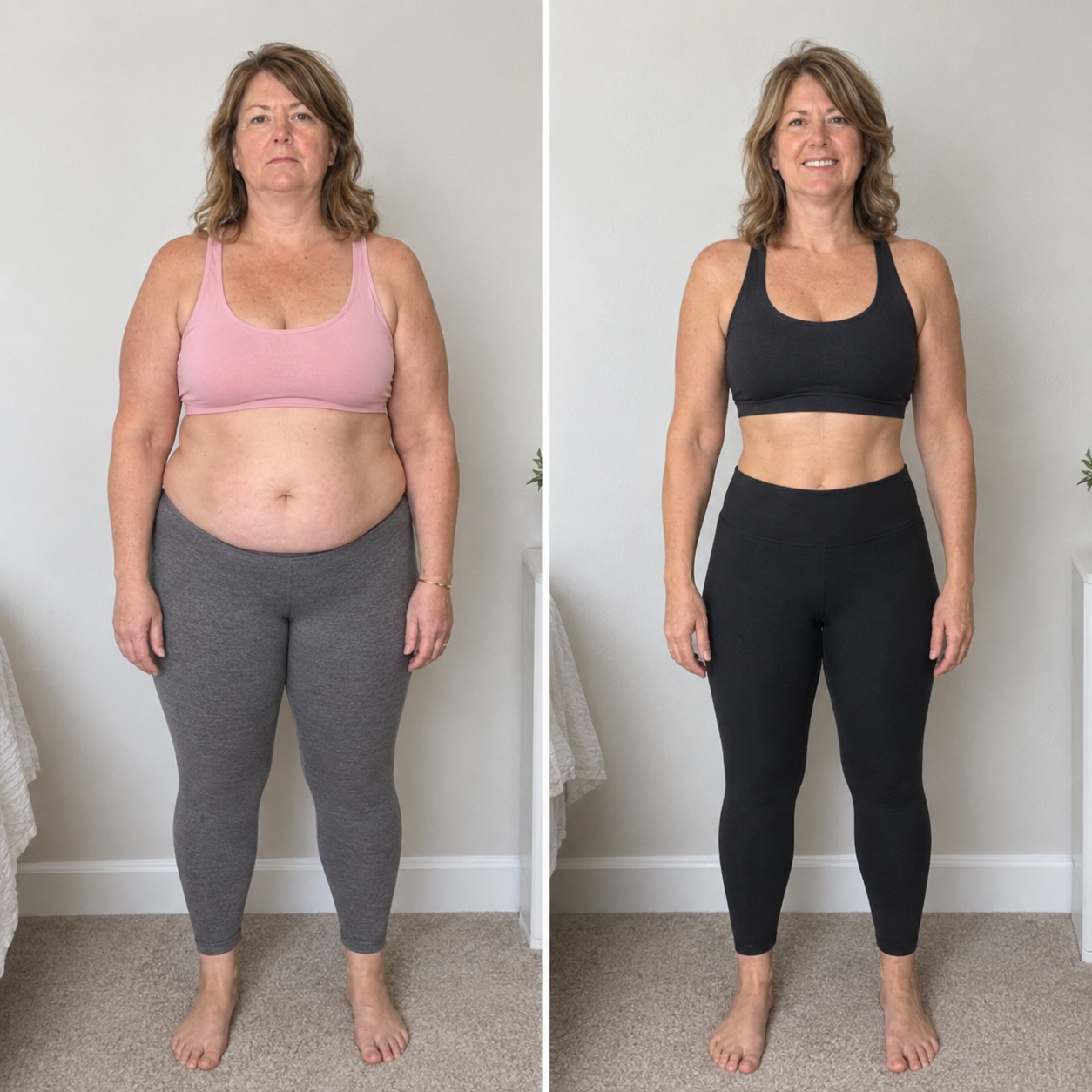
I am 61 and retired, and I paid out of my own pocket to run a body composition panel before and after this $39 supplement. Here are both sets of numbers, side by side. My name is Anne. I spent 29 years as a clinical laboratory scientist, most of it running metabolic and endocrine assays. I retired in 2024 and I have not lost the habit of wanting a number. I need to explain the part that made me angry, because it is the reason this is written down at all. Nobody Measures Muscle After 50: I went to my doctor last year with arms that couldn't carry groceries up one flight of stairs and a straightforward request. I asked her to order a DEXA scan — a body composition test that shows lean muscle mass versus fat mass, bone density, the whole picture. She declined, and I want to be fair to her, because she was not being lazy. DEXA scans have specific clinical indications, and a menopausal woman who says she "feels weaker" is not one of them. That is the guidance and she was following it correctly. But look at what that leaves. I am told the muscle loss is hormonal. Then told the measurement that would quantify it will not be ordered. Then told to "stay active." I ran assays for 29 years. I have run thousands of body composition panels for other people. At 61 I could not get one for myself. So I ordered it privately. $225 for a full DEXA scan at an imaging center, on my own card, which is a sentence that still irritates me. The Numbers It Explained: Before I tell you what the scan showed, you should know what it was explaining. The weakness arrived at 54. Not all at once — gradually, like someone turning down a dial I couldn't find. By last year I was struggling with things that used to be automatic. Carrying a full laundry basket upstairs. Opening a jar. Getting up from a low chair without using my hands. I had gained 31 pounds since menopause. Not from eating more — I eat less now than I did at 40. The weight settled in my midsection and my arms went soft. Not just untoned. Soft in the way that means the tissue under the skin has changed composition. My numbers at baseline, last September: Lean muscle mass: 87.2 lbs (14th percentile for my age — meaning 86% of women my age had more) Body fat percentage: 41.3% Bone density T-score: -1.8 (osteopenia — the stage before osteoporosis) Grip strength: 39 lbs (below the clinical threshold for sarcopenia risk) Resting metabolic rate: 1,180 calories/day That last number is the one that explains why dieting never worked. My body was burning 1,180 calories at rest. An average woman my height burns 1,400. I was running 220 calories per day below normal because I'd lost so much muscle that my metabolism had shut down to match. Every diet I tried was built on a metabolic rate I no longer had. The math was never going to work. The $4,100 I Spent Before: - $1,400 on 14 months of a commercial weight loss programme with weekly weigh-ins - $1,100 on a trainer twice a week for 6 months - $840 on protein powders, collagen peptides, and 3 different meal replacement shakes - $760 on a functional medicine doctor who ordered bloodwork and found "nothing abnormal" Total: $4,100. My arms got weaker. My metabolism got slower. My bone density got worse. Why I Bought It Anyway: My old colleague sent me an article — she's 64, same field, same habit of needing evidence before she'll touch anything. The article was about creatine supplementation in postmenopausal women. Not bodybuilders. Not athletes. Women over 50. I expected to tear it apart in ten minutes. I did not, because the research is not controversial. It is thirty years deep and it says the same thing across every study: Creatine is the molecule your cells use to produce ATP — the actual energy currency of every cell in your body. Muscle cells, brain cells, bone cells, all of them. Your body makes some creatine naturally, but production declines with age. Women produce 70-80% as much as men to begin with. After menopause, with estrogen's protective effect on muscle gone, the decline accelerates. By 60, most women are running their cells on a fraction of the energy they had at 40. The muscle loss, the fatigue, the metabolic slowdown, the bone density decline — it's not five separate problems. It's one problem expressing itself five ways: cellular energy depletion. I spent an evening reading clinical trials. Postmenopausal women. 5g creatine daily. Measurable increases in lean muscle mass without changes to exercise. Measurable improvements in bone density markers. Measurable improvements in cognitive function. The supplement is the part I could evaluate. Five grams of creatine monohydrate in a gummy form — YOLO Creatine + Electrolytes. The gummy matters because absorption begins in the mouth and upper GI, bypassing the stomach bloating that makes most women quit creatine powder within a week. Plus electrolytes, which creatine needs as cofactors to function properly. $39 for a month's supply. After spending $4,100 on things that didn't work, $39 was not the part I needed to think about. But I am a laboratory scientist. I was not going to take anything without measuring before and after. So I stopped trying to evaluate the claims and measured them instead, which is what 29 years teaches you to do. I scheduled the baseline DEXA before the bottle arrived so I could not be accused of tidying up the timeline afterwards. My 16 Weeks: Week 1-2: Energy shift by day 4. Not a caffeine buzz — a deeper fuel. I woke up on day 5 and my body felt like it had something in the tank before coffee. The 2pm crash that had been my daily companion for three years did not come on day 6. Or day 7. Or any day after. Week 3-6: Nothing dramatic on the scale. I logged weight biweekly and expected to write this up as a negative result. But my clothes started fitting differently. Not looser — differently. The softness in my upper arms was firming. I could feel it when I crossed my arms. Week 7-12: The grocery stairs became easy. I noticed it on a Tuesday — I was at the top with two full bags and I wasn't breathing hard. I stood there for a moment because I couldn't remember the last time that had happened. My grip strength improved enough that I opened a jar without running it under hot water first. That sounds like nothing. It wasn't nothing. Week 13-16: The body changed visibly. My arms had shape again — not "toned" in the Instagram sense, but solid. The tissue had firmed underneath the skin. My posture changed because the muscles supporting my spine had strengthened. I stood straighter without thinking about it. Total: 8 lbs lost on the scale. But the DEXA told a different story. Before Against After, Same Lab, Same Machine: I paid another $225 in May. Same DEXA scanner, same facility, same technician. Stacked: Lean muscle mass: 87.2 lbs against 93.8 lbs (+6.6 lbs of muscle gained) Body fat percentage: 41.3% against 35.1% (-6.2 percentage points) Bone density T-score: -1.8 against -1.3 (improved from osteopenia toward normal) Grip strength: 39 lbs against 52 lbs (+13 lbs, now above normal threshold) Resting metabolic rate: 1,180 cal/day against 1,340 cal/day (+160 calories) And from my own measurements: Weight: 178 lbs against 170 lbs (-8 lbs on the scale) Waist: 37 inches against 33 inches (-4 inches) Upper arm circumference: same — but the composition changed entirely Read the lean muscle line first. I gained 6.6 pounds of muscle while losing 14.6 pounds of fat. The scale only showed 8 pounds because muscle was replacing fat. This is why the scale lies to women over 50. If I had been watching the scale alone, I would have said "eight pounds in sixteen weeks, not impressed." The DEXA said my body had recomposed itself. The fat left. The muscle came back. The bone density improved for the first time in six years. The grip strength matters more than people realize. Below 44 lbs in women is associated with increased all-cause mortality. I went from 39 — below the danger line — to 52. That is not a vanity metric. That is a clinical threshold I crossed back over. The metabolic rate increasing by 160 calories per day means my body now burns an extra 1,120 calories per week at rest. That is the equivalent of running 10 miles a week without running. Muscle is metabolically active tissue. Restore the muscle, restore the burn. What I Will Say And What I Will Not: What I measured is a body composition change, before and after, on the same DEXA scanner, 16 weeks apart. What I cannot prove is that the creatine alone caused it, because one person is not a study and I would fail any student who told me otherwise. I continued my normal walking routine. I did not add resistance training. I did not change my diet. What it cost to find out was $39/month for the gummies and $450 for the two DEXA scans. The scans cost more than the supplement, which tells you something about where the real expense sits in this. The Laboratory Truth: If you are 55 or 65 and you have been told "stay active" while your arms get weaker and your metabolism slows and your bone density drops, you were probably told the truth about the labs they ran. Nobody ran the one that was going to explain what was actually happening to your body composition, and at our age nobody is going to. That is not a conspiracy. It is a guideline meeting a woman it was not written for. I could not get anybody to measure me, so I measured myself, twice, on the same machine. The numbers said what thirty years of creatine research said they would. The gummy form matters. Most creatine on the market is a powder that sits in your stomach, pulls water into your gut, and causes bloating that makes women quit within a week. The gummy bypasses the stomach — absorption starts immediately, the water goes to muscle cells where it belongs, not your digestive tract. That is why I didn't bloat. That is why I stayed on it. Women produce less creatine than men. Women lose muscle faster after menopause. Women are told to "stay active" while their cellular energy depletes year after year. And the one supplement with thirty years of evidence specifically in postmenopausal women is still sitting in the bodybuilder aisle because nobody has told us it's ours. 🛡️ 50% Off + Free Shipping right now. 365-day money-back guarantee. If you have been waiting for somebody to prove this to you with a number, I paid for mine, and both sets are above. Measure your arms today. Take a photo in the same spot, same light. Then every two weeks for 16 weeks. If nobody will run a DEXA for you, the mirror and the tape measure are tests, and they cost nothing. P.S. — My colleague ordered it the week after I showed her my DEXA. She called me at 8 weeks and said, "I opened a pickle jar with one hand and then stood in the kitchen trying to remember the last time that happened." She's 64. Her grip strength had been declining for four years. Nobody measured it. Nobody offered to. P.P.S. — The bone density improvement was the number that made me sit down. Osteopenia is the stage before osteoporosis. My T-score had been declining for six years — every scan worse than the last. This was the first time it moved in the right direction. My doctor ordered the scan again because she thought there was an error. There was not. Creatine supports bone mineral density. It's in the research. Nobody mentioned it to me in six years of declining scans. P.P.P.S. — If you've tried creatine powder and quit because of the bloating — it was not the creatine. It was the form. Powder sits in the stomach and pulls water before it absorbs. Gummies absorb through the mouth and upper GI. The water goes to muscle cells, not your gut. That is the difference between bloating and recomposition.
Engagement over time
Not enough history yet to show a trend.