Sarah Mitchell
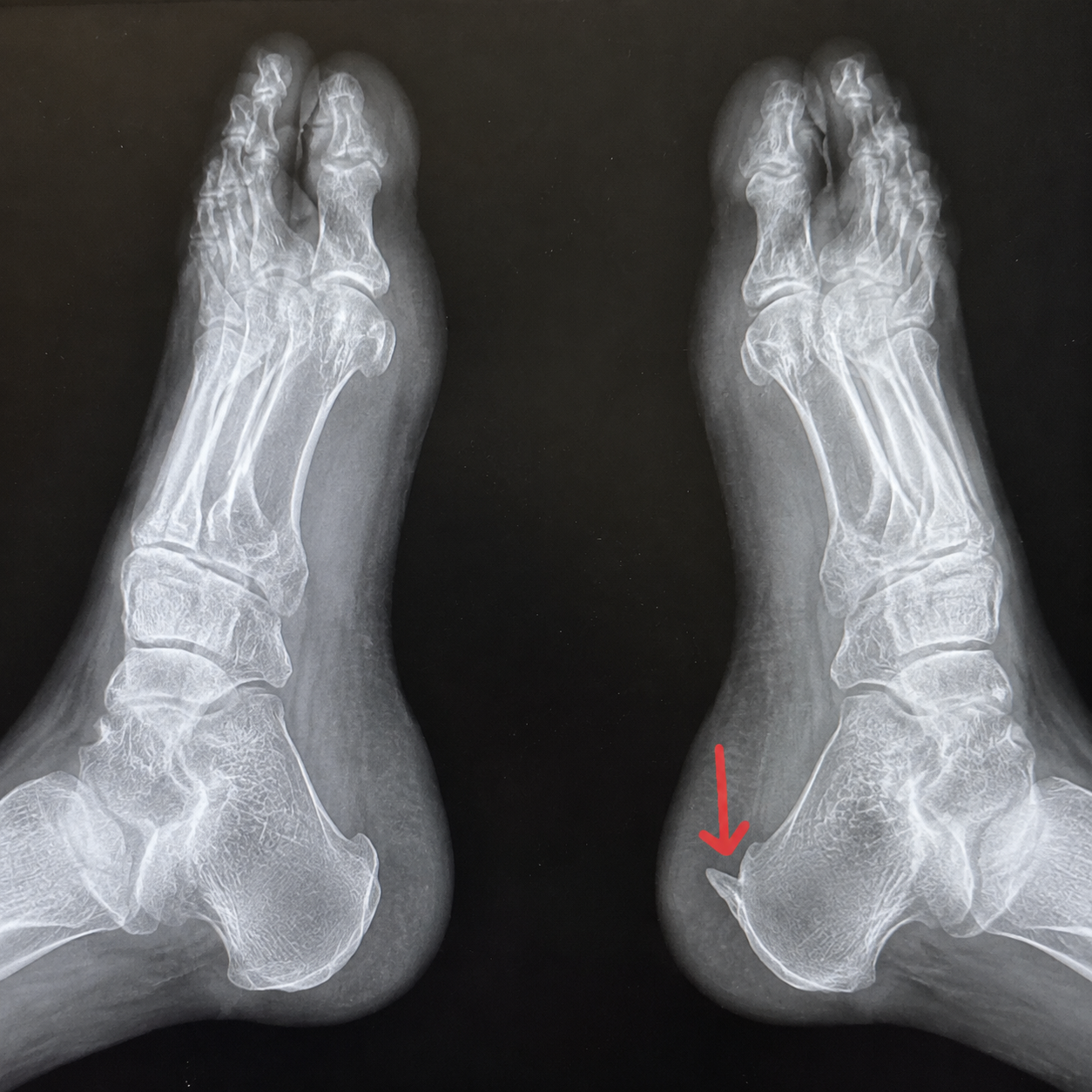
Read this if your heel pain won't go away no matter what you do☝️
I'm going to say something that nobody with plantar fasciitis wants to hear. As long as you believe resting will fix it, it won't heal. Not in six months. Not in a year. Not ever. I know that because I believed it for four years, and I did it better than most people ever do. For almost my entire life, I was a runner. Not casually either. Thirty to forty miles a week since my twenties. I'm 53 now. The rest of my life looks like this. I sit at a desk for nine hours, I come home, and I run. That's been the shape of my days for close to thirty years. I never thought about my feet because they never gave me a reason to. Then one morning I stood up out of bed and my right heel felt like I'd stepped on broken glass. That was the beginning of four years. At first it was only that first step. The pain showed up after runs. Then during runs. Then it stopped waiting for runs at all and just lived there. And it went past stepping on broken glass. It became a nail driven into my heel, or a Lego brick pressed into it, all day long. I tried explaining it to people. Nobody ever really understood. By month four I couldn't get to the mailbox without limping the whole way. Going downstairs in the morning meant holding the rail and putting both feet on each step like I was three years old again. And everyone told me the same thing. "Stay off it." My doctor said it. My husband said it. Every article I read said it. So I stopped running. Completely. Not reduced. Stopped. Six weeks of nothing. No runs. No long walks. No "just testing it." And here's the first thing that confused me. The rest didn't help. It got slightly better for about four days, then it plateaued, and by week five it was getting worse while I was doing absolutely nothing. It made no sense to me, and it kept making no sense for four years. So I went looking for the answer myself, the same place you probably did. Reddit. And I tried everything they recommended. All of it. I started with the shoes, because that's what everyone says. Eight pairs. Including the Hokas, the ones every forum swears by. Every one of them followed the same pattern. The first two hours felt better and I'd think, this is the one. Then the afternoon came, and the pain punched right through the cushioning. Then the custom orthotics. Three hundred dollars, molded to my arch. Same result, more expensive. They worked right up until I took them off at the door. Then the first step inside split my heel open again. Then stretching, because half the internet is convinced tight calves are the whole story. Every morning and every night. The wall stretches, the towel pulls, and the calf raises off the bottom stair. For the first week I was sure it was doing something. It felt like the kind of thing that should work. But my heel didn't notice. Three weeks, no change. Six weeks, no change. Ten weeks, no change. Then the massage gun, every night, on those same calves. Twenty minutes a night for months. It felt good while I did it. And the next morning my heel greeted me exactly the same way it always did. The frozen water bottle. Every night until my heel went numb. The cold quieted the burning while the cold was there. Twenty minutes after I dried my foot off, the stabbing came back, angrier for having been interrupted. Then came the cortisone. Two shots, three hundred dollars each after insurance. Quiet for a few weeks, and then it came back exactly where it was. Two podiatrists. One ultrasound that showed thickening, which sounded serious, and nobody ever told me what to do about it. At some point I stopped believing any of it was going to work. But three things kept bothering me. Three things that never fit the story I'd been told. One. Six weeks of complete rest made it worse. Not neutral. Worse. Two. There were days I was on my feet constantly, running errands all afternoon, and I woke up the next morning better than usual. I never understood why. Three. Every single thing that ever helped, only helped for a while. The ice. The shoes. Even the shot. Not one of them ever lasted. Every article, every doctor, even Reddit said the same things. Rest it and it heals. The right insole changes everything. Stretching is the fix. None of it did anything. That's when I stopped researching plantar fasciitis and started researching why a heel might not heal. And somewhere down in a thread, I found a comment from a woman who said her heel finally healed once she fixed her circulation. Her circulation. Four years of reading. Shoes, insoles, stretches, ice, shots. Every single thing pointed at my foot. This was the first thing I had ever read that pointed somewhere else. The next morning I called a circulation doctor. A real physician who specializes in it. Not another foot doctor. She let me talk all the way through without interrupting. The four years. The six weeks off my feet. The mornings after the days I'd been on them constantly. She nodded. "That's not strange. That's actually the answer." Then she pulled over a notepad and drew a foot, and a line running up the back of the leg. "Let me show you something. Your feet are the farthest thing from your heart, and the only place blood has to climb back up against GRAVITY to get out." "Okay," I said. "What makes that climb happen is a muscle deep in your calf. It's called the soleus. Some people call it the second heart. Every time it squeezes, it pushes the blood out of your feet and back up your legs." "My calf? But the pain is in my heel." "Stay with me. How many hours a day are you at that desk?" "Nine." "For how many years?" "Close to thirty." "That's what stacked up. That muscle stiffens the longer it spends not moving, and it does it a little more every year. By the time you hit your forties, yours had been stiffening long enough to stop." "Once it stiffens, it can't push the blood back up anymore. So the old blood just sits down there in your foot. Pooling. Going nowhere. We call it stagnant blood." "And as long as that old blood is sitting there, fresh blood can't get in behind it. It can't reach your heel at all." I still didn't see what that had to do with my mornings. "Every step you take opens tiny damage in your heel. That's normal. That's just what walking is. In most people it heals overnight." "Mine doesn't." "Healing takes oxygen. Oxygen rides in on fresh blood. And fresh blood isn't reaching your heel. So this morning, your first step came down on damage that never healed. And tore it open again." She let that sit there a second. "Torn open. Never healed. Torn open again. Every morning. That's the stabbing." "So the running was making it worse." "You were opening more damage than most people ever do, with less ability to heal it than most people have. That's the whole picture." "Then why didn't running fix the muscle? I did it for thirty years." "Because by the time this started, it was already too stiff for that. Once it's there, normal movement isn't enough to bring it back. That's the point you were already past." "And the six weeks of rest?" "You added six more weeks of not moving to a muscle that was already stiffening from exactly that. You weren't resting it. You were speeding it up." "Then why didn't the massage gun work? I've been on those calves every night for months." "On the surface," she said. "The muscle you can reach with a massage gun or a stretch is the one on top. The soleus sits underneath it. You can't get to it by pressing from the outside. It has to contract." Then I said the thing I'd been holding since I sat down. "I've spent thousands of dollars on shoes and insoles." "Every insole you've ever bought sits under your foot," she said. "The reason your heel can't heal is above it." I sat there going back through everything I'd tried. Every single thing on that list was aimed at the part that hurt. Not one of them had ever gone anywhere near the reason the blood stopped reaching my heel in the first place. I asked her how to get it working again. "You have to make that muscle squeeze. Directly. In the clinic we use EMS for that. Electrical stimulation, at a frequency that goes deep enough to reach the soleus. It makes the muscle contract on its own, without you standing, without you walking on a foot that hurts." "The contractions loosen it, and the pump starts working again. The stagnant blood finally moves out, fresh blood gets in, and the damage in your heel starts getting the oxygen it needs. It starts healing for the first time in years." "Do I have to keep coming here?" "There are home units now. But listen. If it doesn't run at 40Hz, it's not reaching the soleus. It's just buzzing your skin. Most of what's out there is a massager with a fancy name. Check the frequency before you buy anything." That night I sat at the kitchen table with my phone. She was right. Page after page of foot massagers. Soothing vibration. Relaxing relief. Deep kneading. Not one of them said what frequency they ran at. Then I found one that did. A flat mat called FlowLab Revive. Right on the page: 40Hz EMS, built to reach the soleus. You sit in a chair, put your bare feet on it, fifteen minutes. But honestly, I still hesitated. I'd gotten my hopes up too many times already. Then I saw it came with a 90-day money-back guarantee. A hundred and forty dollars, and ninety days to find out. It felt worth trying. So I ordered it. Here's what happened. Day 1. Fifteen minutes in my chair. My calves started squeezing on their own. Not painful. Deep. A slow grip way down in there, someplace the massage gun had never once reached. The morning after felt the same as every other morning. I told myself the mat was probably nothing. I'd fooled myself before. Day 3. The first step was quieter. Not gone. But it didn't take my breath away. I didn't trust it. Day 8. I crossed the bedroom before the ache caught up with me. I wasn't touching the wall. I stood in the doorway for a second working out what had just not happened. Day 15. Walked two miles. Zero pain during. Mild irritation that evening, maybe a 1 out of 10. Gone by morning. That "gone by morning" is the whole thing. That had not happened once in four years. Day 26. The first step in the morning was just a step. Some mornings I forgot to brace for it entirely. Week 6. I ran three miles. First run in four years. Nothing that night, nothing the next morning. Week 12. I'd stopped thinking about my feet. That was eight months ago. I still do the fifteen minutes, most nights, in the same chair with the TV on. I won't tell you I'm completely cured. What I can tell you is that I don't feel the pain anymore. The morning step is just a step. Here's what I need you to take from this. If you've done the shoes and the insoles and the stretches and the shots and none of it lasted, you didn't fail the treatment. The treatment failed you. And if you've been resting it and waiting, I need you to hear the thing that cost me the most. Rest is not doing what you think it's doing. Nothing in your heel is healing while you sit still. It's only stacking. That muscle gets a little stiffer every year, and every month, and every long weekend you spend on the couch waiting for it to calm down. I lost four years finding that out. The answer was in front of me the whole time. I just couldn't see what I was looking at. That pain in your heel can be fixed. Not managed. Not survived. Fixed. The mat I use is called FlowLab Revive EMS. It was the only one I found that met the 40Hz the doctor told me about. You sit in your chair, you put your feet on it, fifteen minutes. It comes with the same 90-day guarantee that got me to try it. If your first step isn't different, you send it back and get every dollar. They keep the risk. Not you. The site I ordered mine from is linked below. Don't wait until you start hating yourself for it, like I did.
Engagement over time
Not enough history yet to show a trend.