Heart Health Review
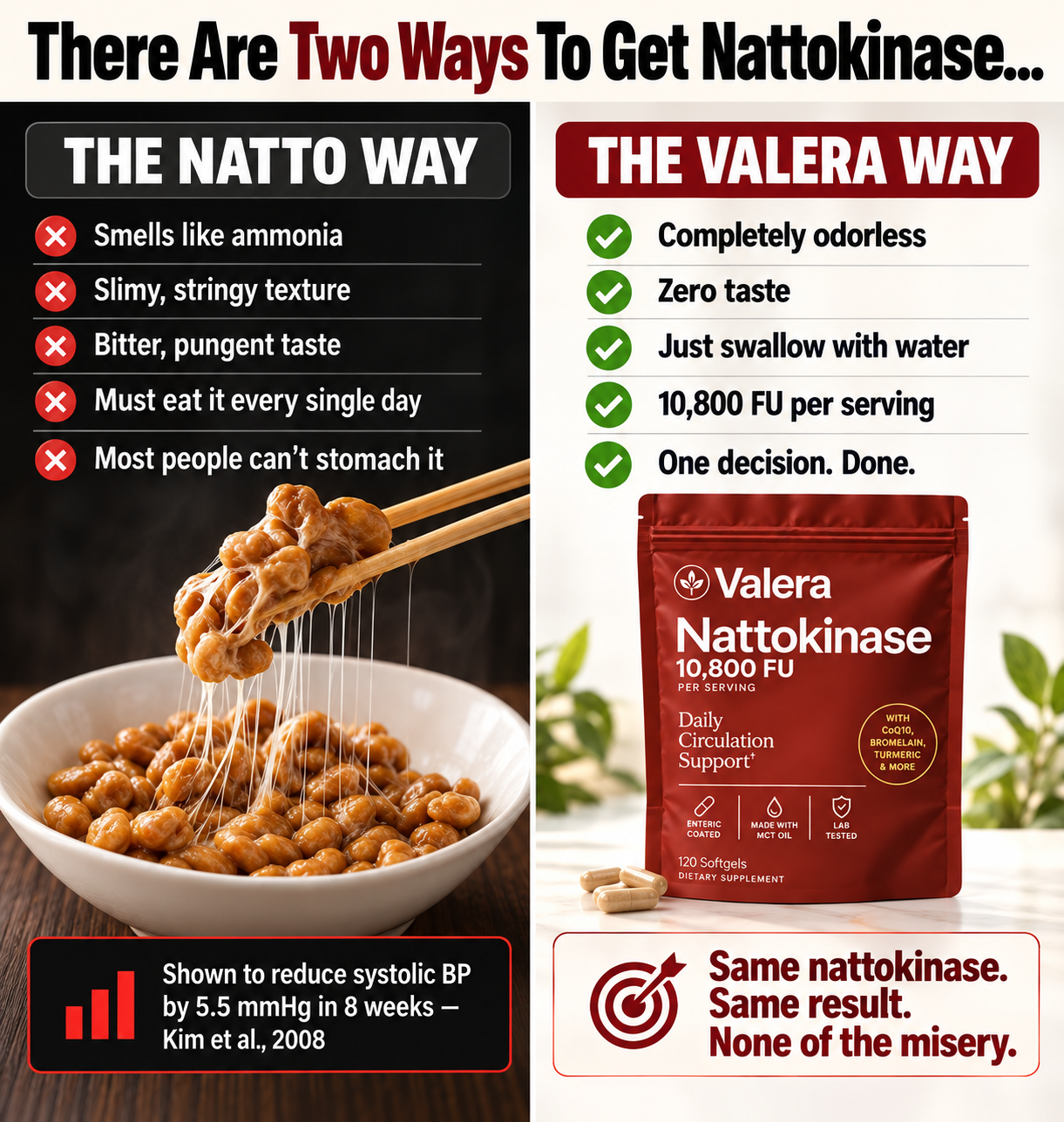
The Smarter Way To Get Nattokinase
People with great circulation in their 60s aren't doing it the way most people assume they are. They're not just drinking more water. They're not relying on fish oil. They're not cutting sodium and hoping for the best. And they're definitely not staying on blood pressure meds for the rest of their lives. Instead, they're supporting something called fibrinolytic activity. Which is a fancy way of saying: your body's natural system for keeping blood flowing freely. Most doctors never mention it, especially not at your checkup. But Japanese researchers have spent 30 years studying the single enzyme that activates it and what they found changes everything for people over 60 struggling with cold hands & feet, heavy legs, and numbness and tingling. Because the real culprit isn't salt or genetics like we’ve been told for decades. It's fibrin. A sticky protein that gradually builds up in your bloodstream and slows circulation over time. Like limescale coating the inside of your pipes. The pressure doesn't drop all at once. It creeps. Until one day your hands are cold, your legs are heavy, and your mornings feel like you're running on half power. That's why your hands are cold. Your legs feel heavy. Your mornings are sluggish. It's not just aging or “not enough water”. It's fibrin build up. And once you start supporting your body's ability to clear it, at the right dose, with the right co-factors, things start to open up. People are waking up warm. Walking without that heavy-leg drag. Watching their systolic number drop without adding a single prescription. If you already know how to support fibrinolytic activity, you won't need the fish oil. If you already know how to clear fibrin, you won't need the sodium restriction. This is exactly how thousands of people over 60 are feeling like themselves again. Click below to learn what 12,000+ people already discovered about circulation after 60, the 40-year-old Japanese enzyme discovery Western doctors still haven’t caught up with, and why 1,047 specialized clinicians are now sharing it with everyone they know.
Engagement over time
Not enough history yet to show a trend.