Healthy Hands Studio
The Vikings Don't Wait. Neither Should You.
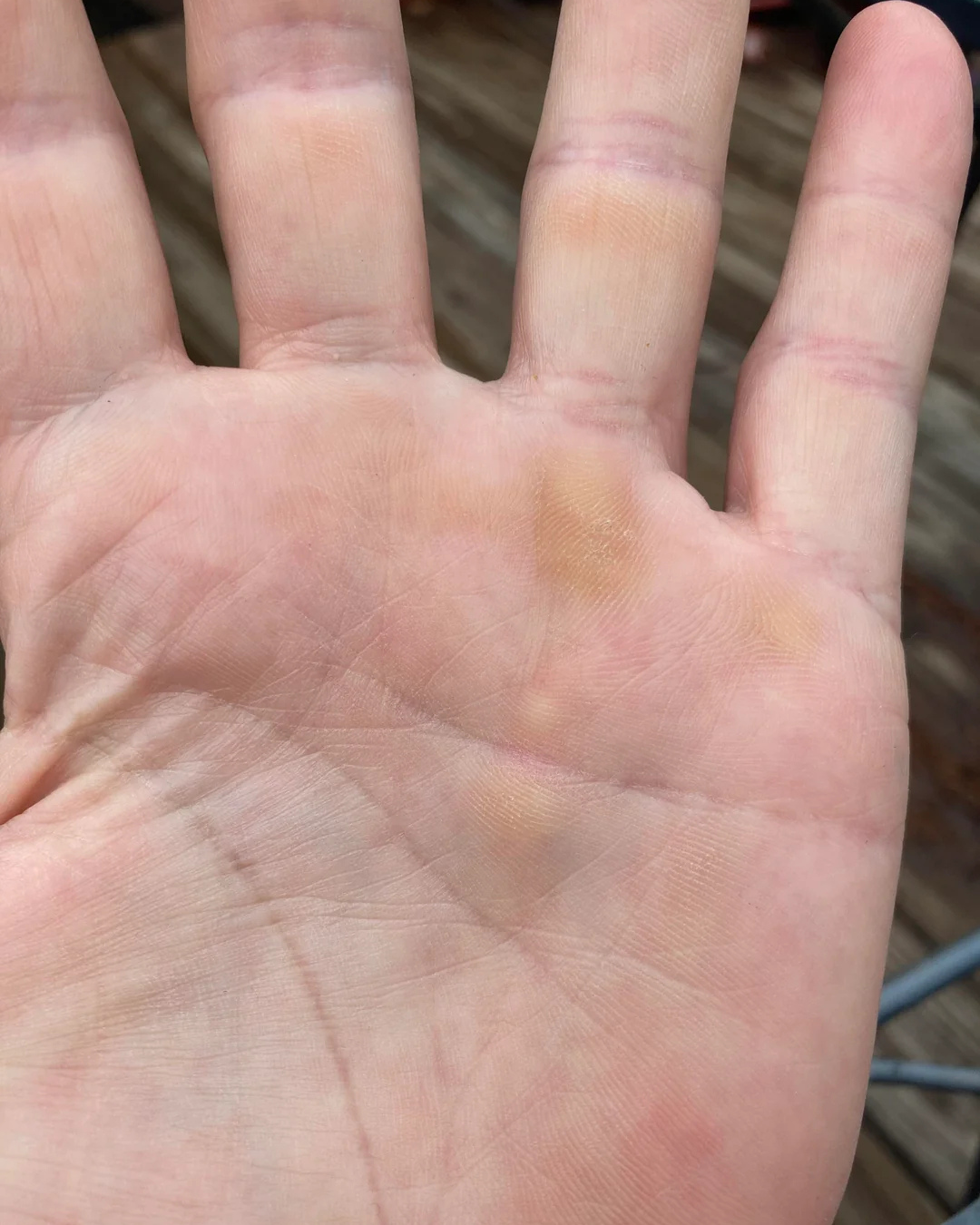
The country with the highest rate of Dupuytren's contracture in the world also has the lowest rate of surgery for it. I found that out by accident. And it completely changed what I thought was going to happen to my hand. Eight months ago I found a hard lump in my palm. I went home and typed the name into Google. Dupuytren's contracture. What I found was not reassuring. The fascia under the skin of your palm starts to thicken. It forms a cord. The cord pulls your fingers down toward your palm. First slowly. Then faster. It does not stop on its own. I read about the ring finger. The little finger. I looked at the photos. Stage 1. Stage 2. Stage 3. I kept thinking about my father. I went back to my doctor and asked him directly. What happens if I do nothing? He said the same thing the internet said. It progresses. Some people slowly, some people faster. There is no way to know which one you will be. The only real options are surgery or injections, and neither is recommended until the finger has bent at least 30 degrees. Mine was barely starting. So he told me to wait. I want to be honest about what that felt like. It did not feel like prudent medical advice. It felt like watching something happen to my body and being told to just observe it. Every morning I would press the nodule in my palm and try to remember if it felt harder than the day before. I started comparing my ring finger to my other hand. I started hiding my hand in photos without even noticing I was doing it. A few weeks later I was reading a hand surgery forum online. Someone had posted a question about recurrence rates after surgery. Another person replied. And buried in that reply was something I had never seen mentioned anywhere before. They said that Scandinavia has the highest concentration of Dupuytren's in the world. Norway, Sweden, Finland. It is so common there they call it the Viking's Disease. One in five men over fifty has some form of it. But here is the part that stopped me cold. Despite having the highest rates in the world, those countries also have the lowest rates of surgery for it. Not because they ignore it. The complete opposite. Because they treat it early. From the very first stages, before any finger has bent, Scandinavian hand specialists use a conservative protocol. Controlled compression. Deep tissue infrared heat. Direct stimulation of the fascial tissue to keep it pliable and slow the fibrous build-up. They do not wait for the contracture to get bad enough to operate. They intervene while the tissue is still responding. That is why their surgery rates are so low. Not because the disease is milder there. Because they start before it becomes severe. I thought about my doctor telling me to wait. I thought about every person in this group who was told the same thing. Wait until it is bad enough. Wait until the finger bends thirty degrees. Wait until surgery becomes the only option left. Scandinavia does not wait. I started looking into what that conservative protocol actually involves. The mechanism is not complicated. Dupuytren's tissue becomes rigid because the fascia loses its normal blood supply and starts producing abnormal collagen. What the Scandinavian approach does is apply deep infrared heat to restore circulation and prevent the fascia from hardening further. Combined with controlled compression and targeted pressure directly on the nodule and the cord, this slows the fibrotic process. The fascia stays softer. The progression slows. Surgery gets delayed by years. In early stages, sometimes indefinitely. I looked for something that could replicate that combination at home. I found the Neurivo hand massager. Infrared deep heat, compression therapy, and targeted acupressure across the palm and fingers. The same three elements the Scandinavian protocol is built on. I was skeptical. I have been in this group long enough to know that most things marketed for hand problems do nothing. But this was not a cream or a generic splint. It was built around heat, compression, and direct fascial stimulation. 15 minutes a day. I have been using it for six weeks. My nodule is still there. I am not going to pretend otherwise. What I can tell you is that the stiffness I had every morning is significantly less. The tightness across my palm that had been quietly getting worse month by month has not gotten worse. My ring finger moves more freely than it did eight weeks ago. There is someone else in this group, Terry, also early stage. He said after just two sessions he could feel a difference and is hoping it slows the progression. There is michybegs who had surgery three years ago and started using it because the contracture is coming back. Said it is giving real relief. That is the honest version of where I am. This is not a cure. Dupuytren's does not have a cure. What this is, is what the Scandinavians figured out a long time ago. You do not wait for the hand to get worse. You treat the tissue while it can still respond. My father waited. He did not have this information. I do. And now you do too. If you are in the early stages and your doctor has told you to just monitor it, I would look at this before accepting that as your only option. Link below https://neurivolab.com/products/therapeutic-massager-for-dupuytrens
Engagement over time
Not enough history yet to show a trend.