Lauren Mitchell
50% OFF — it wasn't infertility
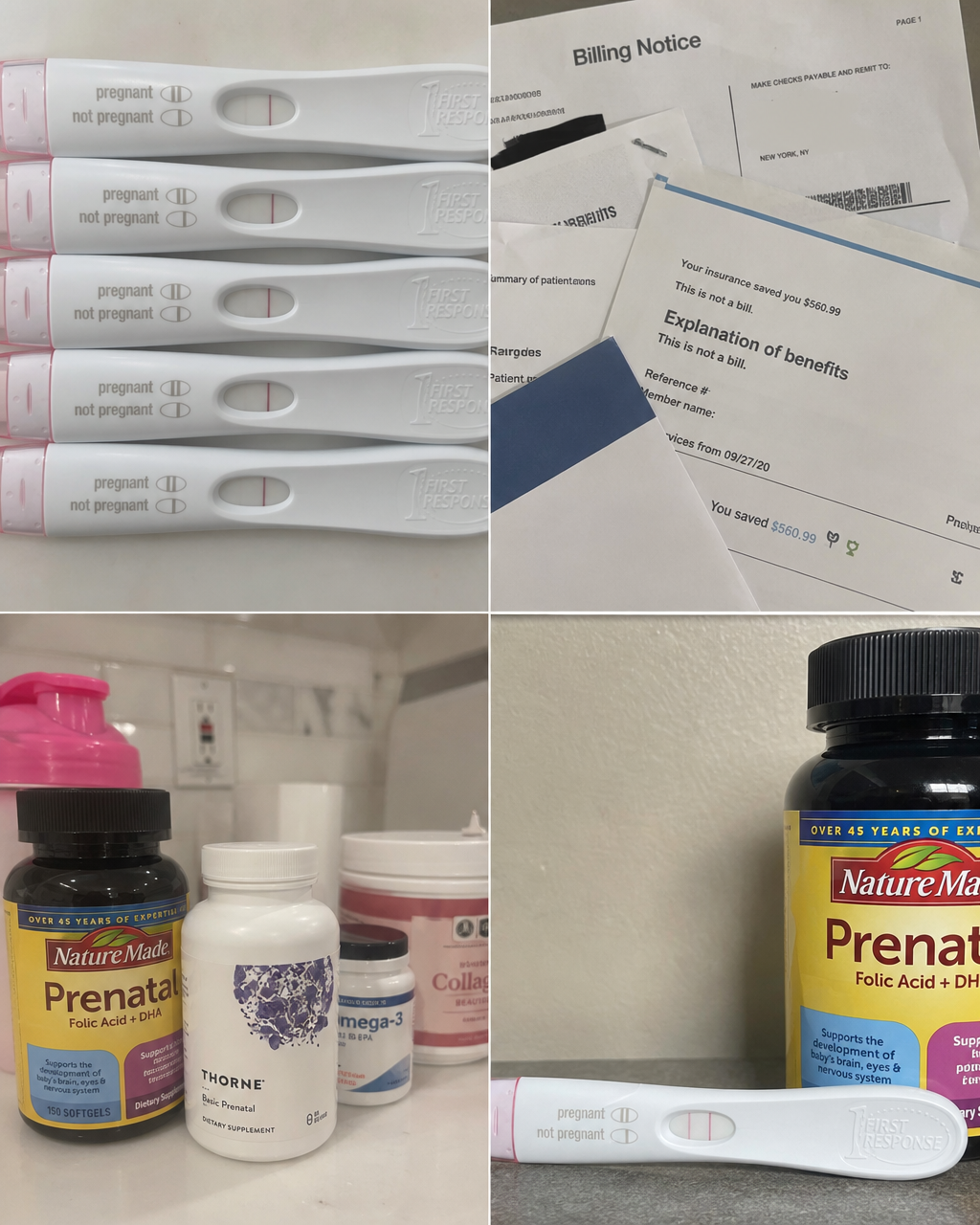
Two rounds of IVF. $28,000. Nobody checked my fasting insulin. I'm going to tell you something that will either make you furious or make you cry. Probably both. My name is Meghan. I'm 33. I live in Gilbert, Arizona. I'm a dental hygienist. And for four years I believed I couldn't have children. I was diagnosed with PCOS at 24. Irregular periods since I was 16 — sometimes 45 days apart, sometimes 60, sometimes nothing for three months. My gynecologist put me on birth control at 17 and said it would "regulate things." It didn't regulate anything. It just covered it up. When Tyler and I started trying in 2021, I went off the pill. My period disappeared entirely. Not late. GONE. Four months. Five months. Six months without a single cycle. My OB referred me to a reproductive endocrinologist. Dr. Patel. Nice office. Diplomas on the wall. Ultrasound machine that cost more than my car. She did an ultrasound on day one. Classic PCOS ovaries — "string of pearls" she called them. Dozens of tiny follicles, none of them maturing. She told me my ovaries were "lazy" and we'd need to "wake them up." She put me on Letrozole. Three rounds. Nothing. No ovulation. No follicle growth above 12mm. She added Metformin. Made me so nauseous I couldn't eat lunch at work for six weeks. Still nothing. Then she said the word I'd been dreading: IVF. Do you know what IVF costs in Arizona? Our clinic charged $14,200 per cycle. That's before medication, which was another $4,800. Before monitoring appointments — $350 each, three times a week for two weeks. Before the anesthesia fee. Before the embryo transfer fee. We put $15,600 on a credit card for Round 1. I gave myself 67 injections in 12 days. Gonal-F in the morning. Menopur at night. Ganirelix when my estrogen got too high. A trigger shot at exactly 9:45 PM on a Tuesday because that's what the nurse said and God forbid you're three minutes late. They retrieved 14 eggs. I was so hopeful I bought a onesie on the way home. Yellow, with tiny ducks on it. Of those 14 eggs, 9 were mature. Of those 9, 6 fertilized. Of those 6, 2 made it to day 5 blastocyst. Two. They transferred the stronger one. Grade 4AA. "Excellent quality," Dr. Patel said. "Very optimistic." I spent the next 12 days barely breathing. I didn't exercise. I didn't lift anything over 5 pounds. I ate pineapple core because someone on Reddit said it helped implantation. I wore warm socks to bed because a woman in my IVF support group swore by it. Day 12. Blood test. HCG: 2. Not pregnant. A 2 is what they call a "chemical" — it tried to implant and couldn't. Tyler held me in the parking lot of the clinic for 20 minutes. We sat in the car and I couldn't stop saying "I'm sorry" and he kept saying "stop saying that" and we both knew we were going to do it again because what else do you do. Round 2. Another $12,400. We borrowed from my parents. My mother handed me a check and said "you don't owe us anything" and I almost threw up from the guilt. This time they retrieved 11 eggs. 7 mature. 4 fertilized. 1 blastocyst. One. Transferred on a Wednesday. Grade 3BB. "Good quality," Dr. Patel said. Not excellent this time. Good. Day 12. HCG: negative. Not even a chemical. Just nothing. $28,000. 134 injections. Two transfers. Zero. I stopped going to baby showers. I muted every pregnant woman on Instagram. I couldn't walk past the baby section at Target without my chest tightening. Tyler and I stopped talking about it. Not a decision — just a slow silence that filled the house. My cousin Nicole had her second baby that October. She sent me a photo of the birth announcement and I threw my phone across the room so hard the screen cracked. I'm telling you this because I need you to understand where I was when I found out the thing that changed everything. It was February. I was in my dentist's break room — ironic, I know — scrolling through a PCOS forum I'd been reading for three years. A woman named Sara posted something that stopped me mid-scroll. She said she'd been through two failed IUIs and was about to start IVF when a new endocrinologist — not her RE, an actual endocrinologist — ran a test her fertility clinic never ordered. Fasting insulin. Not fasting glucose. Not A1C. INSULIN. Her fasting insulin came back at 19. The reference range said "normal" was under 25. But her endo told her anything over 10 was a problem for ovulation. And anything over 15 was actively preventing her body from releasing an egg. I read that sentence three times. Then I went back through every single piece of bloodwork from four years of fertility treatment. Dr. Patel had tested my FSH, my LH, my estradiol, my AMH, my progesterone, my testosterone, my DHEA-S, my thyroid panel, my prolactin. She never tested fasting insulin. Not once. In four years. Across $28,000 of treatment. I called my GP the next morning and asked for a fasting insulin test. She said "that's not standard for fertility workups." I said I didn't care. She ordered it. It came back at 22. Twenty-two. "Normal range" on the lab printout. But according to every piece of research I spent the next 72 hours reading, a fasting insulin of 22 meant my body was producing roughly 3 to 4 times the insulin it needed to process a normal meal. And that excess insulin was doing something nobody at my fertility clinic ever explained: It was suppressing a hormone called SHBG, which allows testosterone to flood my ovaries, which prevents any follicle from ever fully maturing, which means no ovulation, which means no pregnancy — no matter how many drugs they pumped into me, no matter how perfect the embryo grade, no matter how much money we spent. The eggs weren't the problem. The uterus wasn't the problem. The INSULIN was the problem. And not a single person in that $14,000-per-round clinic thought to check. I was furious. I am still furious. I called Dr. Patel's office. I asked why fasting insulin was never ordered. The nurse said "it's not part of our standard panel." I asked whose decision that was. She put me on hold. Dr. Patel never called back. I started reading everything about insulin resistance and ovulation. Not the trying-to-conceive blogs. The actual endocrinology journals. What I found: Up to 70% of women with PCOS have some degree of insulin resistance. Elevated insulin directly stimulates ovarian androgen production. Androgens prevent follicle maturation. No mature follicle = no ovulation. No ovulation = no pregnancy. Metformin helps some women — but it primarily works on muscle tissue insulin sensitivity. It barely touches hepatic (liver) insulin resistance, which is where most of the metabolic damage happens in PCOS. Letrozole can force an egg out, but if insulin is still high, the hormonal environment is so hostile that implantation rates drop significantly. Even IVF — even bypassing ovulation entirely — has lower success rates in women with uncontrolled insulin resistance. The embryo quality suffers. The uterine lining is affected. The immune environment shifts. Every single intervention I'd been through was treating the DOWNSTREAM effect of a problem nobody bothered to identify. Sara — the woman from the forum — said she'd worked with a functional medicine doctor who put her on a protocol targeting insulin resistance. Not Metformin. Three specific compounds: Berberine for AMPK activation — the enzyme that helps cells absorb glucose without needing as much insulin. She said her functional medicine doctor told her it was the most underused compound in reproductive endocrinology. Ceylon Cinnamon extract — the clinical form, not grocery store cinnamon — for supporting insulin sensitivity at the receptor level. Chromium — for glucose metabolism and reducing the insulin spikes that were poisoning her ovulation cycle. She said she found a supplement that had all three at clinical doses. YOLO Daily Sugar Control. She'd been taking it for 4 months when she got pregnant naturally. No IVF. No IUI. No Letrozole. I want to be clear: I didn't believe her. I thought she was selling something. I actually checked her post history — three years of genuine PCOS struggling. Hundreds of comments. She wasn't a bot. She wasn't sponsored. She was just a woman who found the thing nobody told her about. I ordered it that night. $59. After spending $28,000, the number almost made me laugh. I also asked my GP to retest my fasting insulin every 30 days so I could track whether anything was actually changing. Week 1: Nothing dramatic. Maybe slightly less bloated after meals. Could have been placebo. Week 2: I noticed I wasn't crashing at 3pm. The afternoon exhaustion that I'd accepted as just who I am... wasn't there. I ate lunch and just kept going. Week 3: My fasting glucose, which I'd started tracking with a monitor, dropped from 101 to 92. That's when I thought okay, something is actually happening. Day 30: Fasting insulin retest. 22 → 14. Down 8 points in one month. I stared at that number on the lab printout and called Tyler at work. He said "what does that mean?" I said "it means my body might actually be able to ovulate." Day 47: I got my period. That doesn't sound like news. But I hadn't had a natural period in 9 months. It came on its own. No Provera. No birth control. My body did it by itself. Day 60: Fasting insulin retest. 14 → 11. Day 74: Another period. 27-day cycle. I cried in the bathroom at work. My coworker knocked on the door and asked if I was okay and I said "yes" and meant it for the first time in years. Day 90: Fasting insulin: 9. Single digits. My GP actually said "whatever you're doing, keep doing it." Day 118: Positive pregnancy test. I took four of them. Different brands. I lined them up on the bathroom counter and took a photo and sent it to Tyler with no caption. He called me 11 seconds later. I know because I was staring at my phone waiting. I'm writing this at 24 weeks. My anatomy scan was perfect. The perinatologist said my glucose tolerance test was "textbook." The baby is measuring right on track. I spent $28,000 trying to force my body to do something it couldn't do because nobody addressed the one thing standing in the way. Then I spent $59 on a supplement that supported the one metabolic pathway nobody thought to check. I'm not saying YOLO got me pregnant. I'm saying insulin resistance was preventing me from ovulating, and when my insulin dropped, my body did what it was designed to do. I don't know if it would work for everyone. Bodies are complicated. PCOS is complicated. But I know that my fasting insulin went from 22 to 9. I know that my cycles came back. I know that I'm 24 weeks pregnant without a single injection, without anesthesia, without a credit card balance, without my mother's check. If you have PCOS and you're trying to conceive, I am begging you: ask for a fasting insulin test. Not glucose. Not A1C. INSULIN. If it's over 10, you have your answer for why nothing is working. And if your RE says "that's not part of our standard panel," find someone who will order it anyway. 🛡️ 50% OFF — check if YOLO Daily Sugar Control is still in stock: P.S. — I still take it. My OB said the ingredients are pregnancy-safe and my glucose numbers are the best she's seen from a PCOS patient. I'm not stopping until this baby is in my arms. P.S.S. — There's a 365-day money-back guarantee. After what I spent on IVF, the idea that a $59 supplement has a better return policy than a $14,000 medical procedure makes me want to scream. P.S.S.S. — Tyler says to tell you he wishes someone had told us about fasting insulin before we spent our kitchen renovation money on eggs that never had a chance. His words. I'm not editing them. P.S.S.S.S. — The yellow onesie with the ducks is still in my dresser. Third drawer. I'm going to put it on this baby the day we come home from the hospital.
Engagement over time
Not enough history yet to show a trend.