Greg From Aurivita
The Most Common Questions At Aurivita Answered
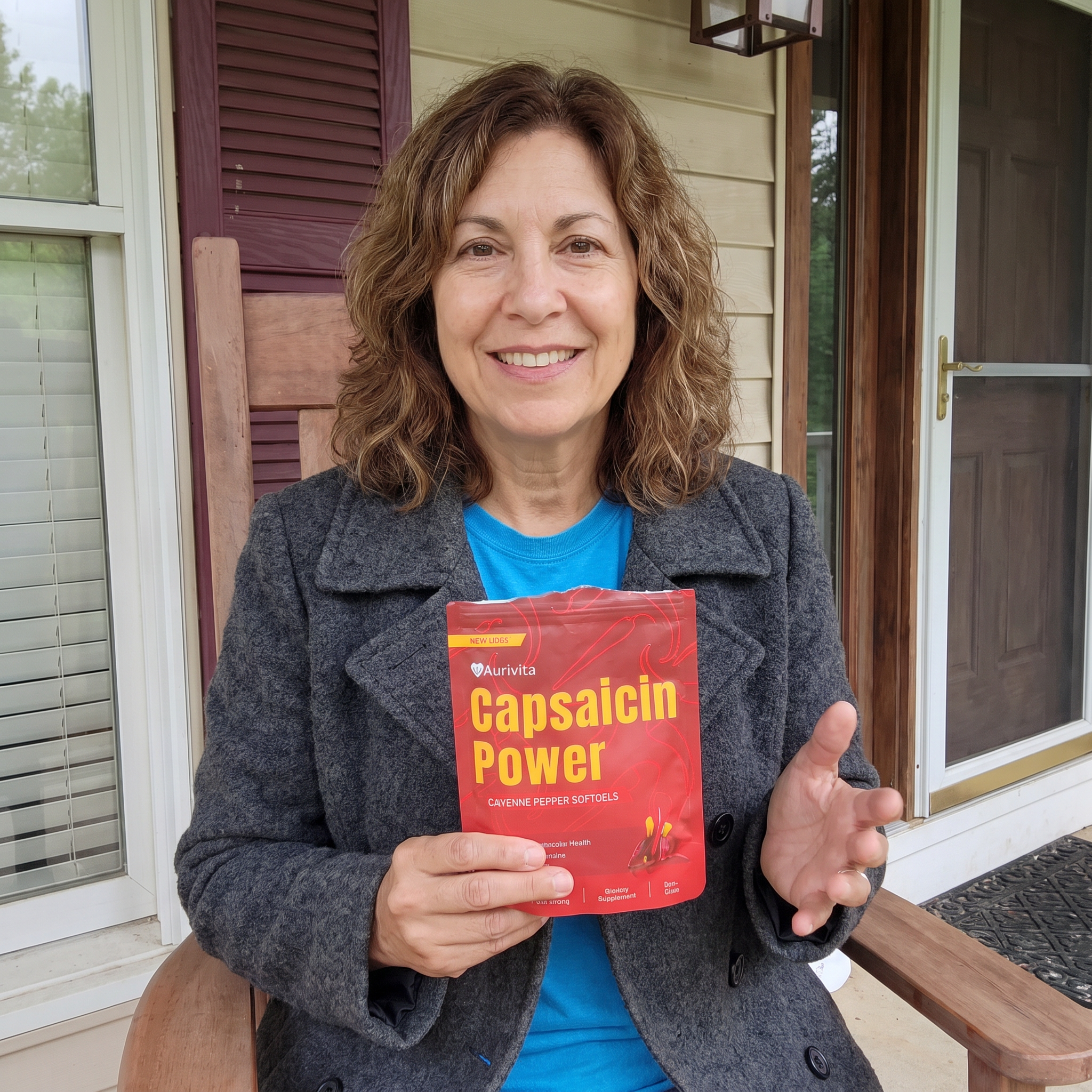
How often should you be taking cayenne pepper if you actually want to move your cardiovascular markers? I get this question about fifteen times a day. My name is Greg Halvorsen. I run customer support at Aurivita, and I have been on the phone and answering emails with our customers for the last two and a half years. I have talked to something like 8,000 men and women in that time — most of them between 55 and 75, most of them with lipid panels, blood pressure logs, or blood sugar numbers that their doctors have been "monitoring" for a decade without meaningfully moving. I am not a doctor. I am the guy who picks up the phone. But when you talk to 8,000 people about the same product and the same set of cardiovascular markers, you start to notice which people move their numbers and which people do not. And the difference almost always comes down to one thing. Frequency and consistency. The people who move their markers take cayenne pepper three times a day, every day, for at least twelve weeks. The people who do not move their markers take it once a day, skip weekends, or quit at week six because they haven't "felt" anything yet. Before I explain why the timing matters, I want to answer the other question I get almost as often, which is why cayenne pepper instead of one of the other cardiovascular supplements people ask me about — amla, beetroot, garlic, or nattokinase. I get asked this every day, and my answer is always the same. Every one of those compounds does one specific thing well. Cayenne does several things at once, less specialized, but broader. Amla is very good at one thing: it is a powerful antioxidant that specifically lowers LDL cholesterol. If cholesterol were the only cardiovascular marker you cared about, amla would be a reasonable single-purpose choice. It does not meaningfully lower blood pressure, it does not clear the sugar clogging that damages diabetic vessels, and it does not restart the nitric oxide production in the endothelium that is upstream of most cardiovascular disease. Beetroot is excellent at one thing: the nitrates in beetroot convert to nitric oxide and produce a temporary, meaningful drop in blood pressure. That drop typically lasts four to six hours after each dose. If blood pressure were the only marker you cared about, beetroot would compete. It does not address cholesterol, it does not affect blood sugar, and it does not repair the endothelium — it substitutes for it by supplying nitric oxide from outside instead of restarting the body's own production. Garlic is good at two things: it modestly lowers blood pressure and modestly reduces platelet aggregation, which is the process that produces the clots that cause heart attacks. It does not do much for cholesterol beyond a small effect and it does not touch the vessel lining itself. Nattokinase is specialized at one thing: it breaks down fibrin, which is the protein that forms blood clots. If you have a specific hypercoagulation issue, nattokinase is a legitimate targeted intervention. It does nothing for cholesterol, blood pressure, blood sugar, or the endothelium. Cayenne is different in a specific way. It activates the TRPV1 receptor on the cells lining your blood vessels, which restarts the endothelium's natural production of nitric oxide. That single mechanism affects five things at once — blood pressure comes down, LDL clearance from the arterial wall improves, blood sugar transfer from the bloodstream into the tissue accelerates, inflammation inside the vessel wall reduces, and the platelet aggregation that drives clot formation slows. Is cayenne the single best compound for any one of those five markers? No. Amla will lower LDL more aggressively than cayenne alone. Beetroot will drop blood pressure faster than cayenne alone. Nattokinase will address clotting more directly than cayenne alone. If you have one specific isolated cardiovascular issue and every other marker is normal, a single-purpose compound may be the right choice. But almost nobody has one isolated issue. Almost everyone I talk to on the phone has some combination of elevated cholesterol, elevated blood pressure, elevated blood sugar, and mid-life fatigue that traces back to the underlying vascular decline. And for that person — which is most people over 55 — the right choice is the compound that addresses the whole cluster upstream, not the compound that addresses one downstream marker at maximum intensity while leaving the other four untouched. That is what cayenne does, and that is why we built the formulation around it. One more thing that comes up a lot on my calls, because people expect this and it is worth naming. Aurivita Cayenne Pepper Softgels are not spicy. You do not taste the cayenne. You do not get any of the heat sensation. This is because we paired the capsaicin with turmeric — which has a naturally cooling, coating effect on the digestive tract — along with the avocado oil suspension that carries the compound past the stomach lining and into the small intestine where it is supposed to absorb. The result is a softgel that swallows like any other softgel. No burning, no heat, no aftertaste. If you have avoided trying a cayenne supplement because you were worried about heartburn or gastric irritation, this is why our reorder rate is what it is. Now let me get back to the frequency question, because this is the part where nine out of every ten customers who call me get it wrong. Capsaicin activates the TRPV1 receptor on a specific rhythm. Once capsaicin binds to it and triggers the signal, the receptor takes several hours to reset before it can be triggered again. If you take one softgel in the morning, you get one wave of nitric oxide production that peaks somewhere between two and four hours after the softgel dissolves, and then tapers off. The receptor sits idle for the rest of the day. Your endothelium gets one shot at repair per 24-hour cycle. If you take one softgel with breakfast, one with lunch, and one with dinner, you get three waves of activation across the day. The repair process happens continuously instead of in a single burst that fades by mid-afternoon. This is why the protocol on the bag is one softgel with each meal. It is the difference between a formulation that moves numbers and one that does not. The customers I talk to who have moved their LDL by 40 to 80 points, dropped their systolic blood pressure by 10 to 20 points, or seen their HbA1c come down by a full point or more — every single one of them, without exception, is on the three-times-daily protocol. The customers who call me at week ten frustrated that nothing has changed — nine out of ten of them, when I ask, are on one softgel a day, usually with breakfast, usually because they forgot the other two. Three other things separate the customers who move their numbers from the ones who do not, and I want to name all three because they matter. Take it with food and a full glass of water. Capsaicin is fat-soluble. If you take it on an empty stomach with a sip of coffee, most of it passes through unabsorbed. Take it with real breakfast, real lunch, real dinner. The water carries it cleanly through the stomach. Give it eight to twelve weeks before you judge. The vessel lining is one of the slowest-repairing tissues in the human body. It will not produce measurable changes on your bloodwork or your blood pressure log for at least six weeks, with the meaningful changes typically appearing between weeks eight and twelve. This is exactly why we set the money-back guarantee at 120 days — the biology needs the full window, plus a buffer month. Keep taking it after your numbers move. This is where I lose the most customers. The endothelial repair is real, but it is not permanent unless you keep supporting the mechanism. I have talked to customers who moved their LDL from 180 to 110 in four months, stopped taking Aurivita, and were back at 165 nine months later. This is a maintenance protocol, not a cure. Here is what I tell every customer who calls me and asks how often they should take cayenne pepper. One softgel with breakfast. One softgel with lunch. One softgel with dinner. Each one taken with a full glass of water. Every day. For at least twelve weeks before you judge whether it is working. And after your numbers move, keep taking it. That is the protocol that moves cardiovascular markers. We are running a first-time customer promotion right now that brings the daily cost below what most of my customers spend on a single cup of coffee — up to 48 percent off your first order. Every order comes with our 120-day money-back guarantee, full bag or empty bag. If you take it the way I just described for 120 days and your bloodwork does not move and your symptoms do not lift, you send the bag back and we refund every dollar. No paperwork. No fine print. I have processed thousands of refunds in two and a half years. I have processed fewer than 40 of them for people who followed the three-times-daily protocol for the full 120 days. That is the number on my refund dashboard as of last month. The reason I am telling you all of this is that the difference between the customers who move their cardiovascular markers on Aurivita and the customers who do not is not the product. It is the protocol. And I would rather spend ten minutes writing this and have you succeed than sell you a bag you take once a day for six weeks and then quit on because you were not told how to take it correctly. If you have questions before you order — about how it interacts with your medications, about what to expect at each stage of the twelve weeks, about anything else — call the number on our site and you will probably get me. I am the one who picks up. — Greg Halvorsen Customer Support Lead, Aurivita
Engagement over time
Not enough history yet to show a trend.