Nerves & Tremor support community
for every parkinsons survivor
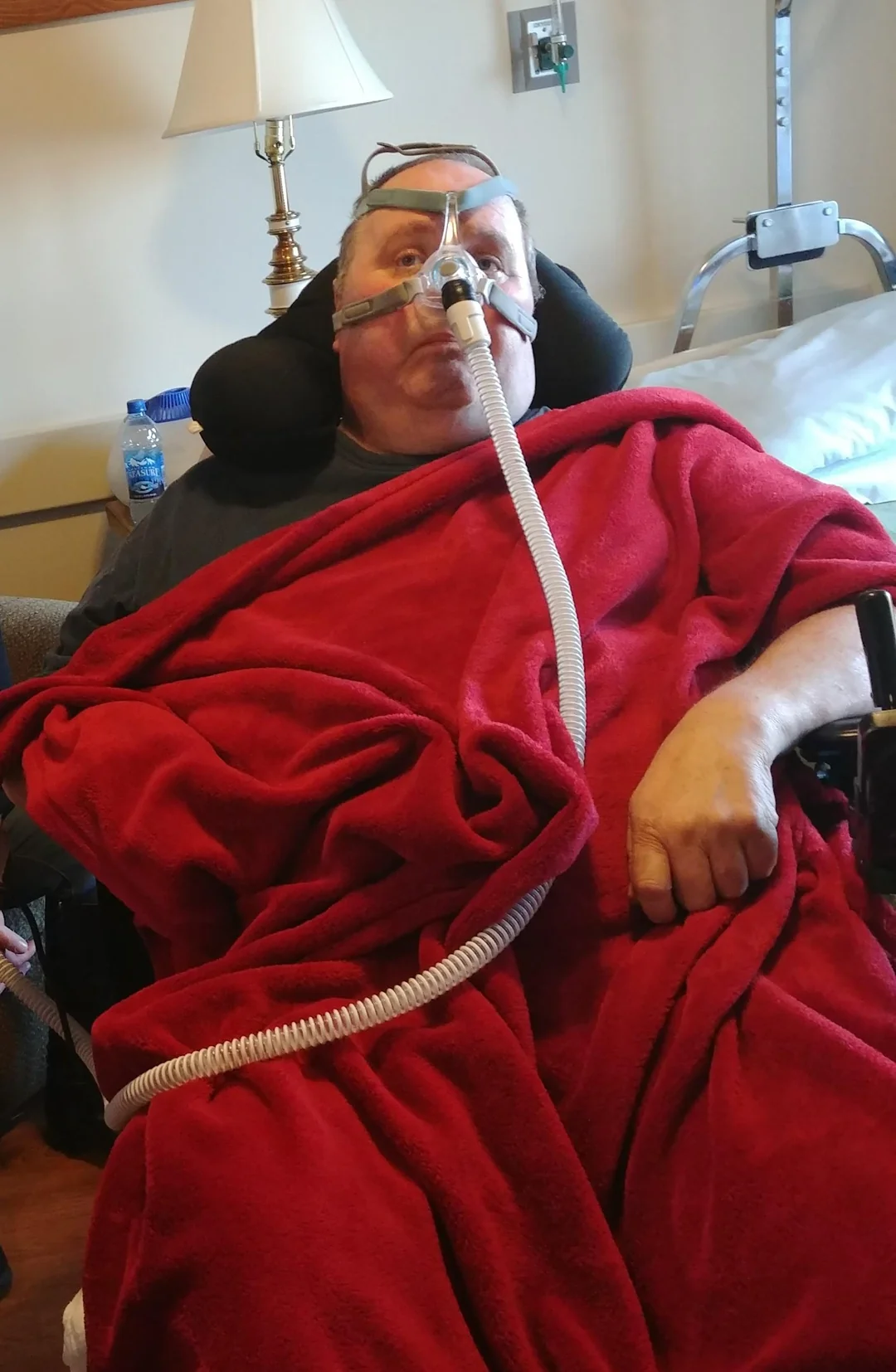
I'm a nurse. I spent fourteen years on a neuromuscular unit handing out Riluzole. Two months ago I was diagnosed with ALS myself, and I refused to fill the same prescription I've been handing other people for over a decade. I want to explain why. Because there's a sentence I've never once been allowed to say to a patient in fourteen years on the floor. And until it was my own name on the chart, I kept my mouth shut. I'm not keeping it shut anymore. My name is Diane. I spent fourteen years on a neuromuscular unit at a hospital I'm not going to name. I've handed out more Riluzole than I could count. I've watched families walk in terrified and walk out with a prescription and a little hope. And I've watched most of those same patients come back three months later, six months later, worse. Still on the medication. Still doing everything right. Still losing ground. That's the part that broke me eventually. I just didn't know it yet. Here's what my job looked like. A patient gets diagnosed. The neurologist writes the script. My job is to hand it over and explain the dosing. And when the wife asks me, the way they always ask, "will this help?", I'm allowed to say one thing. "It may slow things down a little. Your doctor will manage it." I'm not allowed to say what I actually think. I'm not allowed to tell her that the pill in her husband's hand was only ever shown to extend survival by two or three months on average. Two or three months. That's what we call a breakthrough in ALS. I'm not allowed to tell her that it does nothing for the exhaustion that's already hollowing him out, or the cramping that wakes him at 3 AM, or the fact that his voice is getting quieter every week, or the afternoon where he sat down at 2 PM and didn't have the energy to stand back up until dinner. I'm not allowed to tell her that the thing she's actually afraid of losing, his independence, his presence, him, the medication was never designed to protect. Say that out loud in front of a patient and I'm out of a job. Possibly out of a career. That's not a metaphor. That's a real rule. So I learned to nod. To smile. To explain the schedule. To go home and try to forget, and come back the next shift and do it again. That was the deal I made for fourteen years. Two months ago the deal blew up. It was a routine appointment. I'm fifty-two. I exercise, I cook my own food, I've never missed a shift I didn't choose to miss. But I'd been ignoring things. My left hand had been cramping for months and I blamed it on charting. I'd been tripping on flat ground and blamed my shoes. My voice had started giving out by the end of a twelve-hour shift and I blamed fatigue. Then my hand stopped cooperating with a pen the way it used to, and I stopped blaming anything because I'd watched that exact progression walk through my doors hundreds of times. The neurologist confirmed it. Early-stage ALS. Motor neuron disease. And then, in the next breath, "I want to start you on Riluzole. I'll send it to your pharmacy today." He didn't ask. He told. Fourteen years of nodding collapsed in about four seconds. I drove home and sat at my kitchen table and cried. Not because I was afraid of the diagnosis. Because I knew exactly what was coming. I was about to walk into the same machine I'd been feeding patients into for over a decade, and I had spent fourteen years watching that machine offer almost nothing while the person disappeared. I let the prescription sit at the pharmacy. I didn't pick it up. I told my husband I needed a week. He's a paramedic. He's seen what I've seen. He didn't argue. That week I did the thing I never let myself do as a working nurse. I read. Not the drug pamphlets. The actual studies. The research nobody hands you on the floor because it complicates the story you're paid to tell. And I learned something I cannot believe I didn't know. The muscle weakness was never the whole problem. I had to sit with that for a week before I accepted it. The weakness is the part everyone can see. It's the part the diagnosis is built around. But it's the downstream result, not the upstream cause. And the upstream cause is what nothing in my medication cabinet was ever built to touch. Here's what's actually happening. ALS doesn't just kill motor neurons. It kills them in a specific way. The first thing is oxidative stress. Free radicals. Unstable molecules that corrode motor neurons day after day, like rust eating through wiring. The motor neurons in ALS patients are under constant oxidative attack, and every day the damage compounds. The cells that control your muscles are being eaten alive from the inside. The second thing is energy collapse. Every motor neuron runs on tiny engines called mitochondria. In ALS, those engines start failing. The neurons can't produce enough energy to maintain themselves, to fire properly, to stay alive. They're starving. And starving cells die. That's the mechanism underneath the weakness, the fatigue, the cramping, the fading. It's not just that neurons are dying. It's that they're running out of fuel while being attacked by rust, and nobody is addressing either one. The third thing is mineral depletion. The nervous system runs on trace minerals. Magnesium. Zinc. Selenium. Dozens more. ALS drains them. Stress drains them. And nobody measures them because mineral panels aren't part of a standard ALS workup. Nobody is looking. So nobody tells you. A nervous system rusting from the inside while the fuel it needs to fight back runs dry. That's the real machine. And here's what I had to face about the drug I'd been handing out for fourteen years. Riluzole reduces glutamate, a chemical that overexcites motor neurons and speeds up the damage. That's the whole mechanism. It tries to slow one part of the destruction. The studies show it extends survival by roughly two to three months on average. That's real, and I don't dismiss it. But the rust is still spreading. The energy is still collapsing. The minerals are still draining. The drug touches one piece of the puzzle and leaves the rest of the picture falling apart. That's why my patients kept coming back worse with "stable" charts. The medication did what it was designed to do. It nudged one mechanism. But the exhaustion, the cramping, the fog, the bone-deep fatigue that made them ghosts of themselves months before the disease took their movement, nobody was touching that. Doctor after doctor writing "disease progression" and moving on. As if progression were a weather pattern and not something with a mechanism you could actually address. That week I went looking for what actually reaches the damage. I'd watched the whole menu fail on my patients over the years. CoQ10 by itself. Vitamin D. Magnesium. B12. Curcumin. Lion's mane. The "nerve health" formulas. Every one has the same flaw. It adds a single nutrient, and almost none of it ever reaches the brain or the spinal cord. There's a wall around the central nervous system called the blood-brain barrier that blocks nearly everything out. Swallow all the minerals and antioxidants you want. Most of it goes straight through you. There's one thing that gets through. High in the Himalayas, when the summer sun warms the rock, a black resin seeps out of the cracks in the stone. They call it shilajit. Ayurvedic healers used it for five thousand years and called it the destroyer of weakness, the thing they reached for when a body was breaking down from the inside. Modern science finally caught up to why. Shilajit is one of the most antioxidant-rich, nutrient-dense substances on earth, so it fights the exact free radicals doing the damage. And it's loaded with fulvic acid, one of the only compounds that can carry minerals past the wall around the central nervous system, into the cells that need them. The antioxidants to fight the rust. The minerals to refuel. And the one key that gets them both through the door. Into the motor neurons, where the damage actually is. Then I did what nurses do before we trust anything. I checked the product. Because most shilajit is a scam. It's one of the most faked substances on earth, and most of the real resin gets wrecked by cheap high-heat processing that burns off the very thing you're paying for. Some is contaminated with heavy metals. Most has no lab report you can actually read. I went with a small brand called Xara Shilajit. Processed under low heat so the good stuff survives. Standardized to over eighty percent fulvic acid. Third-party tested, with the dated lab report sitting right on the page, so I didn't have to take anyone's word for it. No fillers. No heavy metals. And nine more brain and nerve ingredients built around the shilajit, including CoQ10, the exact fuel those motor neurons run low on. And it's a gummy. One a day. Not another pill on a shelf already full of them. For someone whose swallowing is starting to change, that matters more than most people realize. I took my first one with breakfast. I left the Riluzole at the pharmacy. The first few days, nothing. It doesn't announce itself. So I just kept going. One gummy, every morning. Then the small things started. End of the second week, my afternoons came back. That two o'clock wall I'd been hitting for months, the one that sat me down in a chair and wouldn't let me up, just eased. Not gone. Eased. Like the volume on something that had been screaming inside my body turned down by half. That's the first phase. The oxidative load settling. You don't feel the chemistry. You feel the noise lifting. Week three, the fog cleared. I found my words again. I stopped losing the thread of a conversation at minute four. I stayed sharp through a full twelve-hour shift for the first time in months. My charge nurse looked at me sideways and said, "You seem like yourself today." I almost cried in the break room. Week four, the cramping eased. Not disappeared. Eased. The 3 AM cramps that had been waking me every night, the ones that left my calves locked and screaming, they backed off. I slept through the night for the first time since before my diagnosis. I woke up and lay there for a minute just feeling what it was like to have actually rested. Week six, my voice came back. Not louder, exactly. Fuller. My husband noticed before I did. He said, "You sound like you again." I was standing in the kitchen and I had to put my hand on the counter because the weight of that sentence almost took my legs out. I'm not going to tell you my ALS reversed. I don't know what an EMG would show, and I'm not claiming to. I'm telling you what I felt, which was the fatigue, the fog, the cramping, the fading, the slow disappearing, all of it easing, at the level nothing else had ever reached. At the level I had watched nothing reach in fourteen years of nursing. At my follow-up, my neurologist ran his assessment, looked at me, and said, "Whatever you're doing, keep doing it." I told him what it was. He was quiet for a long moment, the kind of silence I've learned to recognize, a doctor recalibrating in real time. Then he wrote it down. Fourteen years of biting my tongue, and a doctor across the table finally said the thing I'd waited my whole career to hear. That's why I'm writing this. Because I cannot keep nodding and smiling. If you've just been diagnosed, or someone you love has, and the doctor is reaching for the pad, I want you to understand one thing. The medication targets one narrow mechanism. That's the job. Everything else you're afraid of losing, the energy, the independence, the voice, the presence, the person, is running underneath, unaddressed, and no one is going to tell you that in a twelve-minute appointment. Xara Shilajit. One gummy every morning. It works where the damage actually is. And it comes with a sixty-day money-back guarantee. Take it for two months, and if you don't feel the difference in your energy, your clarity, and your presence, you send it back and you don't pay. In fourteen years of nursing I never once saw a drug company offer your money back if their drug didn't work. Think about that. It's a small company. They make it in small batches to keep it potent, which means they run out. Right now it's up to seventy-five percent off, and it's buy two, get one free. If you're standing where I stood two months ago, don't wait. Every month the damage runs is a month you don't get back. 👉 https://www.xarashilajit.com/products/xara-shilajit%C2%AE-pure-shilajit-wellness-formula You don't have to walk into the machine. I spent fourteen years feeding people into it. I'm done. Diane, RN P.S. Hear me carefully. If you are already on Riluzole, or Radicava, or anything else your neurologist prescribed, I am not telling you to stop. Nobody should ever stop medication without their doctor, and that conversation belongs to you and your neurologist, not to me and not to a page on the internet. What I chose, at the very start, was to support my nervous system at the level the drug doesn't reach. That's the whole of what I'm saying. P.P.S. The guarantee is the part I keep coming back to. I handed out thousands of prescriptions in my career and not one came with "if it doesn't work, we'll give your money back." Not one. Whatever you decide, that detail is worth sitting with. 👉 https://www.xarashilajit.com/products/xara-shilajit%C2%AE-pure-shilajit-wellness-formula
Engagement over time
Not enough history yet to show a trend.