Muslim Health Insider
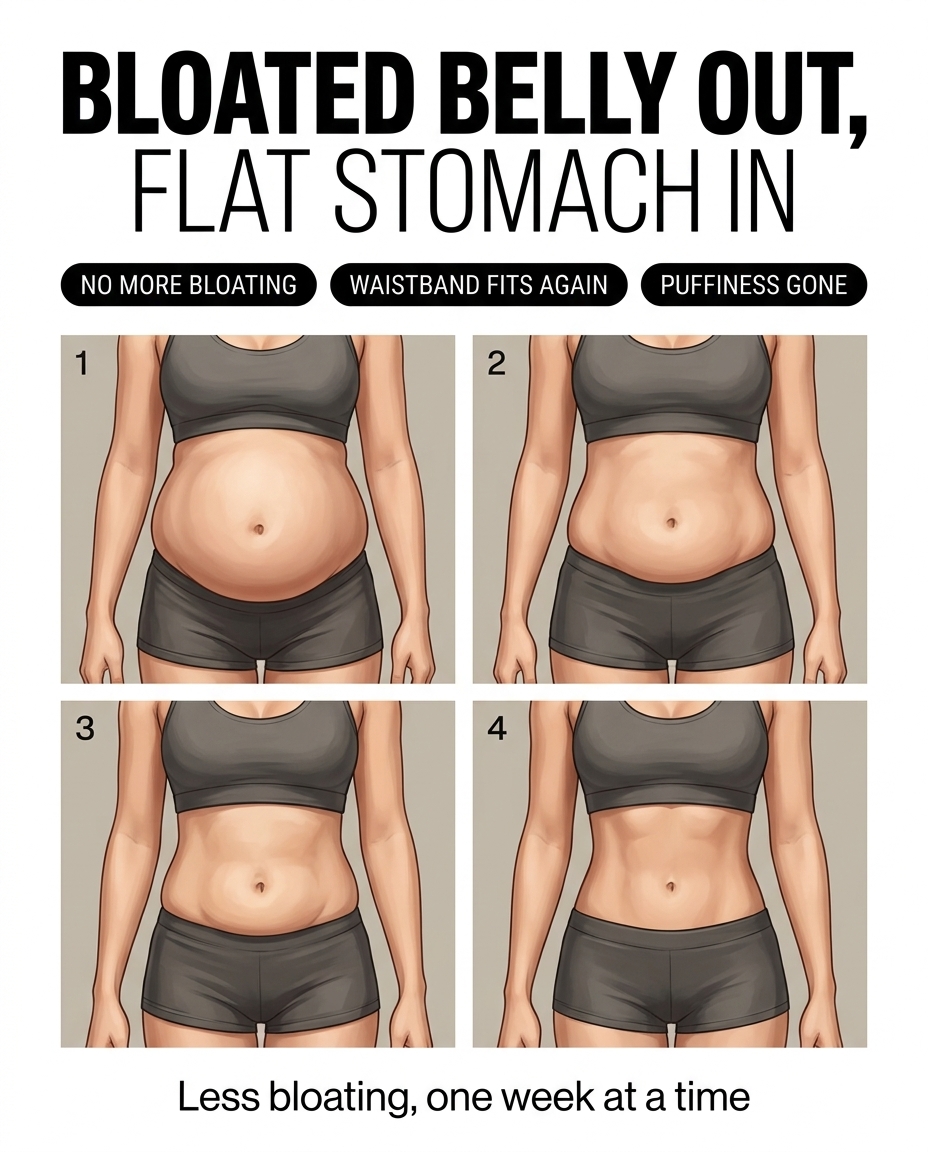
Nine hours. Same woman.
Four pictures of the same woman on the same day. Fajr: waistband fine, rings slide on, stomach flat. After Dhuhr: breakfast is still in there, and lunch has joined it. Asr: the waistband pulls. The loose kameez comes out of the wardrobe. Maghrib: the rings won't come off and the ankles look puffy. Nine hours. Nobody gains anything in nine hours. That's the thing that finally made me stop dieting and start reading. Fat takes months to arrive and months to leave. It does not turn up between Fajr and Maghrib and then vanish again by morning. Water does. Gas does. Both take their orders from the same place. Stress raises cortisol. Cortisol tells your kidneys to hold on to sodium, and water follows sodium — into your fingers, your ankles, your middle. The same stress state slows digestion, so food sits longer and what sits ferments. Breakfast is fine. Lunch adds to it. By Maghrib there's a queue. And here's the part that traps you. Feeling that waistband pull creates fresh stress, which raises cortisol again — which is why it's back tomorrow no matter how carefully you ate today. It's a loop, and willpower isn't a lever on it. Restriction is stress too. Which means every diet I ever did was quietly feeding the thing I was trying to fix. The whole thing is written up here — all four steps, and every number with its source attached: https://www.myislam.store/pages/see-how-muslim-women-over-30-are-beating-the-mental-fog-belly-bloat-hijab-hair-fall
Engagement over time
Not enough history yet to show a trend.