Senior Health Guide
As a rheumatologist, I'm telling you — your pill isn't enough
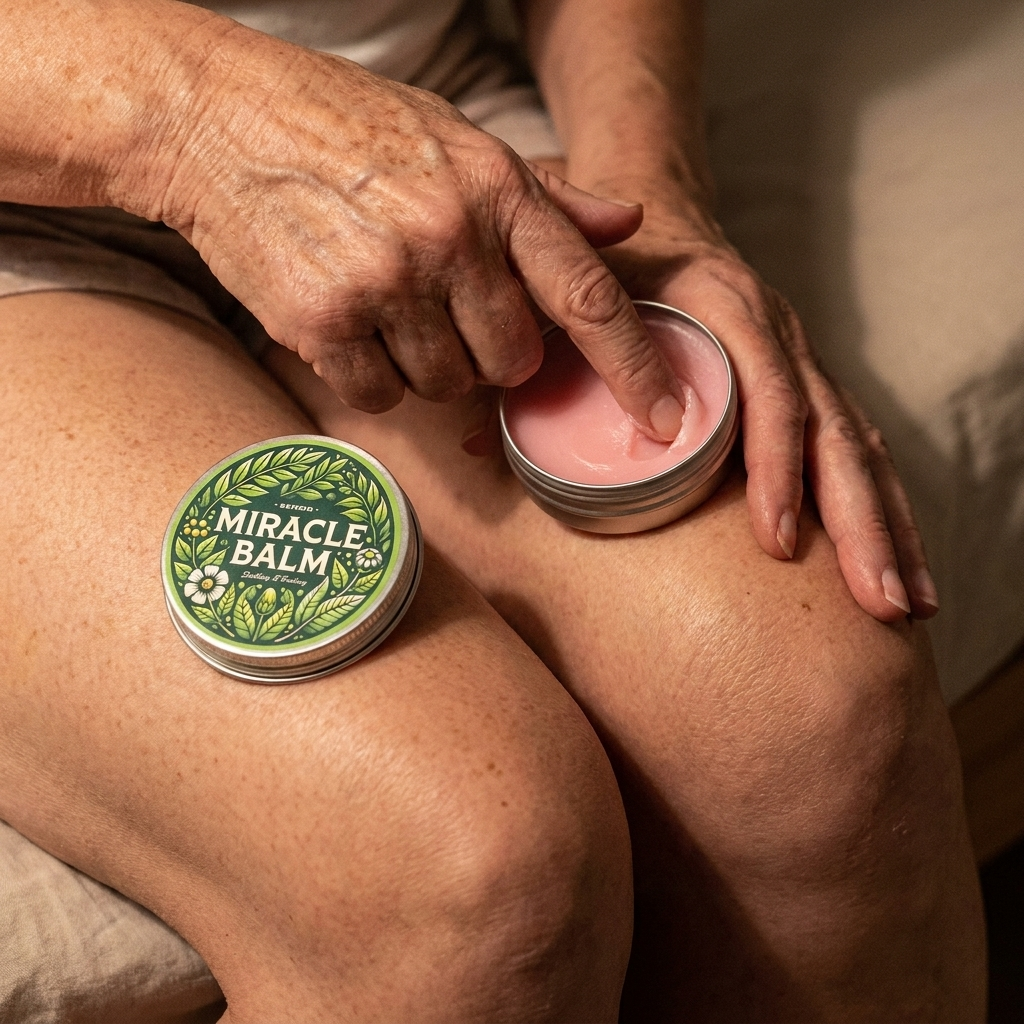
I've been a rheumatologist for 21 years. ⠀ And I need to tell you something that most doctors in my position will never say out loud. ⠀ The pill we've been handing you — the Naproxen, the Ibuprofen, the Meloxicam — does not treat your knee. ⠀ It manages one part of the inflammation. And leaves the other half completely untouched. ⠀ Nobody is telling you that. And that gap is why you're still getting worse. ⠀ My name is Dr. Patricia Harlow. Board-certified rheumatologist. I've diagnosed and managed osteoarthritis in over 3,100 patients across two decades. ⠀ I'm breaking ranks today. Because of what happened to one of my patients — and because of what I eventually had to admit about myself. ⠀ Eleanor was 67. Osteoarthritis in both knees. She'd been managing it — or trying to — for twelve years. ⠀ She walked into my office leaning on a cane she shouldn't have needed. ⠀ She had done everything right. Everything I would have told her to do. ⠀ Eight hundred milligrams of ibuprofen, three times a day. Glucosamine supplements for four years. Two corticosteroid injections per year. Physical therapy twice a week. A knee brace she wore to the grocery store, to church, to her granddaughter's birthday party. ⠀ And her knees? ⠀ Still swollen. Still grinding. Still waking her up at 3am when she rolled over. ⠀ She looked at me across my desk and said something I still think about. ⠀ "Dr. Harlow. I have done everything every doctor told me to do for twelve years. Why am I getting worse?" ⠀ I didn't have a good answer. ⠀ And that is what sent me looking. ⠀ Here's what your doctor probably never fully explained about your knee. ⠀ When cartilage breaks down in osteoarthritis, the joint produces inflammatory compounds called cytokines. Specifically — TNF-alpha and Interleukin-1 Beta. These are signaling proteins. And their job, once released, is to call in more inflammation. To break down more cartilage. To sensitize the nerve endings in the surrounding tissue so that even light pressure on your knee fires like a lit match. ⠀ This is not simply a pain problem. ⠀ This is a runaway inflammatory signal that is actively destroying tissue from the inside. Every day it runs unchecked. ⠀ Here's what ibuprofen and naproxen actually do — and where they stop. ⠀ NSAIDs travel through the bloodstream and act on the inflamed tissue inside the knee joint. They block COX-1 and COX-2 enzymes — the enzymes that produce prostaglandins. Prostaglandins are the inflammatory chemicals driving swelling and pain at the joint level. That part works. That's real science and I'm not going to pretend otherwise. ⠀ But here's what they miss. ⠀ Prostaglandins are only one branch of the inflammatory cascade inside an arthritic knee. There is a parallel branch. The LOX pathway — responsible for producing a different class of inflammatory compounds called leukotrienes. Also driving joint inflammation. Also breaking down cartilage tissue. ⠀ NSAIDs don't touch it. COX inhibitors have no effect on 5-lipoxygenase — the enzyme driving leukotriene production. This is not a fringe claim. It's basic pharmacology. ⠀ This is why Eleanor's inflammation never fully calmed. The COX side was being suppressed. The LOX side was running unchecked. Half the fire out. Half still burning. Every single day for twelve years. ⠀ And the gut damage was real. Eleanor had developed gastric irritation from years of high-dose NSAID use. She was taking a proton pump inhibitor — a second daily medication — to manage the GI side effects of the first one. ⠀ Managing the side effects of the medication that was only stopping half the problem. ⠀ That's what finally sent me looking beyond what I'd been prescribing. ⠀ What shifted everything was a study I sat down and read in full. ⠀ I had seen Comfrey root extract mentioned in botanical literature before. I'd dismissed it the way most rheumatologists do — as a traditional remedy without rigorous backing. ⠀ Then I found the clinical trial. 220 patients. Knee osteoarthritis. Three weeks. ⠀ The comfrey gel group reduced their pain scores by 42 percent. ⠀ That number stopped me. Because 42 percent pain reduction in three weeks is comparable to what we see with pharmaceutical diclofenac gel — the topical NSAID that rheumatologists actually respect. And the comfrey group didn't have the GI risk. No systemic absorption. No gut lining damage. No proton pump inhibitor to manage the side effects. ⠀ It wasn't just the pain numbers. The patients showed measurable improvements in knee mobility and daily function. Things that oral NSAIDs — circulating through the blood and barely reaching the joint — couldn't produce. ⠀ Why? ⠀ Because topical application changes everything about the math. ⠀ Applied directly to the knee, the active compounds in comfrey root reach the joint tissue at concentrations that oral medication delivered through the bloodstream simply cannot achieve in a peripheral joint. This is the fundamental flaw in the pill-for-arthritis model. The blood doesn't carry enough to the knee. But the skin — applied correctly, in the right delivery base — can. ⠀ But Comfrey alone wasn't the complete answer. And here's where the research took me somewhere I didn't expect. ⠀ Oral NSAIDs miss an entire branch of the inflammatory cascade. The COX pathway — prostaglandins — is what ibuprofen targets. But there's a parallel pathway. The LOX pathway — leukotrienes. Also inflammatory. Also active in arthritic joints. Completely untouched by Naproxen or Ibuprofen. ⠀ This is why Eleanor's inflammation never fully calmed. Half the fire was still burning. ⠀ Frankincense — specifically its active compound AKBA, Boswellic acid — directly inhibits 5-lipoxygenase. The enzyme that drives leukotriene production. Published research shows AKBA suppresses this pathway at the molecular level. The pathway NSAIDs entirely miss. ⠀ Myrrh compounds work alongside Frankincense — inhibiting NF-κB, the gene expression pathway that signals ongoing joint destruction. The two compounds together address the inflammatory cascade at multiple entry points simultaneously. Not one door. Every door. ⠀ Peppermint Oil's menthol activates TRPM8 receptors — cold-sensing channels on the nerve endings surrounding the joint. This is not just a cooling sensation. It is genuine nerve signal modulation. Analgesic effect at the tissue where the pain signal originates. ⠀ Angelica Sinensis restores microcirculation to the cartilage tissue. Arthritic joints are hypoxic — oxygen-starved, nutrient-deprived. The blood flow that's supposed to carry repair signals to the tissue has been compromised. Angelica opens that pathway again. ⠀ Sesame Oil is the carrier that makes all of this possible at the tissue level. Rich in sesamol and sesamin — compounds with documented anti-inflammatory properties of their own — it also acts as a natural penetration enhancer, carrying the botanical compounds through the skin barrier and into the tissue underneath. ⠀ The research on these compounds is published. Peer-reviewed. Available to any physician who wants to look. ⠀ Most don't look. Because topical botanicals don't arrive with pharmaceutical reps. They don't come with conference sponsorships. They don't come with a CME lecture funded by the company that makes the product. ⠀ And you cannot patent a plant that has been used in traditional medicine for centuries. ⠀ There is no financial model in telling a patient: apply this to your knee twice a day and in three weeks your pain scores will drop 42 percent. The model is: take this pill daily, come back in three months, manage the GI side effect with a second pill, come back again. ⠀ When I put all of this together — when I finally gave Eleanor a protocol using Senzio Miracle Balm, the only formulation I found that combines all these compounds at therapeutic concentrations in a beeswax delivery base engineered for transdermal absorption — here is what happened. ⠀ Week 2. She called my office. "Something feels different. The grinding is still there but the burning after I walk is less. I lasted an extra block this morning." ⠀ Week 5. She walked into my office without the cane. ⠀ She stood in the doorway. Just stood there. Looking at me. ⠀ Week 8. Full clinical assessment. Pain scores down from 7.8 to 2.9 out of 10. Joint circumference measurably reduced in both knees. Range of motion improved beyond what two years of physical therapy had produced. ⠀ And then she said something I've thought about every day since. ⠀ "I gardened yesterday. Two hours. I haven't been able to do that in six years." ⠀ Six years. ⠀ The cartilage damage from twelve years of OA isn't reversed. That's not what happened. Osteoarthritis cannot undo structural loss. ⠀ But the inflammatory cascade accelerating that damage? Quieted. The nerve sensitization making every step feel like grinding glass? Calmed. The synovial swelling compressing the joint with every movement? Reduced. ⠀ Her knee wasn't cured. ⠀ Her knee was finally being treated at the right level. In the right place. ⠀ There is one thing I need you to understand about timing. ⠀ Osteoarthritis moves in stages. In early and mid-stage — when cartilage is thinning but joint architecture is still largely intact — anti-inflammatory intervention can meaningfully slow the damage rate. In late stage — bone-on-bone, complete cartilage loss — the window for conservative management closes significantly. ⠀ If you still have good days and bad days. If the pain is manageable sometimes and unbearable on others. You are in the window. ⠀ Every month of unmanaged cytokine activity is a month of cartilage you cannot get back. ⠀ Senzio Miracle Balm. ⠀ Every compound I just described. At therapeutic concentrations. Cold-processed botanicals in a beeswax and sesame oil base specifically engineered for transdermal delivery — not a water-based lotion that evaporates before it penetrates. ⠀ Two minutes of massage into the knee. Twice a day. That's the protocol. ⠀ No water. No fillers. No parabens. Cold-processed botanicals in a beeswax base specifically designed to hold the compounds against the skin long enough for transdermal absorption — not a lotion that evaporates before it penetrates. ⠀ Under $40. With a 60-day money-back guarantee. ⠀ Less than what Eleanor was spending per month on ibuprofen, glucosamine, and injection co-pays — products managing her symptoms while her cartilage kept breaking down underneath. ⠀ The system is not designed to fix your knee. It is designed to sell you things that make the pain manageable enough to keep you coming back. ⠀ Treat the actual mechanism. From the right direction. While you still have the window to slow what's happening. ⠀ — Dr. Patricia Harlow, MD, FACP | Board-Certified Rheumatologist | 21 Years in Practice ⠀ P.S. — Eleanor's exact words at her week 12 follow-up: "I stopped telling people I use a balm. They'd say it's a placebo. But I can walk to the end of my street and back. I couldn't do that for three years." I'm her rheumatologist. I told her to tell everyone. ⠀ P.P.S. — If you've been on NSAIDs for more than two years and your knee is still getting worse, you aren't failing the medication. NSAIDs address the COX inflammatory pathway and they do it well. But the LOX pathway — the second branch of the inflammatory cascade driving cartilage breakdown — runs untouched the entire time. That's not a failure of compliance. That's a gap in the treatment model nobody told you about. ⠀ P.P.P.S. — A 3-week clinical trial in 220 patients with knee osteoarthritis showed comfrey gel reduced pain scores by 42%. That data was sitting in a peer-reviewed journal the entire time Eleanor was taking ibuprofen and wondering why nothing was working. We just weren't looking in the right direction.
Engagement over time
Not enough history yet to show a trend.