Greg From Aurivita
Experience The Power of Cayenne
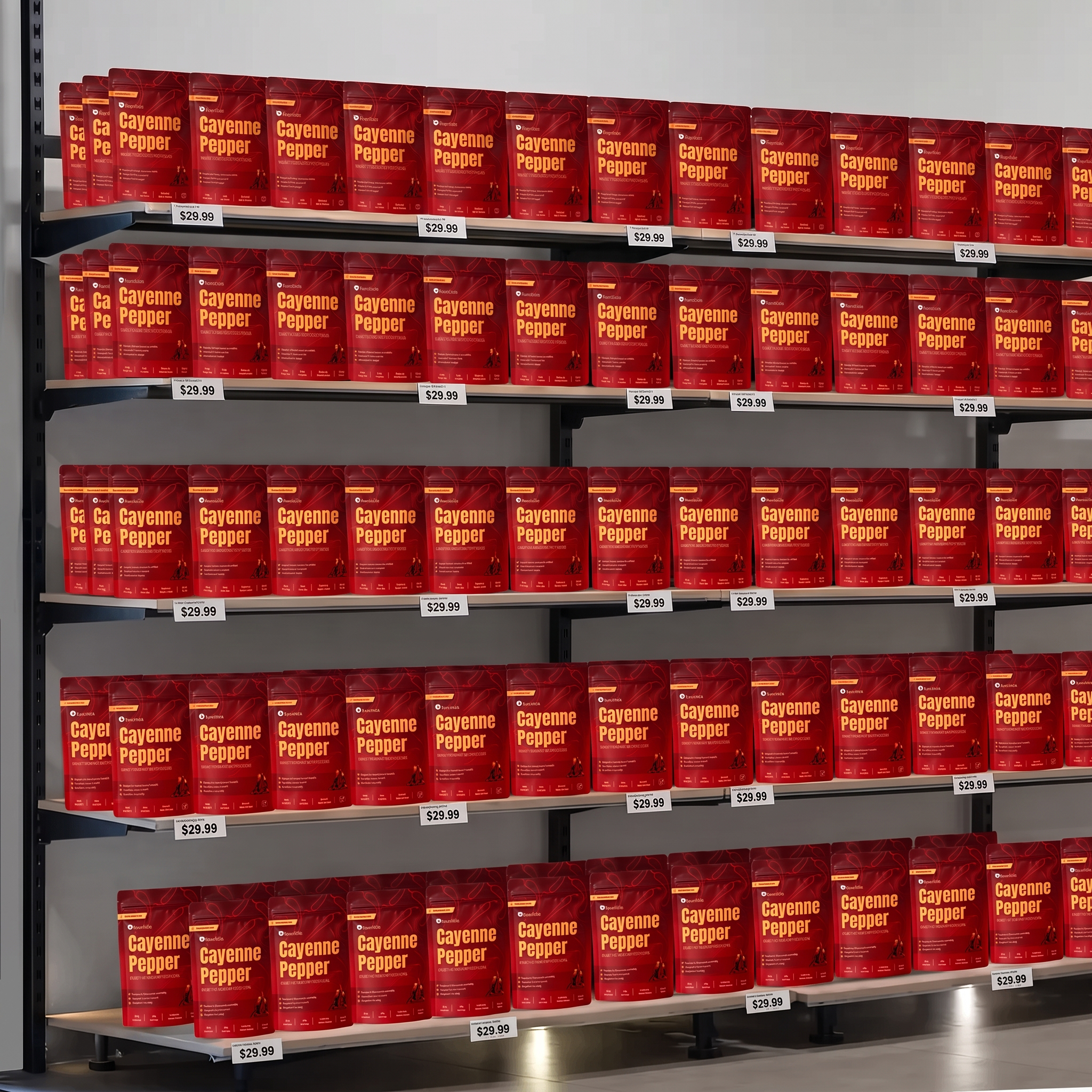
Since we launched Aurivita, products have appeared on Amazon, at Walmart, at pharmacies, at supplement stores and e-commerce sites across the internet, all of them claiming capsaicin in avocado oil softgels, all of them packaged and labeled closely enough to what we make that our customers could not tell the difference from the outside. When the comments started arriving that cayenne was not working, that people had been taking softgels for weeks without a single point of change in their fasting glucose or blood pressure, I said nothing publicly. I thought the product would speak for itself. It did not. People blamed Aurivita. But the product they were holding was not Aurivita. My name is Greg. I am a co-founder of Aurivita. What I am about to explain is the answer to a question we receive more than any other, from more people than I expected: why does Aurivita say two softgels per day when almost every other capsaicin product on the market tells you to take one or three dry capsules? The answer is what this post is about. And once you understand it, you will not need to wait another month to figure out why your number has not moved. --- The comment pattern The question arrives in different forms but carries the same confusion. Someone writes that they are taking a cayenne pepper capsule and the label says to take three per day. Aurivita says take two softgels. They want to know which is correct. They will find out after their next panel. Someone else writes that theirs also says three capsules per day. What is the right dose? Another person writes that their product's back label is nearly identical to Aurivita's — same claims, same mechanism language, same described delivery — but the product comes in a hard capsule, not a softgel. Another writes that they take their product and it clearly says standardised to 5% capsaicinoids, and they want the discrepancy explained. These are not isolated comments. They arrive every day, from people in different countries, from every corner of the internet where Aurivita appears. The volume of the question is significant in itself. It means there are dozens of products circulating in this category making claims similar enough to ours that our customers cannot reliably distinguish them from the label alone. It means those products are directing people to take one, two, or three dry capsules per day. And it means the people taking them are waiting for results that are not arriving. The dosage difference is not an accident. It is the downstream consequence of a formulation decision. And the formulation decision is what determines whether a blood pressure reading moves, whether a fasting glucose shifts, whether a cholesterol panel returns different from the last one — or whether all of it stays exactly where it has been for the last three appointments. --- What we found when we investigated When the comment pattern became clear, I began ordering competing products. Not one or two. Dozens. From Amazon. From Walmart. From online supplement retailers. From pharmacy platforms. Every product I could find that claimed to be capsaicin in oil, every product using the same mechanism language Aurivita uses, every product priced in a range that made the formulation cost difficult to explain. We brought everything to our laboratory team. The analysis took weeks. We tested capsaicin concentration on every product — whether the capsaicin inside was a standardised concentrated extract or raw dried cayenne powder, and at what ratio. We tested the carrier medium: whether the product actually contained a lipid-based oil or a dry powder fill in a softgel shell that looked identical from the outside. We measured the total milligrams of active capsaicin per recommended daily serving and compared that figure to the dose the clinical research used. What we found across the majority of competing products confirmed what the pricing had already suggested. The label said softgel or oil-delivered. The ingredient inside, in product after product, was either dry powder in a capsule or a token amount of oil that performed no meaningful absorption function. And the instruction to take one or three per day was not offering the customer a higher or comparable effective dose. It was offering more or fewer units of a cheaper material at a fraction of the concentration that actually drives a biological response. --- The delivery problem Cayenne pepper extract and capsaicin in a lipid-based softgel are not two names for the same ingredient. They are two different delivery formats with two different absorption profiles and two entirely different relationships to the biological mechanism they claim to support. Capsaicin is the active molecule in cayenne pepper. It is fat-soluble. This is not a marketing claim. It is a chemical property. Fat-soluble compounds are absorbed across the intestinal wall via a lipid-dependent pathway. They require a fat carrier to be transported into the lymphatic system and then into systemic circulation. In the absence of a fat carrier, fat-soluble compounds pass through the digestive tract largely unabsorbed. The compound is present in the capsule. It is not present in the bloodstream at the concentration the mechanism requires. A dry powder capsule — which is what the overwhelming majority of cayenne and capsaicin supplements on the market contain — provides no lipid carrier. The capsaicin goes through first-pass hepatic metabolism, where a significant portion is cleared by the liver before it reaches the systemic endothelial cells where the TRPV1 receptor sits. The customer experiences nothing. They conclude that cayenne does not work. What they experienced is cayenne that was never bioavailable. This is the central problem with nearly every capsaicin supplement on the market. The right ingredient in the wrong form. The substitution runs deep in the supply chain. Some companies are making a deliberate formulation decision. Others are purchasing from ingredient suppliers who have already made that decision upstream. The incentive structure points in the same direction at every level. A properly formulated capsaicin softgel in a genuine lipid carrier costs significantly more per unit to produce than a dry powder capsule or a softgel with nominal oil content. Every step where the real delivery mechanism is compromised, the formulation cost falls. The retail price falls with it. When someone asks why Aurivita costs what it costs and a product with similar label claims costs $14 on Amazon, the answer is not markup. The answer is what is inside the softgel and what is carrying it. --- The carrier oil problem Even among the small number of products in our analysis that contained genuine oil carriers, the oil choice consistently undermined the formula. Soybean oil and sunflower oil are the dominant carrier oils in the softgel supplement industry because they are cheap, widely available, and technically qualify as lipid carriers. Both are high in omega-6 fatty acids. High omega-6 intake is associated with increased systemic inflammatory signaling through the arachidonic acid pathway. Aurivita's target customer is almost always dealing with vascular inflammation. Elevated blood pressure. Elevated LDL. High blood sugar. All of these conditions share endothelial inflammation as a central mechanism. Suspending a compound intended to reduce vascular inflammation in a pro-inflammatory oil carrier is not just suboptimal. It is mechanistically counterproductive. The carrier is working against the capsaicin from the moment the softgel is swallowed. Aurivita uses cold-pressed avocado oil. Avocado oil is high in oleic acid, a monounsaturated fat associated with anti-inflammatory activity and cardiovascular benefit. It provides the lipid matrix the capsaicin needs to absorb efficiently. And it does not introduce the pro-inflammatory omega-6 load that soybean and sunflower oil carry. The carrier works with the capsaicin rather than against it. When someone asks why Aurivita specifies avocado oil when other softgels just say vegetable oil, this is the answer. --- The concentration problem Species is the first failure in the cinnamon category. In the capsaicin category the equivalent failure is concentration — and it compounds the delivery problem. There is a meaningful difference between raw dried cayenne powder standardised to 2% capsaicinoids and Aurivita's capsaicin equivalent of 30,000 fresh peppers per serving. A product claiming high-potency capsaicin that delivers 500 milligrams of raw cayenne powder at 2% standardisation delivers 10 milligrams of capsaicin per serving. Aurivita delivers the capsaicin equivalent of 30,000 peppers per serving in a lipid-based format that actually reaches systemic circulation. The active compound density per serving is not a variation on the same theme. It is a different category of formulation. And the TRPV1 receptor — the receptor capsaicin must activate to drive endothelial repair, insulin sensitivity restoration, and nitric oxide production — does not produce a partial response to a subthreshold dose. The receptor either activates at clinically meaningful capsaicin concentrations or it does not. A dose chosen to look meaningful on a label is not the same as a dose chosen to cross the activation threshold the mechanism requires. --- The BioPerine problem The fourth variable most competing products miss entirely is clearance rate. Even when capsaicin is correctly concentrated and properly delivered in an oil carrier, it clears from the bloodstream relatively quickly. TRPV1 activation requires sustained exposure — not a brief pulse that peaks and fades. A brief pulse of capsaicin at threshold concentration activates the receptor temporarily and then disappears before the intracellular signaling cascades that produce the downstream benefits have fully propagated. BioPerine is a patented extract of piperine — the active compound in black pepper — that has been clinically documented to inhibit the enzymes responsible for clearing capsaicin from the bloodstream. It extends the active window. It converts a brief pulse into sustained receptor activation. Aurivita includes BioPerine at a clinically relevant dose specifically because without it, even a correctly formulated oil softgel at the right concentration may not stay active in circulation long enough to drive the full TRPV1-mediated response. It is not listed on the label as a credibility signal. It is there because without it the formula does not perform to its potential regardless of how correctly the other three variables are handled. The four variables are not separable. Capsaicin concentration, carrier oil quality, lipid delivery format, clearance extension. All four must be correct for the number to move. A product that fails on any one of them does not produce the clinical outcome regardless of how many units per day the label recommends. --- The direct answer to the dosage question Aurivita says two softgels per day because two softgels delivers the capsaicin equivalent of 30,000 peppers, suspended in cold-pressed avocado oil, with BioPerine to extend active circulation time, in a softgel that delivers the active compounds to the intestinal wall at the concentration the absorption mechanism requires. That is two softgels. Per day. Thirty servings per pouch. Thirty days. A competing product that says one or three capsules per day is not offering one third or three times as much of the same formula. It is offering units of a lower-concentration material from a cheaper source in a format that does not address absorption or clearance. The unit count is chosen for how it reads on the label. It is not chosen because that unit count equals what two Aurivita softgels deliver. If you are holding a bottle that uses the same mechanism language — TRPV1, nitric oxide, endothelial repair, avocado oil — and the price makes the formulation cost difficult to explain, you now understand why. The claims are borrowed. The formulation behind them is not. The companies producing competing products in this category are copying the mechanism language because the mechanism language is what makes a customer believe the product will work. They cannot copy the formulation without sourcing the real capsaicin at the real concentration in the real delivery format with the real clearance extension, and that is the cost they are not paying. --- How the mechanism actually works The biology behind why correctly formulated capsaicin moves blood pressure, blood sugar, and cholesterol markers matters because it explains why concentration, carrier oil, delivery format, and clearance extension are not interchangeable variables. Every blood vessel in your body is lined with a single continuous sheet of cells called the endothelium. When these cells are functioning correctly they produce nitric oxide — the molecule that signals the surrounding smooth muscle to relax, keeps vessels open, prevents LDL from adhering to the arterial wall, and maintains blood pressure without pharmaceutical override. When the endothelium is damaged — by chronic glucose exposure, by arterial inflammation, by the progressive oxidative stress of metabolic syndrome — nitric oxide production falls. Vessels constrict. Blood pressure rises. LDL catches against an inflamed wall. GLUT4 transporters on muscle and fat cell surfaces respond more slowly to insulin. Glucose lingers in the bloodstream. The downstream measurements that cardiologists and endocrinologists track — blood pressure, LDL, A1C, fasting glucose, triglycerides — all move in the wrong direction for the same upstream reason. TRPV1 is a receptor that sits inside the endothelial cells themselves. When capsaicin activates TRPV1 at therapeutic concentration, it initiates a cellular repair sequence that addresses this upstream failure directly. SIRT1 rises — protecting endothelial cells against the premature senescence driven by chronic inflammation. p21 falls — releasing the cell cycle arrest preventing damaged cells from recovering function. eNOS activates — the enzyme that produces nitric oxide from within the cells themselves, not from a dietary precursor, not from a drug overriding the system, from restored cellular machinery. When the endothelium repairs, every downstream measurement it was failing to regulate begins to normalize. Blood pressure comes down because the vessels can regulate their own tone. LDL environment changes because the inflammatory adhesion the damaged wall was causing is reduced. Insulin sensitivity improves because the inflammatory burden on the insulin signaling pathway is addressed. Fasting glucose and A1C reflect the improved cellular uptake. This mechanism does not operate below the effective dose. Remove the capsaicin concentration. Use the wrong carrier oil. Skip the BioPerine. The TRPV1 receptor does not activate meaningfully. The endothelial repair sequence does not initiate. The downstream measurements do not move. --- What happens on the real formula The responses we receive from people we can confirm are taking genuine Aurivita — who ordered through our website and whose orders are in our records — are different from the dosage questions. Blood pressure readings that have moved between appointments. Fasting glucose numbers that came down for the first time in months. A1C results that returned lower than the previous test. LDL panels that shifted at a check-up the person expected to be the same as the last one. Energy through the afternoon that no longer required a third coffee. Sleep that improved because the vascular tension driving nighttime wakefulness had begun to ease. These changes do not happen overnight. The TRPV1-mediated endothelial repair sequence does not produce an acute response to a single dose. The first signals people tend to notice are sleep and energy, which can appear within the first week or two as systemic nitric oxide production begins to restore. The panel confirmation comes later, usually after several weeks of consistent use, and it reflects the cumulative direction the biology has been moving. People waiting thirty days on a competing product will often be back with the same comment. The panel returned unchanged. The question gets asked again. We are writing this post so that the question does not have to be asked again. --- Why Aurivita is only available through our official website Aurivita is not sold on Amazon. It is not at Walmart. It is not on pharmacy shelves or through third-party supplement platforms. This is not a distribution limitation. It is a deliberate decision, and the reason connects directly to everything above. Every channel outside of our direct website introduces a layer of the supply chain we cannot control or verify. On Amazon, any seller can create a listing that uses our imagery, our product name, our mechanism claims, and packaging designed to resemble our pouches closely enough that a customer placing an order cannot tell the difference until it arrives. The product inside can be formulated with dry powder instead of oil-delivered capsaicin, with soybean oil instead of avocado oil, without BioPerine, and priced at a level that reflects the actual formulation cost rather than the one we pay. The customer trusts the listing. They place the order. They take the product for a month. The panel comes back unchanged. And the question arrives in the comments. We cannot prevent that from happening on Amazon. We can only prevent it from affecting orders that come through us directly. Aurivita stock runs out regularly. We do not maintain standing inventory at third-party warehouses. When a batch is available, it is available on our website. When it runs out, it is not available anywhere else because we do not supply anywhere else. A product claiming to be Aurivita appearing on Amazon, at a pharmacy, at an online retailer, or in a store is not Aurivita. The formula inside is not what we make. The only guarantee of receiving genuine Aurivita is an order placed directly through our official website. --- The guarantee Every pouch ships with a 120-day money-back guarantee. Take two softgels per day for 120 days. If your blood pressure does not move, if your fasting glucose does not shift, if your A1C does not come down, if the formula does not perform the way the mechanism says it should, send back what is left in the pouch and every dollar returns to you. Full refund. Opened pouches accepted. No conditions. No restocking fee. 120 days is the time frame we stand behind because 120 days is enough for the TRPV1-mediated endothelial repair sequence to express itself across multiple blood panel markers. If the correct capsaicin concentration in the correct lipid carrier with the correct clearance extension does not do what the research says it does, we do not want your money. That is the guarantee. Two softgels per day. Thirty servings per pouch. Thirty days of consistent use with a 120-day window to see it confirmed in your labs. Aurivita is available in three supply options. One pouch for a 30-day supply. A two-pouch order that includes a third pouch at no additional cost. A three-pouch order that includes two additional pouches at no cost. Free shipping is available on the largest bundle. Every order ships directly from us and is covered by the guarantee. If you are holding a bottle right now that says one or three capsules per day and you have been waiting for a number that has not moved, you have read the answer. Get the real formula. 👉 https://aurivita.co/pages/7-benefits — Greg Co-Founder, Aurivita
Engagement over time
Not enough history yet to show a trend.